Plant Protein vs Protein Isolates Explained
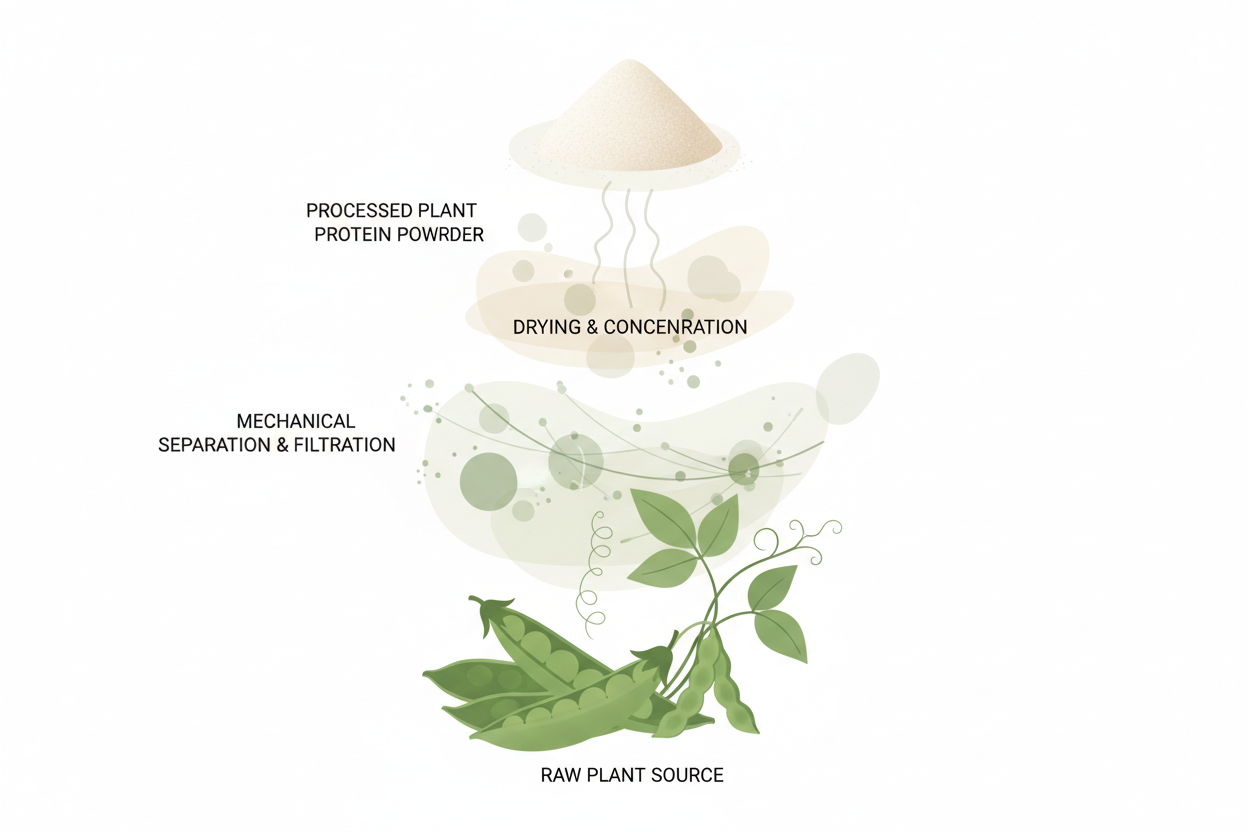
Plant protein is often presented in different forms depending on how it is processed. One of the most common distinctions is between general plant protein ingredients and plant protein isolates. Understanding this difference from a mechanical perspective focuses on how protein is separated, concentrated, and structured.
All proteins are composed of amino acids arranged in chains. These amino acids form the foundation of protein regardless of the source or processing method.
Plant protein begins as part of whole plant materials such as seeds, legumes, or grains. Through processing, this protein can be concentrated into different forms, including isolates.
This article explains plant protein vs protein isolates using neutral, science based language focused on structure, processing, and composition.
What Plant Protein Refers To
Plant protein is a broad term that refers to protein derived from plant based sources.
This includes protein that has been extracted and concentrated from plant materials but may still contain varying amounts of other components such as fiber, fats, or carbohydrates.
Plant protein ingredients can exist in different forms depending on how much processing has been applied.
Understanding plant protein in this context means recognizing it as a category rather than a single defined form.
What Protein Isolates Are
Protein isolates are a more refined form of protein ingredient.
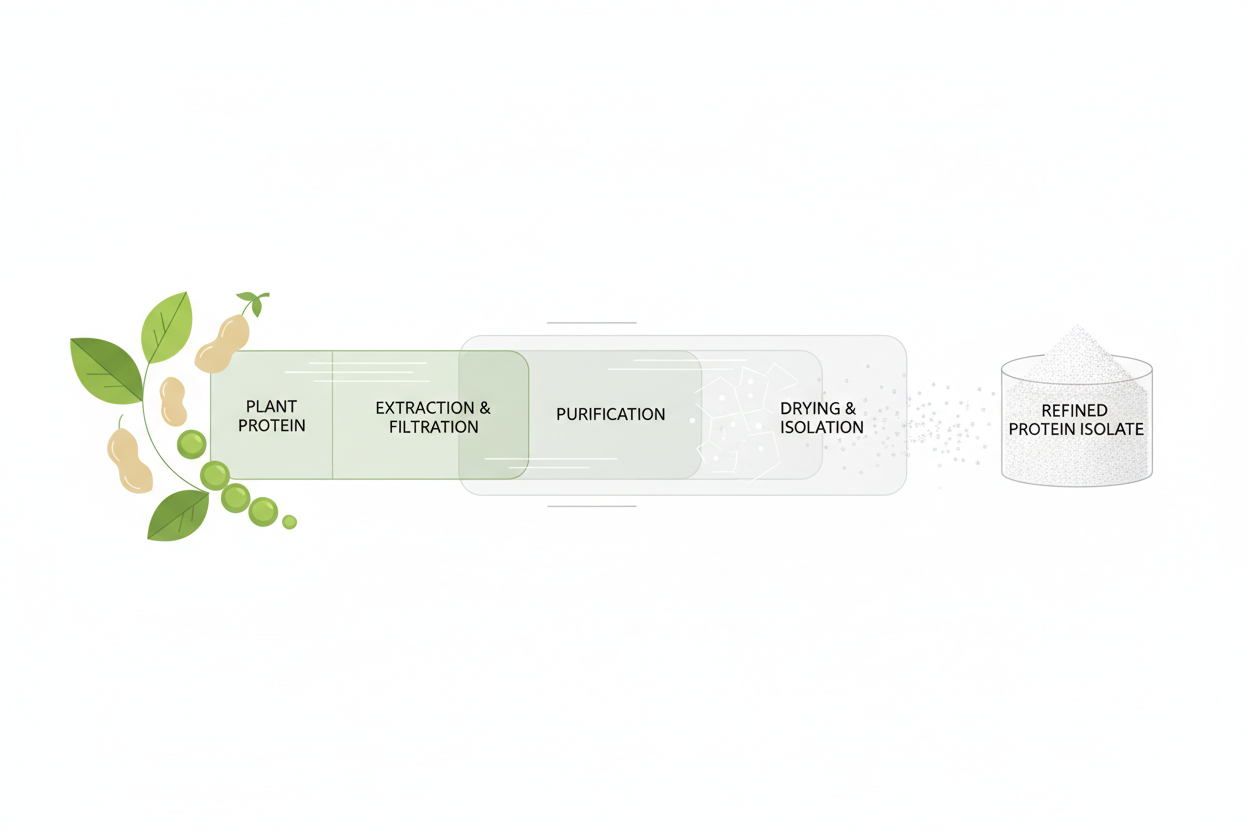
An isolate is produced by processing plant material to remove most non protein components, resulting in a higher concentration of protein within the ingredient.
This process typically involves additional steps beyond basic extraction, aiming to increase the purity of the protein.
The result is a protein ingredient with a higher proportion of protein relative to other components.
Understanding isolates helps clarify how plant protein can be modified through processing.
Processing Differences Between Forms
The key difference between general plant protein and isolates lies in the level of processing.
Basic plant protein extraction separates protein from the original plant material but may retain some non protein elements.
Isolate production involves further refinement to reduce the presence of these additional components.
These processing differences influence the composition of the final ingredient.
A deeper explanation of protein ingredient processing can be found here:
protein ingredient processing methods explained
Understanding processing helps explain how different forms of plant protein are created.
Structural and Compositional Differences
Although isolates are more concentrated, the underlying amino acids remain the same.
The difference is not in the amino acids themselves, but in how much of the surrounding plant material remains in the ingredient.
General plant protein may include a broader range of plant components, while isolates are more focused on the protein fraction.
These differences are compositional rather than structural at the amino acid level.
Understanding this distinction helps clarify how plant protein forms are compared.
Comparing Forms Mechanically
From a mechanical perspective, plant protein and protein isolates differ primarily in concentration and composition.
Both forms originate from the same plant sources and contain the same types of amino acids.
The distinction lies in how the protein is processed and how much of the original plant material is retained.
Once consumed, both forms are broken down into amino acids and follow the same biological pathways.
Understanding these differences allows for a clear comparison without relying on assumptions.
Part of the Protein Science Foundations Series
This article is part of the Earth Fuel Protein Science Foundations series, where we explore how protein functions within modern nutrition.
The series focuses on protein structure, sourcing, and how protein ingredients are used in formulation systems.
Related Articles in This Series
Plant Protein Explained for Beginners
Plant Protein Compared Without Bias
What Protein Quality Really Means
Price vs Quality in Protein Powders
Why Cheaper Protein Is Not Always Better
About Earth Fuel
Earth Fuel is built around one principle: simple protein. Nothing extra. We focus on clean ingredients, transparent sourcing, and clear formulation practices across every stage of the protein lifecycle. Learn more about the formulation and ingredients behind Earth Fuel plant protein powder:
Frequently Asked Questions
What is the difference between plant protein and protein isolates
Plant protein is a broad category, while isolates are a more refined and concentrated form.
Do isolates contain different amino acids
No. The amino acids are the same, but the concentration differs.
How are protein isolates made
They are produced through additional processing to remove non protein components.
Are isolates more processed than regular plant protein
Yes. They undergo more refinement steps.
Do plant protein and isolates function differently after digestion
Both are broken down into amino acids and follow the same biological pathways.

Written by Earth Fuel