How Amino Acids Are Absorbed
After protein is digested, amino acids must be absorbed before the body can use them. Absorption is the step that moves amino acids from the digestive tract into circulation, where they become available to cells throughout the body.
Once absorbed, amino acids move through the body to support different processes. This guide explains that movement:
https://getearthfuel.com/blogs/learn/amino-acids-and-nutrient-transport
This article explains how amino acids are absorbed using clear, foundational language. The focus is on biological process and organization, not outcomes, performance, or recommendations.
Absorption Happens in the Small Intestine
Amino acid absorption occurs primarily in the small intestine.
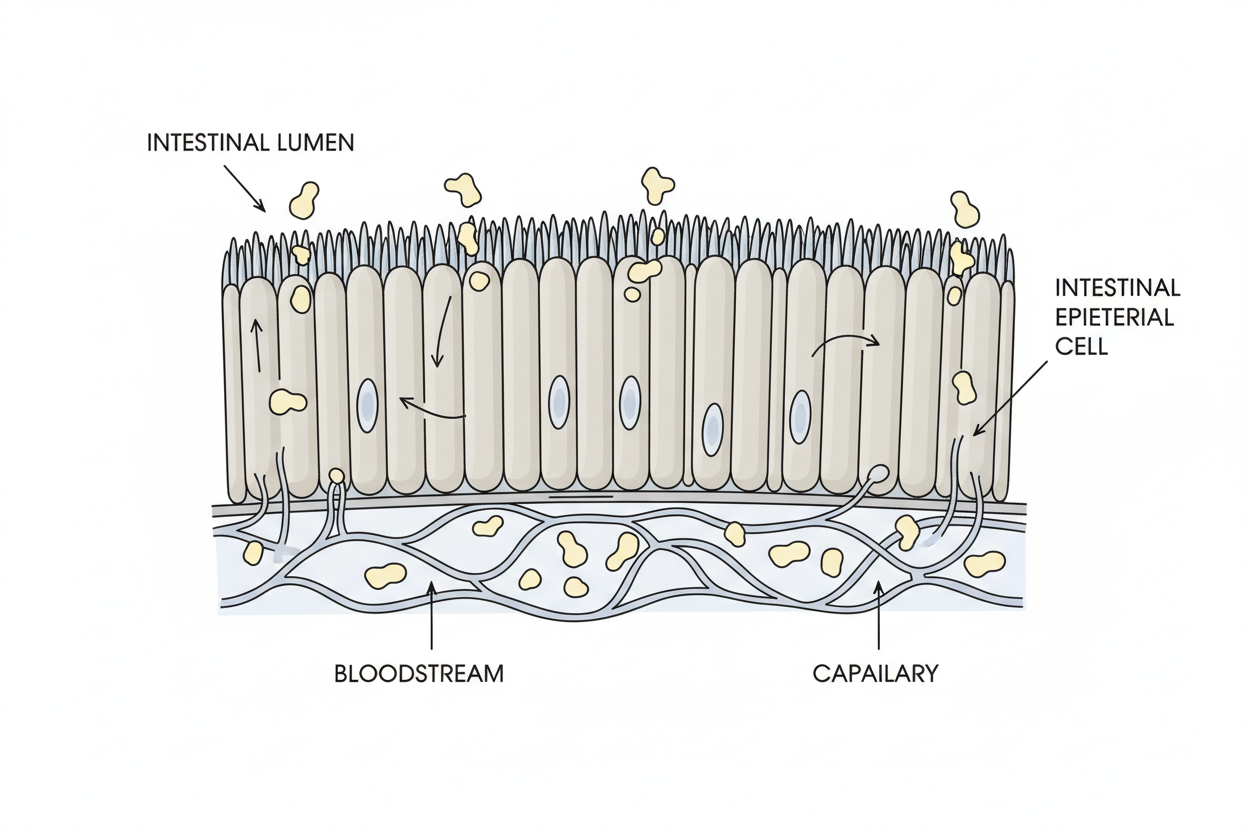
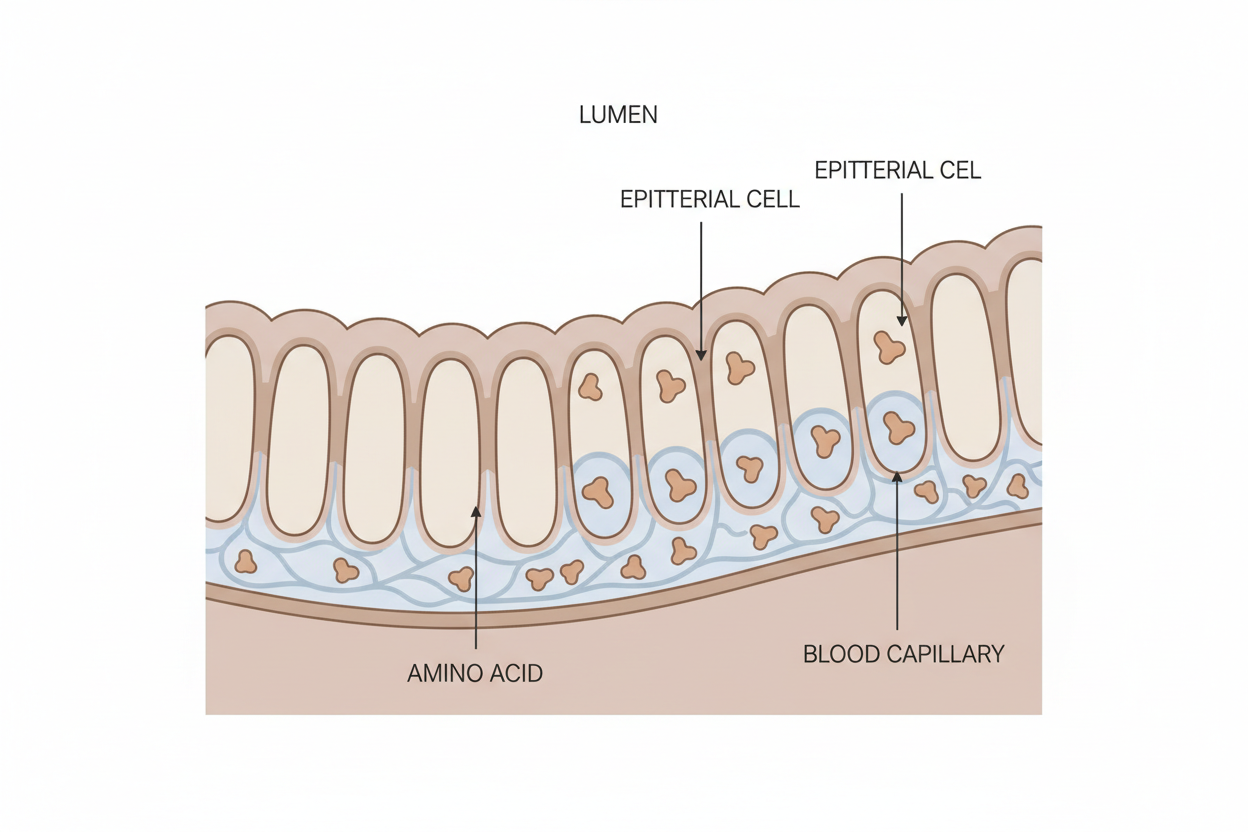
Once dietary protein has been broken down into individual amino acids and small peptide units, these components come into contact with the intestinal lining. Specialized cells along the intestinal wall are responsible for moving amino acids from the digestive tract into the bloodstream.
This transfer marks the transition from digestion to systemic availability.
Transport Across the Intestinal Wall
Amino acids do not pass through the intestinal wall passively.
They are moved across the lining by transport systems embedded in intestinal cells. These transport systems recognize amino acids and carry them into the cells of the intestinal lining, and from there into circulation.
This process is selective and regulated, ensuring amino acids enter the body in an organized way.
You can also explore how amino acids are used after they reach cells:
https://getearthfuel.com/blogs/learn/protein-metabolism-explained-simply
Individual Amino Acids and Small Peptides
Amino acids can be absorbed in more than one form.
Some are absorbed as individual amino acids, while others are absorbed as small peptide units that are later broken down inside intestinal cells. Both forms ultimately contribute to the circulating amino acid pool.
This flexibility allows the body to absorb amino acids efficiently from different protein sources.
Absorption Leads to Circulation
Once amino acids cross the intestinal barrier, they enter the bloodstream.
From there, they are transported throughout the body as part of a shared amino acid pool. No single tissue receives all absorbed amino acids first. Instead, availability is distributed system wide.
Absorption is therefore a gateway step rather than a final destination.
Absorption Is Part of a Larger System
Amino acid absorption works in coordination with digestion, circulation, and cellular use.
It does not operate independently or determine how amino acids are ultimately used. That use depends on metabolic regulation and cellular needs discussed elsewhere in Protein Fundamentals.
Understanding absorption helps clarify how protein moves from food into biological systems.
How This Fits Into Protein Fundamentals
Protein Fundamentals focuses on how protein is handled step by step.
Amino acid absorption sits between digestion and cellular utilization. It explains how amino acids move from the digestive tract into circulation, connecting earlier digestion topics with later discussions about availability and protein use inside cells.
This explanation stays grounded in process rather than outcomes.
Part of the Nutrition Foundations Series
This article is part of our Nutrition Foundations series, where we explain how different macronutrients are digested and used by the body.
👉 Visit the Nutrition Foundations hub to explore more articles in this series.
Related Articles in This Series
About Earth Fuel
Earth Fuel is built around one principle: simple protein. Nothing extra. We focus on clear formulation, ingredient transparency, and structural integrity across every stage of the protein lifecycle. Learn more about our approach and formulation philosophy on the
Earth Fuel homepage
Frequently Asked Questions
Q: Are amino acids absorbed in the stomach
A: No. Most amino acid absorption occurs in the small intestine.
Q: Are all amino acids absorbed the same way
A: Amino acids use different transport systems, but all are absorbed through regulated processes.
Q: Can amino acids be absorbed as peptides
A: Yes. Some amino acids are absorbed as small peptide units and then broken down further.
Q: Does absorption equal utilization
A: No. Absorption moves amino acids into circulation. Utilization happens later inside cells.
Q: Is absorption a passive process
A: No. Amino acid absorption involves active transport mechanisms.
Q: Does this article describe absorption efficiency
A: No. It explains the process of absorption, not comparative efficiency.

Written by Earth Fuel