Amino Acid Availability Explained
When protein is discussed in nutrition, it is ultimately amino acids that the body manages and uses. Amino acid availability refers to how amino acids become accessible to the body after protein is digested and absorbed, and how they circulate for normal biological use.
This article explains amino acid availability in simple, foundational terms. The focus is on process and flow, not outcomes, performance, or recommendations.
What Amino Acid Availability Means
Amino acid availability describes whether amino acids are present in the body in a form that cells can access.
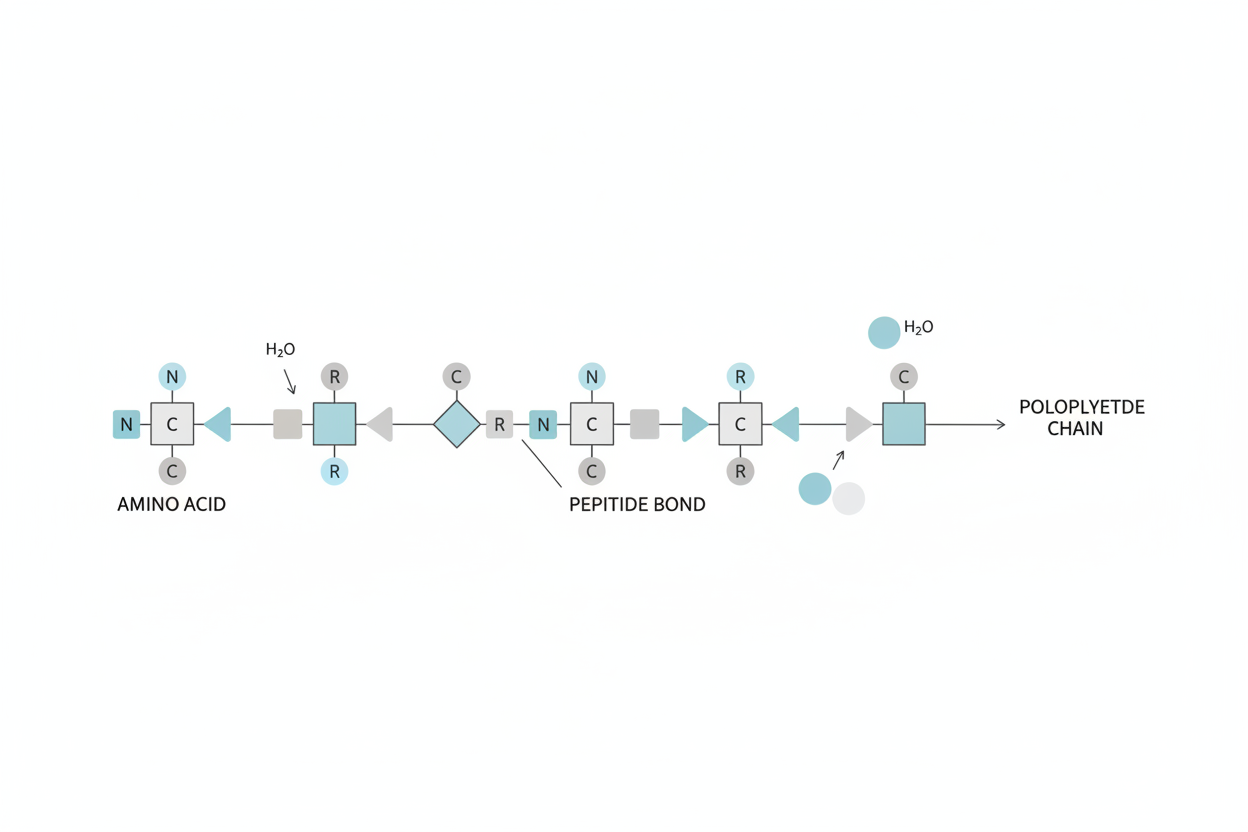
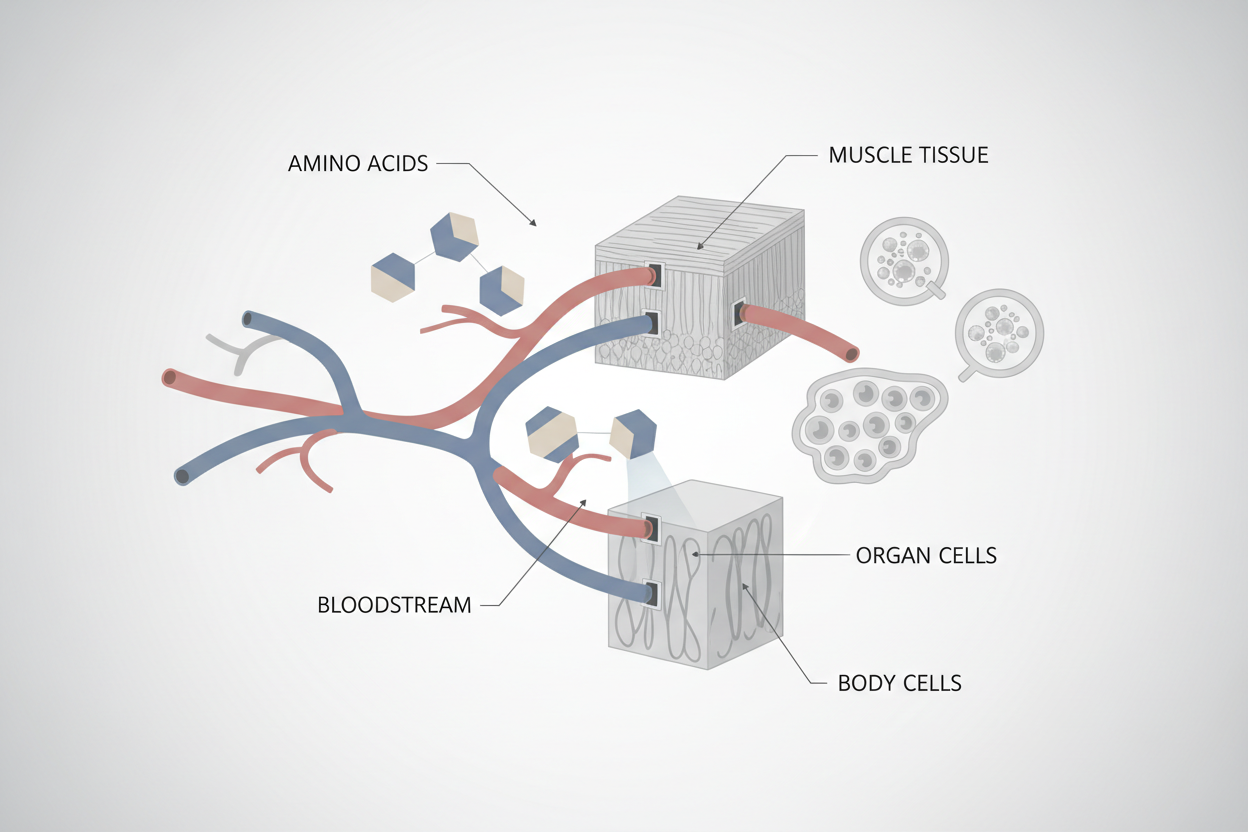
After dietary protein is broken down during digestion, amino acids and small peptides are absorbed through the small intestine and enter circulation. Once in the bloodstream, these amino acids form a shared pool that tissues draw from as needed.
Availability is about presence and access, not quantity or speed.
From Digestion to Circulation
Amino acid availability begins with digestion.
Proteins must be broken down into individual amino acids before they can be absorbed. Once absorbed, amino acids move into circulation rather than being directed to a single destination.
This circulating pool allows different tissues to access amino acids based on normal biological priorities.
Availability Is Not the Same as Intake
Eating protein does not automatically mean amino acids are immediately available.
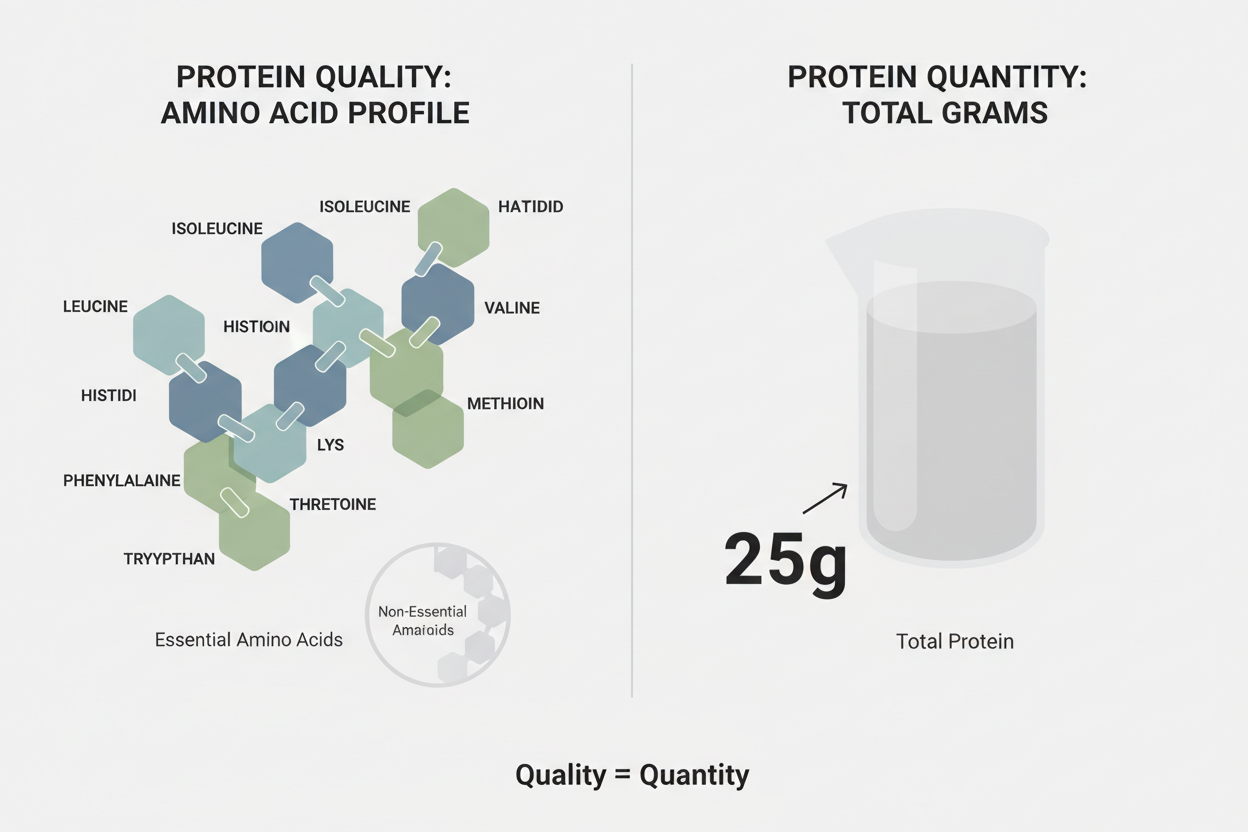
Protein must be digested, absorbed, and transported before amino acids can be used. Factors such as protein structure, processing, and meal composition influence how efficiently amino acids move through this sequence.
Availability describes this entire pathway, not just what is consumed.
How Cells Access Amino Acids
Cells access amino acids from the circulating pool.
Transport systems move amino acids into cells where they are assembled into proteins according to genetic instructions. Cells do not store large reserves of free amino acids, which is why circulation plays such an important role.
Amino acid availability supports this steady, regulated access.
Why Amino Acid Availability Matters in Protein Fundamentals
Understanding availability helps connect digestion, absorption, metabolism, and cellular use into one continuous system.
Protein fundamentals focus on how protein is handled by the body step by step. Amino acid availability sits at the center of that process, linking what is eaten to how proteins are built and maintained inside cells.
This concept provides clarity without relying on targets, timing, or claims.
Part of the Nutrition Foundations Series
This article is part of our Nutrition Foundations series, where we explain how different macronutrients are digested and used by the body.
👉 Visit the Nutrition Foundations hub to explore more articles in this series.
Related Articles in This Series
About Earth Fuel
Earth Fuel is built around one principle: simple protein. Nothing extra. We focus on clear formulation, ingredient transparency, and structural integrity across every stage of the protein lifecycle. Learn more about our approach and formulation philosophy on the
Earth Fuel homepage
Frequently Asked Questions
Q: Is amino acid availability the same as protein digestion
A: No. Digestion is one step. Availability refers to amino acids being present in circulation for cellular use.
Q: Does eating more protein always increase availability
A: Availability depends on digestion, absorption, and transport, not intake alone.
Q: Are amino acids stored for later use
A: Amino acids circulate and are used as needed rather than stored in large reserves.
Q: Do all tissues access amino acids the same way
A: All tissues draw from the circulating pool, but their specific needs differ.
Q: Is amino acid availability about timing
A: No. It describes access and movement, not timing strategies.
Q: Does availability determine protein quality
A: Availability contributes to use but does not define protein quality by itself.

Written by Earth Fuel