What Protein Bioavailability Actually Means
Protein bioavailability is a term that appears often in discussions about protein quality, but it is rarely explained clearly. Many people assume it refers only to how much protein is listed on a label, when in reality it describes how effectively protein can be used by the body.
Understanding protein bioavailability helps explain why two protein sources with the same protein content can feel very different in daily use.
This article explains what protein bioavailability actually means, how it differs from digestion and absorption, and why it matters in everyday nutrition.
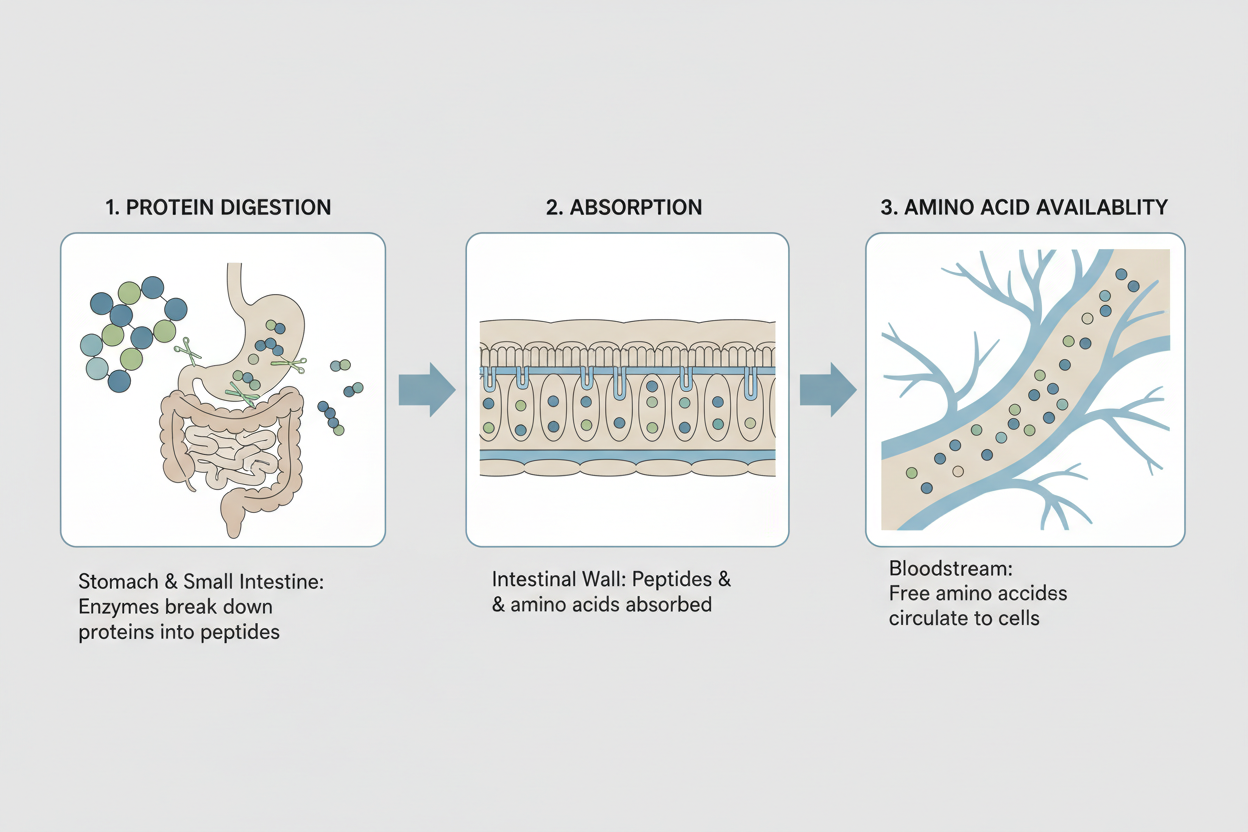
What Bioavailability Means in Simple Terms
Bioavailability refers to how much of a nutrient becomes available for use after it is consumed.
For protein, this means:
-
How well protein is digested
-
How efficiently amino acids are absorbed
-
How effectively those amino acids are used by the body
Bioavailability is not about theoretical protein content. It is about practical use.
Bioavailability Is Not the Same as Protein Amount
Protein grams on a label indicate how much protein is present, not how much the body can use.
Two protein powders may list the same protein amount, but differ in:
-
Digestibility
-
Amino acid balance
-
Processing methods
-
Ingredient composition
These differences influence how much protein contributes to the body’s amino acid pool.
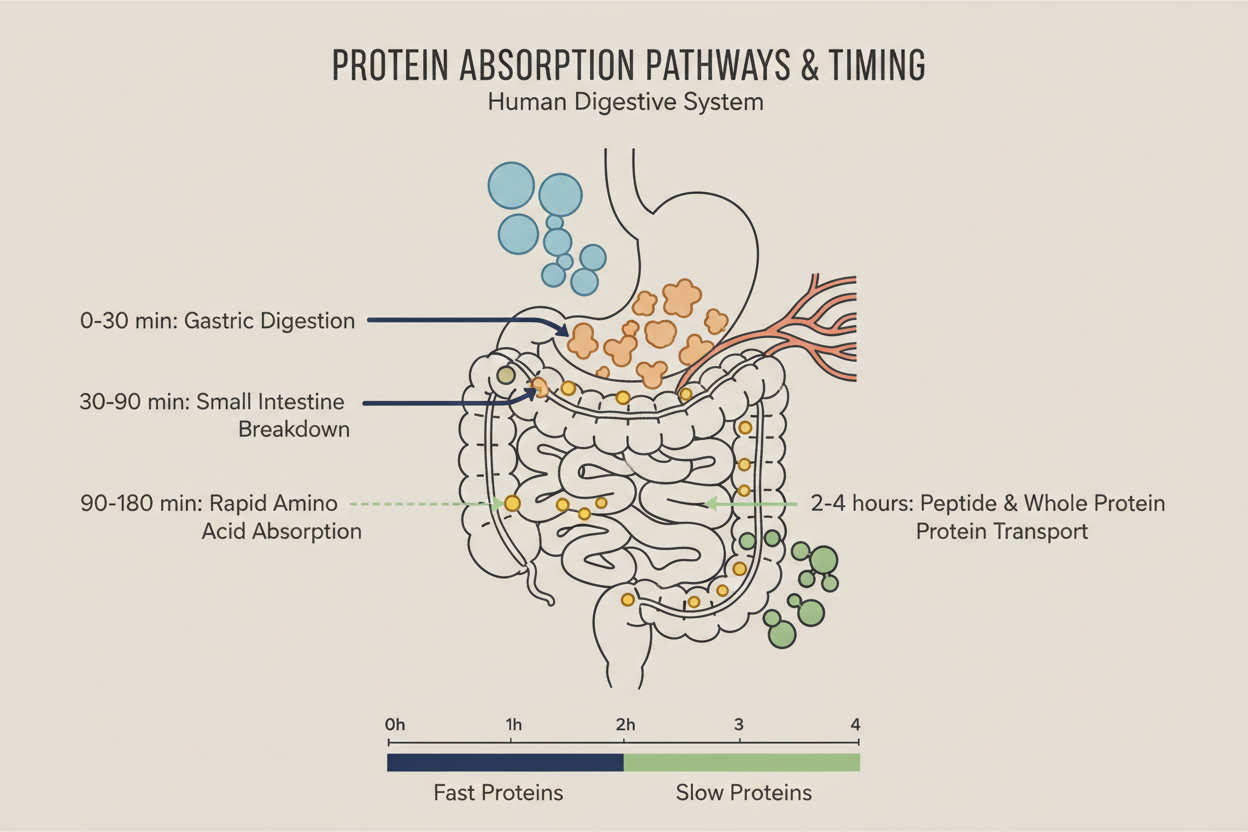
How Digestion Affects Bioavailability
Protein must be broken down into amino acids before it can be used.
If digestion is efficient:
-
Amino acids are released smoothly
-
Protein is prepared for absorption
If digestion is less efficient:
-
Protein may feel heavy or uncomfortable
-
Amino acids may be released inconsistently
Bioavailability depends on digestion working as intended.
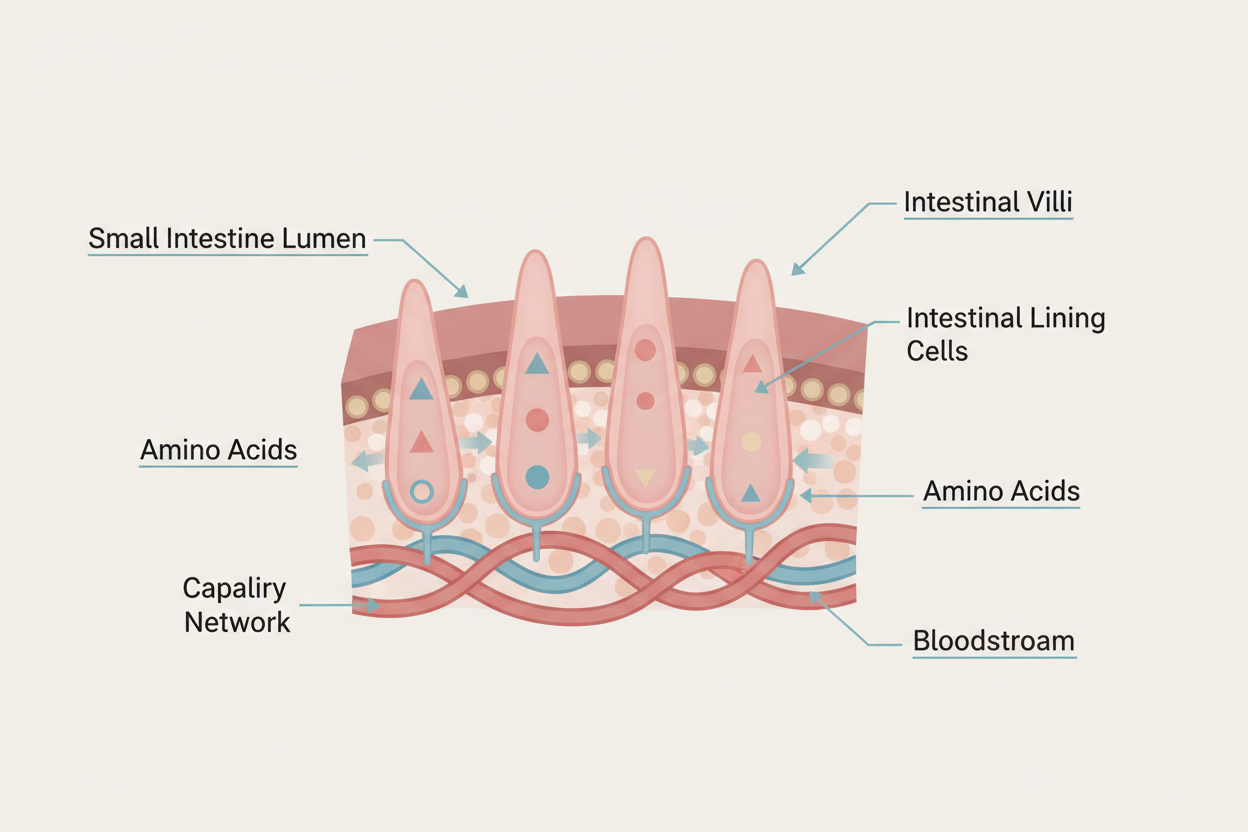
How Absorption Influences Bioavailability
After digestion, amino acids must be absorbed through the small intestine.
Absorption affects:
-
How quickly amino acids enter circulation
-
How steadily they become available
-
How effectively they support normal protein turnover
Even well-digested protein must be absorbed efficiently to be bioavailable.
Amino Acid Balance and Bioavailability
Bioavailability is also influenced by amino acid balance.
Protein sources that provide essential amino acids in balanced proportions support more effective use. This is why formulation and blending matter in many protein products.
Balanced amino acid availability supports normal protein metabolism over time.
Processing and Protein Structure
Processing methods can influence protein bioavailability.
Gentle processing tends to:
-
Preserve protein structure
-
Support digestion
-
Maintain amino acid availability
Over-processing may alter protein structure in ways that affect digestion and use for some individuals.
Bioavailability in Real Life Nutrition
In daily nutrition, bioavailability shows up as experience.
Protein with good bioavailability often:
-
Feels comfortable to consume
-
Supports consistency
-
Fits easily into routines
Protein with lower bioavailability may feel less effective or harder to tolerate, even if protein content appears high.
Why Bioavailability Matters More Than Claims
Bioavailability cannot be guaranteed by marketing language.
It depends on:
-
Individual digestion
-
Ingredient quality
-
Formulation
-
Overall diet
Understanding this helps people evaluate protein products based on experience and understanding rather than slogans.
Protein Bioavailability Over Time
Bioavailability matters most with repeated use.
Protein that is consistently digested and absorbed supports:
-
Regular amino acid availability
-
Normal tissue maintenance
-
Sustainable nutrition habits
This long-term perspective is more useful than focusing on single servings.
Part of the Nutrition Foundations Series
This article is part of our Nutrition Foundations series, where we explain how protein digestion, absorption, and formulation influence how protein supports normal body function.
👉 Visit the Nutrition Foundations hub to explore more articles in this series.
Related Articles in This Series
You may also find these helpful:
About Earth Fuel
Earth Fuel is built around one principle: simple protein. Nothing extra. We focus on clear formulation, ingredient transparency, and structural integrity across every stage of the protein lifecycle. Learn more about our approach and formulation philosophy on the
Earth Fuel homepage
FAQ
What does protein bioavailability mean
Protein bioavailability refers to how much protein is digested, absorbed, and available for use by the body.
Is bioavailability the same as digestion
No. Digestion breaks protein down, while bioavailability includes digestion, absorption, and use.
Does higher protein content mean higher bioavailability
Not necessarily. Bioavailability depends on digestion, absorption, and amino acid balance.
Do all protein sources have the same bioavailability
No. Protein sources vary in structure, processing, and digestion behavior.
Can bioavailability vary by person
Yes. Individual digestion and tolerance influence bioavailability.
Why does bioavailability matter for daily nutrition
Bioavailability influences how effectively protein supports normal body function over time.

Written by Earth Fuel