How Protein Is Absorbed in the Small Intestine (Explained Clearly)
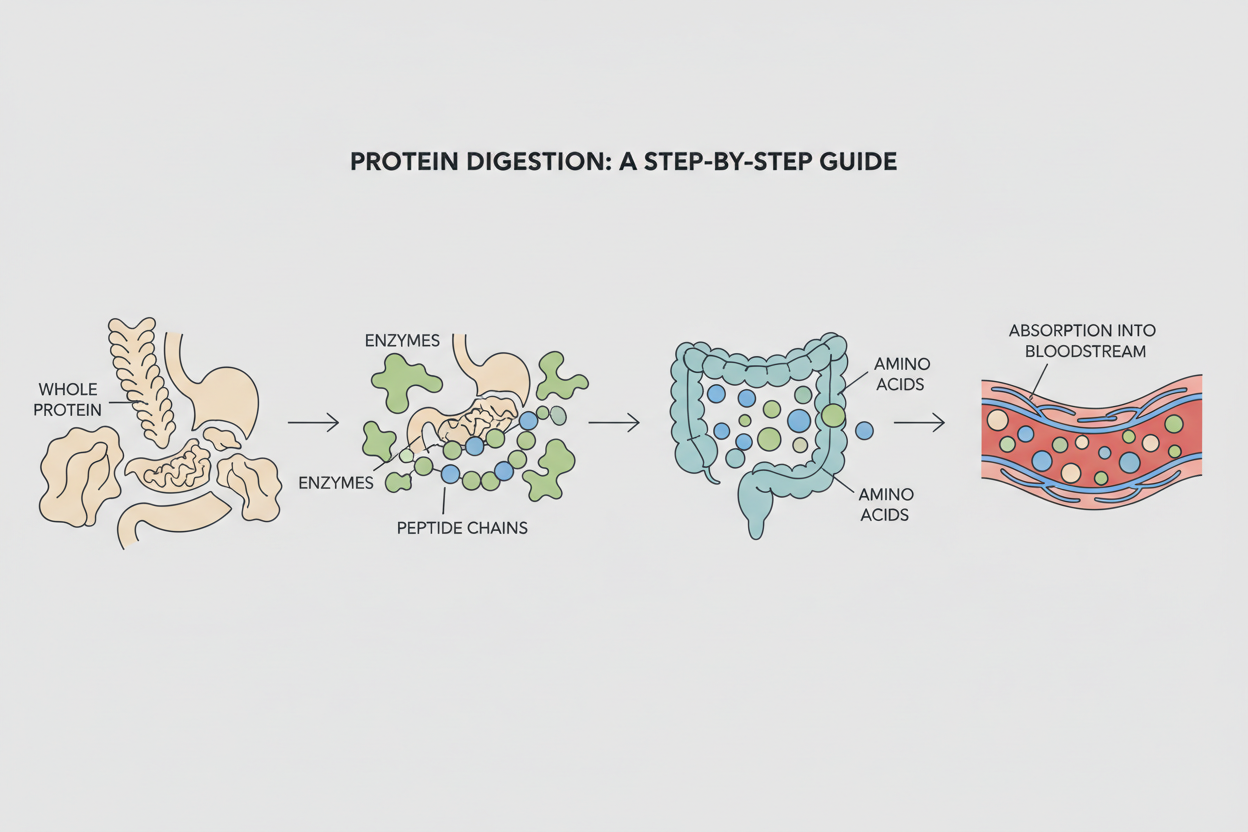
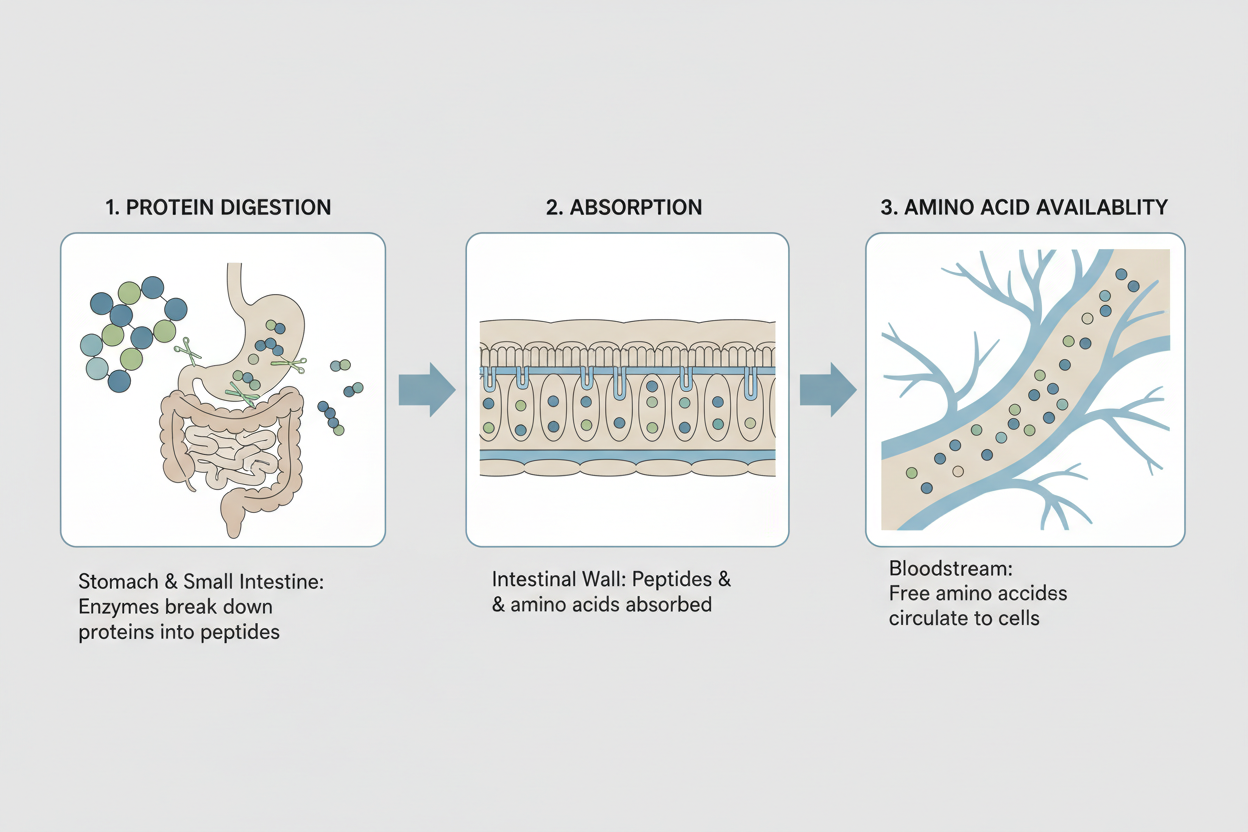
Protein digestion prepares protein for use, but absorption is the step that determines whether amino acids actually become available to the body. This final stage of digestion takes place primarily in the small intestine.
After absorption, amino acids move through the body to support different functions. This article explains that process:
https://getearthfuel.com/blogs/learn/amino-acids-and-nutrient-transport
Understanding how protein is absorbed in the small intestine helps explain why digestion quality matters, why experiences vary between individuals, and why absorption is influenced by more than just protein intake.
This article explains how amino acids are absorbed after digestion and what factors support normal protein absorption.
The Role of the Small Intestine
The small intestine is where most nutrient absorption occurs.
After protein is broken down into amino acids during digestion, those amino acids move into the small intestine, where the body prepares to absorb them into the bloodstream.
This process allows amino acids to be transported to tissues throughout the body for normal physiological use.
You can also explore how protein is used after digestion:
https://getearthfuel.com/blogs/learn/protein-metabolism-explained-simply
How Amino Acids Are Absorbed
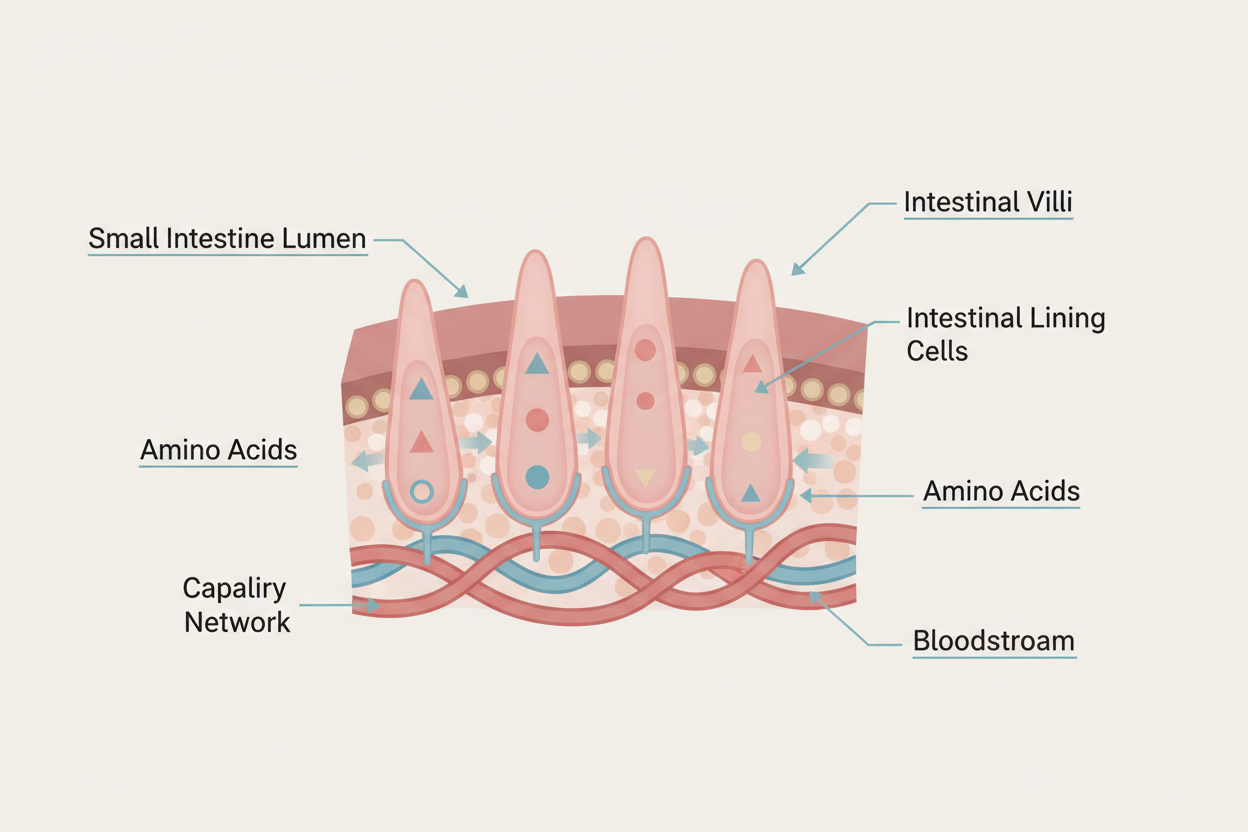
Amino acids are absorbed through the lining of the small intestine.
This occurs when:
-
Amino acids pass through intestinal cells
-
They enter the bloodstream
-
They become part of the circulating amino acid pool
Once in circulation, amino acids are available to support normal tissue maintenance, enzyme production, and metabolic processes.
Transport Systems in the Intestine
The small intestine uses specialized transport systems to move amino acids from the digestive tract into the bloodstream.
These systems:
-
Regulate absorption
-
Control how quickly amino acids enter circulation
-
Help maintain balance
Efficient transport supports steady amino acid availability rather than sudden spikes.
Absorption Happens Gradually
Protein absorption is not instantaneous.
Amino acids are absorbed over time as digestion progresses, which helps:
-
Maintain a steady supply
-
Support continuous protein turnover
-
Reduce digestive strain
This gradual process aligns with how the body uses protein throughout the day.
Factors That Influence Protein Absorption
Several factors influence how efficiently protein is absorbed, including:
-
Digestive enzyme activity
-
Protein source and structure
-
Fiber content
-
Ingredient processing
-
Individual digestive tolerance
These factors help explain why protein absorption experiences differ between people.
Digestion and Absorption Work Together
Digestion and absorption are closely linked.
Efficient digestion helps ensure amino acids are released in a form that can be absorbed smoothly. When digestion is less efficient, absorption may feel inconsistent or uncomfortable.
This is why protein quality includes both digestion and absorption considerations.
Absorption and the Amino Acid Pool
Once absorbed, amino acids contribute to a circulating amino acid pool.
From this pool, the body:
-
Draws amino acids as needed
-
Supports normal tissue maintenance
-
Replaces proteins that naturally break down over time
This system allows protein to support daily nutrition beyond a single meal.
Individual Differences in Absorption
Protein absorption can vary based on:
-
Digestive sensitivity
-
Gut health
-
Previous diet patterns
-
Overall nutritional context
These differences highlight why protein recommendations and experiences are not identical for everyone.
Supporting Normal Protein Absorption
Many people focus on:
-
Choosing digestible protein sources
-
Paying attention to comfort
-
Avoiding overly complex formulations
These approaches support consistent absorption and long term use.
Absorption Is the Final Step of Protein Use
Protein absorption completes the journey from food to function.
Understanding this step helps clarify why:
-
Intake alone is not the full story
-
Digestion quality matters
-
Protein effectiveness is influenced by multiple factors
This perspective supports informed, balanced protein choices.
Part of the Nutrition Foundations Series
This article is part of our Nutrition Foundations series, where we explain how protein digestion, absorption, and nutrient availability support normal body function.
👉 Visit the Nutrition Foundations hub to explore more articles in this series.
Related Articles in This Series
You may also find these helpful:
About Earth Fuel
Earth Fuel is built around one principle: simple protein. Nothing extra. We focus on clear formulation, ingredient transparency, and structural integrity across every stage of the protein lifecycle. Learn more about our approach and formulation philosophy on the
Earth Fuel homepage
FAQ
Where is protein absorbed in the body
Protein is absorbed in the small intestine after digestion breaks it into amino acids.
Does protein absorption happen instantly
No. Amino acids are absorbed gradually over time.
What affects how well protein is absorbed
Digestion efficiency, protein source, formulation, and individual tolerance influence absorption.
Is absorption different from digestion
Yes. Digestion breaks protein down, while absorption moves amino acids into the bloodstream.
Does fiber affect protein absorption
Fiber can influence digestion speed, which may affect the timing of absorption.
Why does protein absorption vary between people
Individual digestive differences influence how protein is absorbed.

Written by Earth Fuel