How the Body Breaks Down Protein After You Eat It (Step by Step)
After you eat protein, your body begins a carefully coordinated process to break it down into usable components. This process does not happen instantly, and it involves multiple stages working together to prepare protein for absorption.
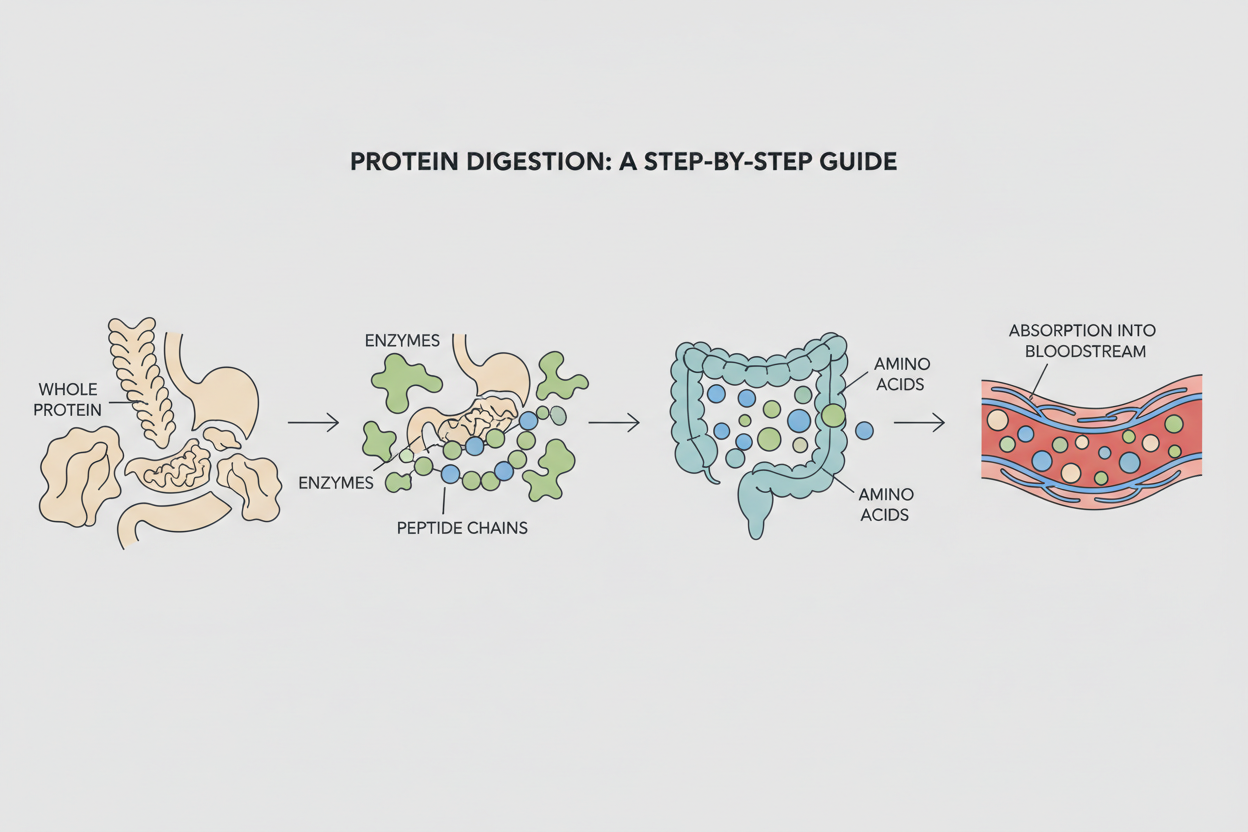
Protein digestion is a multi-stage process that begins in the stomach and continues in the small intestine. If you want a deeper breakdown of how this works step by step, see how protein is absorbed in the small intestine:
https://getearthfuel.com/blogs/learn/how-protein-is-absorbed-in-the-small-intestine
Understanding how the body breaks down protein after you eat it helps explain why digestion quality matters and why protein experiences can vary between individuals.
This article explains what happens to protein after consumption and how the body prepares it for use.
Also, understanding how amino acids are used after digestion helps complete the picture of protein metabolism:
https://getearthfuel.com/blogs/learn/protein-metabolism-explained-simply
Protein Breakdown Begins Immediately
Protein breakdown starts as soon as food enters the digestive system.
Although chewing does not chemically digest protein, it helps:
-
Reduce food into smaller pieces
-
Increase surface area
-
Prepare protein for enzymatic digestion later
This mechanical preparation supports the next stages of breakdown.
The Role of the Stomach in Protein Breakdown
Once protein reaches the stomach, chemical digestion begins.
In the stomach:
-
Acid helps unfold protein structures
-
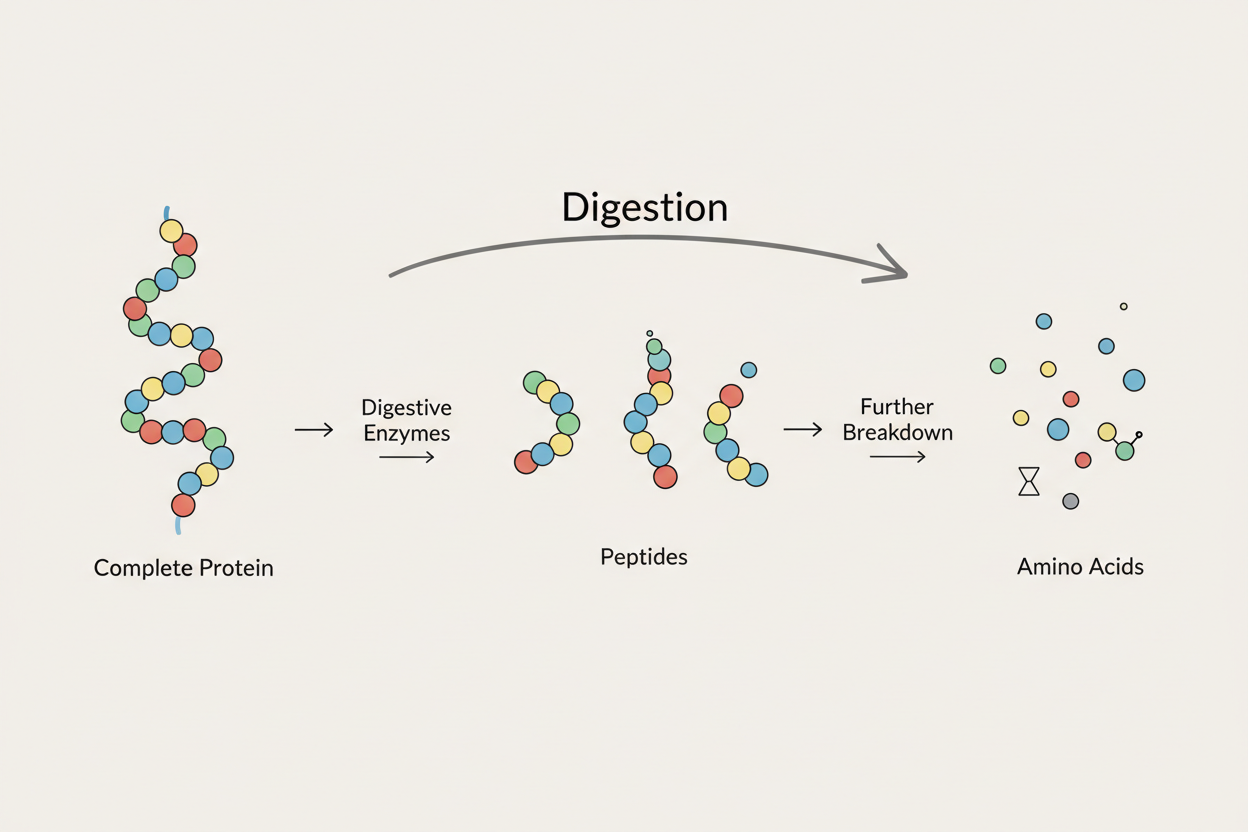
Enzymes begin breaking protein into smaller chains called peptides
This step is essential because intact proteins are too large to be absorbed by the body.
The effectiveness of this stage can vary based on:
-
Protein source
-
Processing methods
-
Individual digestive factors
Protein Breakdown Continues in the Small Intestine
After leaving the stomach, partially broken down protein enters the small intestine.
Here:
-
Additional enzymes continue breaking peptides into smaller components
-
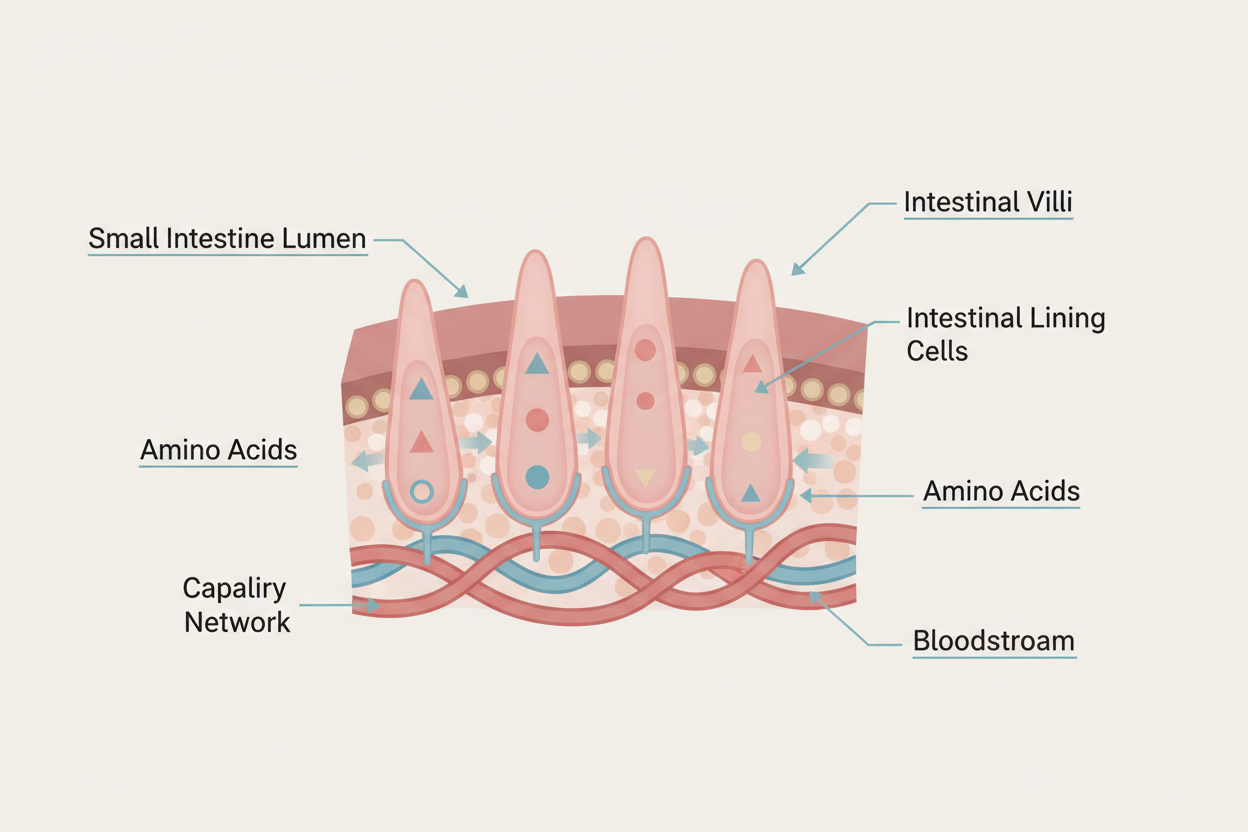
Protein is reduced into individual amino acids
This step prepares protein for absorption into the bloodstream.
Peptides and Amino Acids Explained Simply
During breakdown, protein passes through several forms.
-
Proteins → large, complex structures
-
Peptides → smaller chains of amino acids
-
Amino acids → individual building blocks
The body can only absorb protein once it reaches the amino acid stage.
Why Protein Breakdown Takes Time
Protein breakdown is a gradual process.
Factors that influence how quickly protein is broken down include:
-
Protein structure
-
Fiber content
-
Meal composition
-
Digestive enzyme activity
This is why protein does not provide instant effects and why timing and digestion vary.
Individual Differences in Protein Breakdown
Not everyone breaks down protein in the same way.
Differences can be influenced by:
-
Digestive sensitivity
-
Previous diet patterns
-
Ingredient tolerance
-
Overall digestive health
These differences help explain why the same protein may feel different from person to person.
When Protein Breakdown Is Less Efficient
If protein is not broken down efficiently, some individuals may notice:
-
A feeling of heaviness
-
Digestive discomfort
-
A sense that protein lingers
This does not mean protein is harmful. It usually indicates a mismatch between protein source and digestion.
Protein Breakdown Supports Daily Nutrition
Efficient protein breakdown helps ensure amino acids are available throughout the day.
These amino acids support:
-
Normal tissue maintenance
-
Enzyme production
-
Ongoing metabolic processes
Consistent breakdown and digestion support regular protein use as part of daily nutrition.
Protein Breakdown Is Part of Protein Quality
Protein quality includes not only amino acid content, but also how easily protein is broken down during digestion.
A protein that breaks down smoothly often supports better long term consistency and comfort.
Part of the Nutrition Foundations Series
This article is part of our Nutrition Foundations series, where we explain how protein digestion, breakdown, and nutrient availability support normal body function.
👉 Visit the Nutrition Foundations hub to explore more articles in this series.
Related Articles in This Series
You may also find these helpful:
About Earth Fuel
Earth Fuel is built around one principle: simple protein. Nothing extra. We focus on clear formulation, ingredient transparency, and structural integrity across every stage of the protein lifecycle. Learn more about our approach and formulation philosophy on the
Earth Fuel homepage

FAQ
How does the body break down protein
Protein is broken down into peptides and then amino acids through digestive enzymes.
Where does protein breakdown start
Protein breakdown begins in the stomach and continues in the small intestine.
Does protein break down instantly
No. Protein breakdown occurs gradually during digestion.
Why does protein breakdown vary between people
Differences in digestion, enzyme activity, and tolerance affect breakdown.
What happens if protein is not broken down fully
Protein may feel heavier or less comfortable, depending on digestion.
Is protein breakdown part of protein quality
Yes. How protein breaks down influences how it supports daily nutrition.

Written by Earth Fuel