Protein Metabolism Explained Simply (How Your Body Uses Protein)
Protein metabolism describes how the body handles protein after it is eaten, digested, absorbed, and made available for use. This process is part of normal human biology and happens continuously, regardless of diet style or activity level.
Rather than being stored in a single location, protein is processed and used through coordinated steps that involve digestion, circulation, and cellular activity. This article explains protein metabolism in clear, descriptive terms, focusing on how the system works without making performance or health claims.
What Protein Metabolism Refers To
Protein metabolism is the collective set of processes the body uses to manage protein and amino acids.
It includes:
-
breaking dietary protein into amino acids
-
transporting those amino acids through the bloodstream
-
using them to build and maintain proteins inside cells
These steps work together to support normal biological structure and function. Protein metabolism does not describe a result or outcome. It describes a system.
From Digestion to Circulation
Protein metabolism begins after protein digestion.
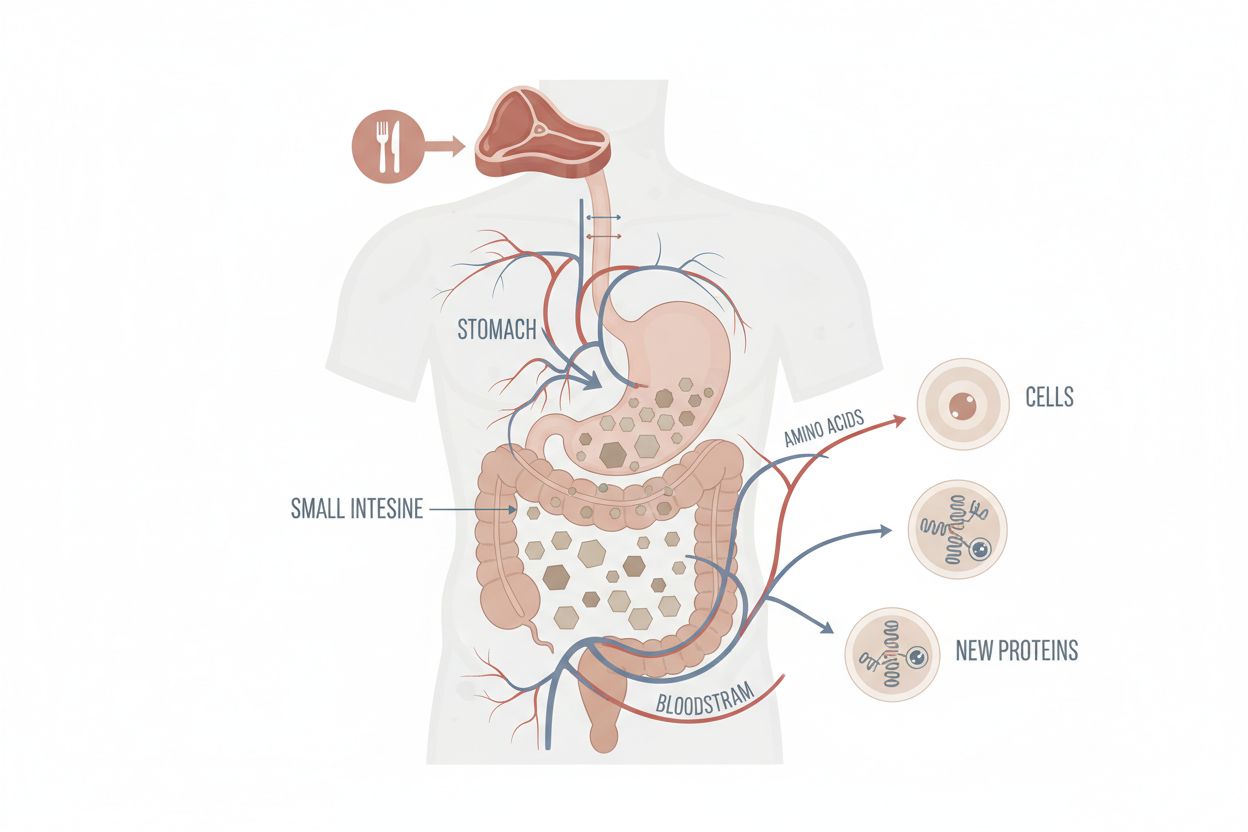
Dietary protein is broken down into amino acids and small peptide units in the digestive tract. These components are absorbed through the small intestine and enter circulation.
Once in the bloodstream, amino acids are distributed throughout the body. Different tissues draw from this shared pool based on normal physiological needs.
This movement from digestion to circulation is a central part of protein metabolism.
How Cells Use Amino Acids
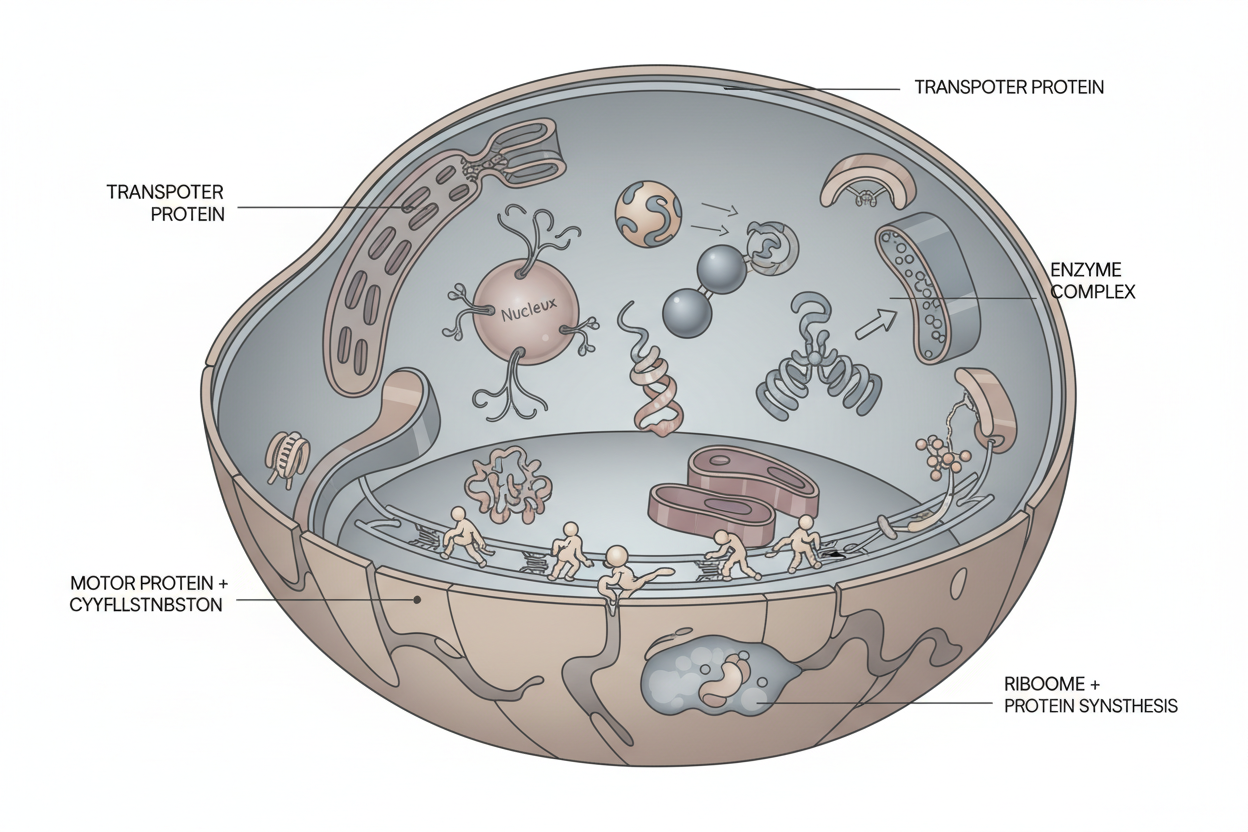
Inside cells, amino acids serve as building materials for many types of proteins.
Cells assemble amino acids into specific protein structures based on genetic instructions. These proteins may become part of cell structure, enzymes, transport systems, or signaling components.
Protein metabolism includes both the delivery of amino acids to cells and their use in ongoing cellular maintenance.
Protein Is Managed Continuously
Protein metabolism is not a one time event.
It occurs continuously as proteins are built, adjusted, and replaced over time. Because the body does not store excess protein in a dedicated reserve, amino acids are constantly moving through this system.
This is why protein metabolism is often discussed in the context of daily nutrition rather than long term storage.
How Protein Metabolism Fits Into Nutrition Education
In nutrition education, protein metabolism helps explain how protein moves from food into functional components inside the body.
From a formulation and ingredient perspective, protein sources are described by their digestibility and amino acid composition because these factors influence how amino acids become available within the metabolic process.
Understanding protein metabolism provides context for these discussions without implying benefits or outcomes.
Part of the Nutrition Foundations Series
This article is part of our Nutrition Foundations series, where we explain how different macronutrients are digested and used by the body.
👉 Visit the Nutrition Foundations hub to explore more articles in this series.
Related Articles in This Series
About Earth Fuel
Earth Fuel is built around one principle: simple protein. Nothing extra. We focus on clear formulation, ingredient transparency, and structural integrity across every stage of the protein lifecycle. Learn more about our approach and formulation philosophy on the
Earth Fuel homepage
Frequently Asked Questions
Q: Is protein metabolism the same as digestion
A: No. Digestion is one part of protein metabolism. Metabolism also includes absorption, transport, and cellular use.
Q: Does protein metabolism only occur after eating
A: No. It is a continuous process that occurs throughout the day.
Q: Is protein metabolism different for plant and animal protein
A: Protein sources differ in composition and digestibility, which can influence amino acid availability, but the metabolic process itself follows the same biological pathways.
Q: Does protein metabolism stop if protein intake is low
A: No. The process continues as part of normal physiology.
Q: Is protein metabolism something people can feel
A: No. It occurs at the cellular level and is not directly perceived.
Q: Is protein metabolism a measure of protein quality
A: No. It describes how protein is processed, not how quality is defined.

Written by Earth Fuel