Amino Acids and Nutrient Transport
After amino acids are absorbed into circulation, they must be transported to cells throughout the body. Nutrient transport is the system that moves amino acids and other nutrients from the bloodstream into cells where they can be used as part of normal biological structure and activity.
This article explains how amino acids relate to nutrient transport using clear, foundational language. The focus is on process and organization rather than outcomes, performance, or recommendations.
What Nutrient Transport Means
Nutrient transport refers to the movement of nutrients from one part of the body to another.
Once amino acids enter the bloodstream, they do not automatically enter cells. Transport systems are required to move amino acids from circulation into cells in an organized and regulated way.
This step connects absorption with cellular use.
Amino Acids in Circulation
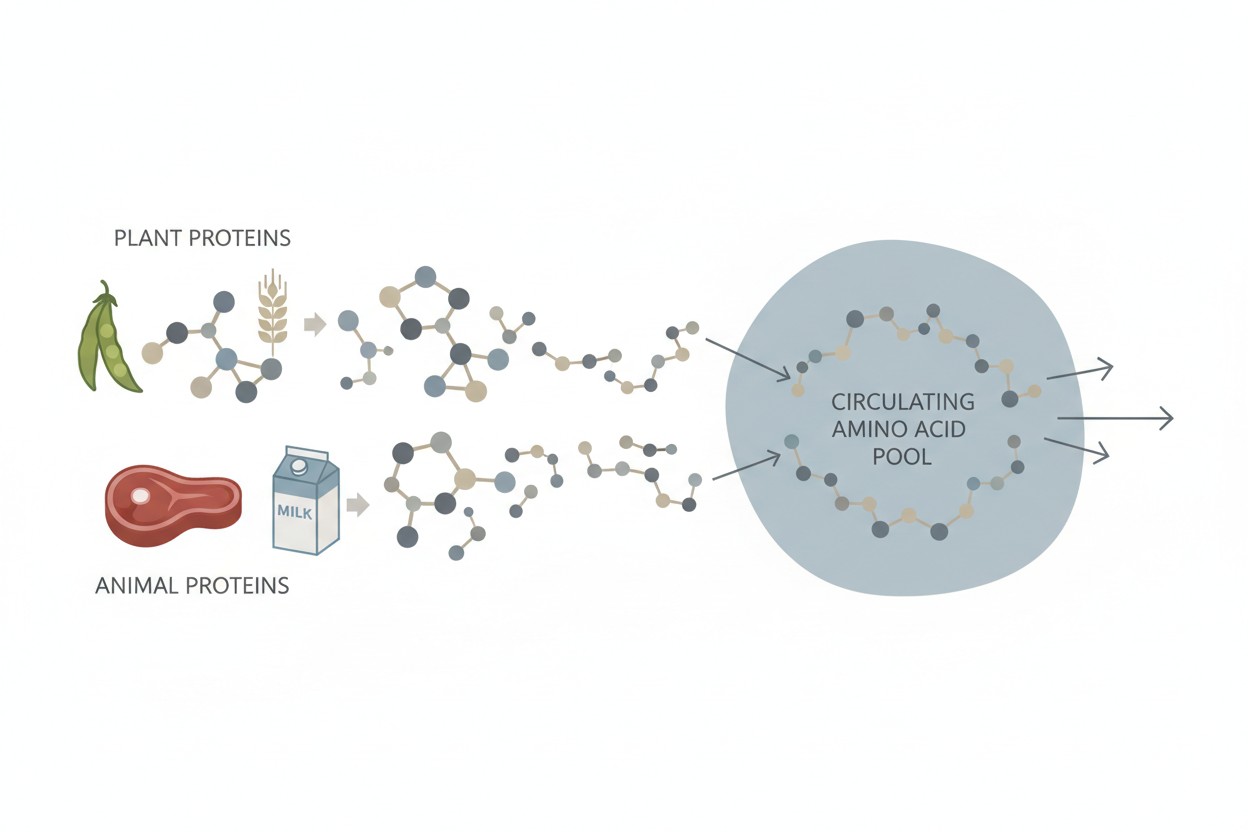
After absorption, amino acids become part of the circulating amino acid pool.
This pool travels through the bloodstream and supplies tissues throughout the body. Amino acids remain in circulation until they are taken up by cells through transport mechanisms.
Circulation provides access. Transport enables entry.
Transport Systems at the Cellular Level
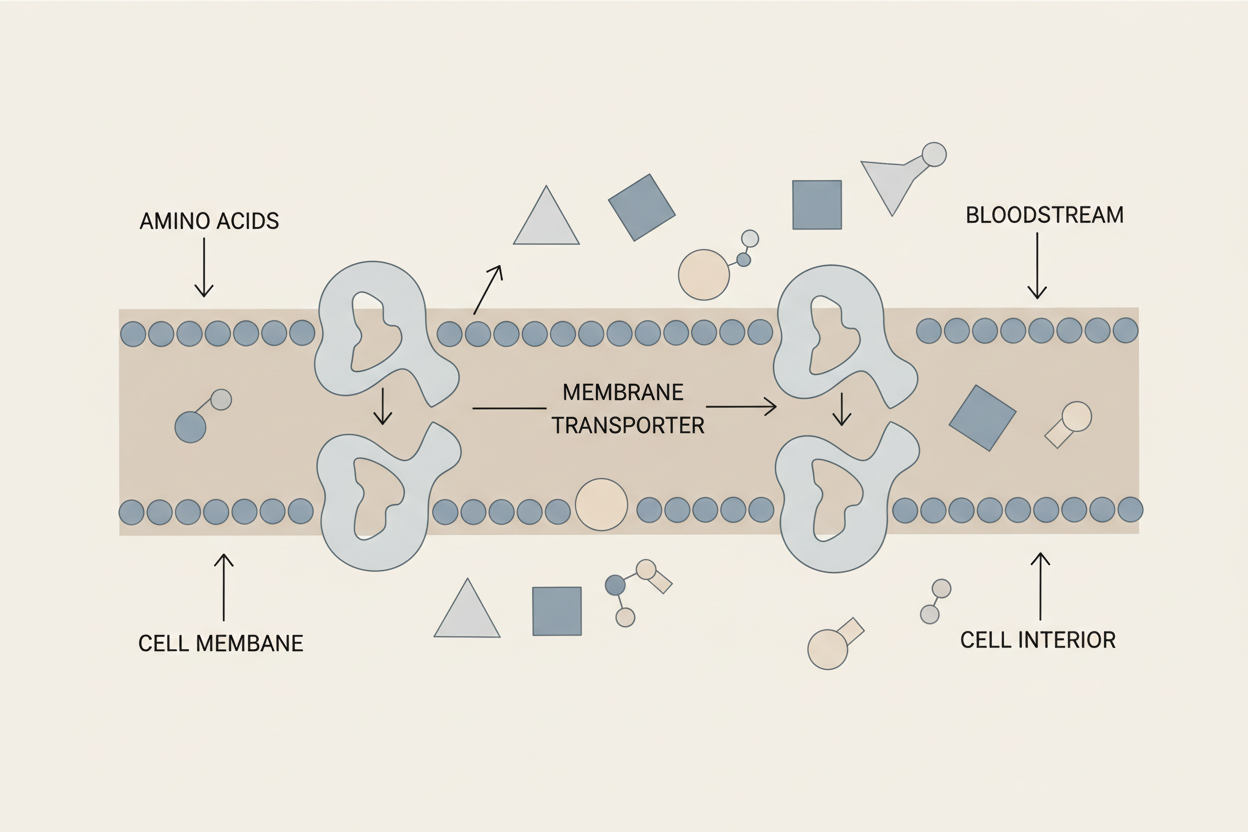
Cells use specialized transport systems to take in amino acids.
These systems are embedded in cell membranes and recognize specific amino acids or groups of amino acids. Transport allows amino acids to cross the cell membrane and enter the internal cellular environment.
This movement is controlled and selective rather than passive.
Amino Acids and Transport Coordination
Nutrient transport is coordinated across systems.
Amino acids must be absorbed before they can be transported, and transport must occur before amino acids can be used to build proteins. Each step depends on the one before it.
Transport does not determine how amino acids are used. It enables access so normal cellular processes can proceed.
Transport Supports Multiple Nutrients
Amino acids are not the only nutrients that rely on transport systems.
The body uses transport mechanisms to move many types of nutrients, including sugars, minerals, and other compounds. Amino acids follow this same organizational principle as part of broader nutrient handling.
This shared system helps maintain balance and coordination across metabolic pathways.
How This Fits Into Protein Fundamentals
Protein Fundamentals explains how protein moves from food into functional components inside the body.
Amino acids and nutrient transport represent the step that connects circulation with cellular use. This topic helps complete the pathway from digestion to absorption to availability and finally to protein construction inside cells.
The explanation remains focused on biological process rather than outcomes.
Part of the Nutrition Foundations Series
This article is part of our Nutrition Foundations series, where we explain how different macronutrients are digested and used by the body.
👉 Visit the Nutrition Foundations hub to explore more articles in this series.
Related Articles in This Series
About Earth Fuel
Earth Fuel is built around one principle: simple protein. Nothing extra. We focus on clear formulation, ingredient transparency, and structural integrity across every stage of the protein lifecycle. Learn more about our approach and formulation philosophy on the
Earth Fuel homepage
Frequently Asked Questions
Q: Do amino acids move freely into cells
A: No. Amino acids require transport systems to cross cell membranes.
Q: Is nutrient transport the same as circulation
A: No. Circulation moves nutrients through the bloodstream. Transport moves them into cells.
Q: Are transport systems specific to amino acids
A: No. Transport systems handle many types of nutrients, including amino acids.
Q: Does transport determine how amino acids are used
A: No. Transport enables access, while cellular regulation determines use.
Q: Is nutrient transport constant
A: Transport occurs continuously as part of normal cellular activity.
Q: Does this article describe transport efficiency
A: No. It explains the transport process rather than comparing efficiency.

Written by Earth Fuel