Amino Acids in Plant and Animal Proteins
Proteins from both plant and animal sources are made from amino acids. While these sources differ in origin and composition, the body ultimately breaks all dietary protein down into amino acids and uses those amino acids through the same biological systems.
This article explains how amino acids appear in plant and animal proteins using clear, foundational language. The focus is on composition and structure rather than outcomes, performance, or recommendations.
All Dietary Proteins Are Made From Amino Acids
Regardless of source, protein is built from amino acids.
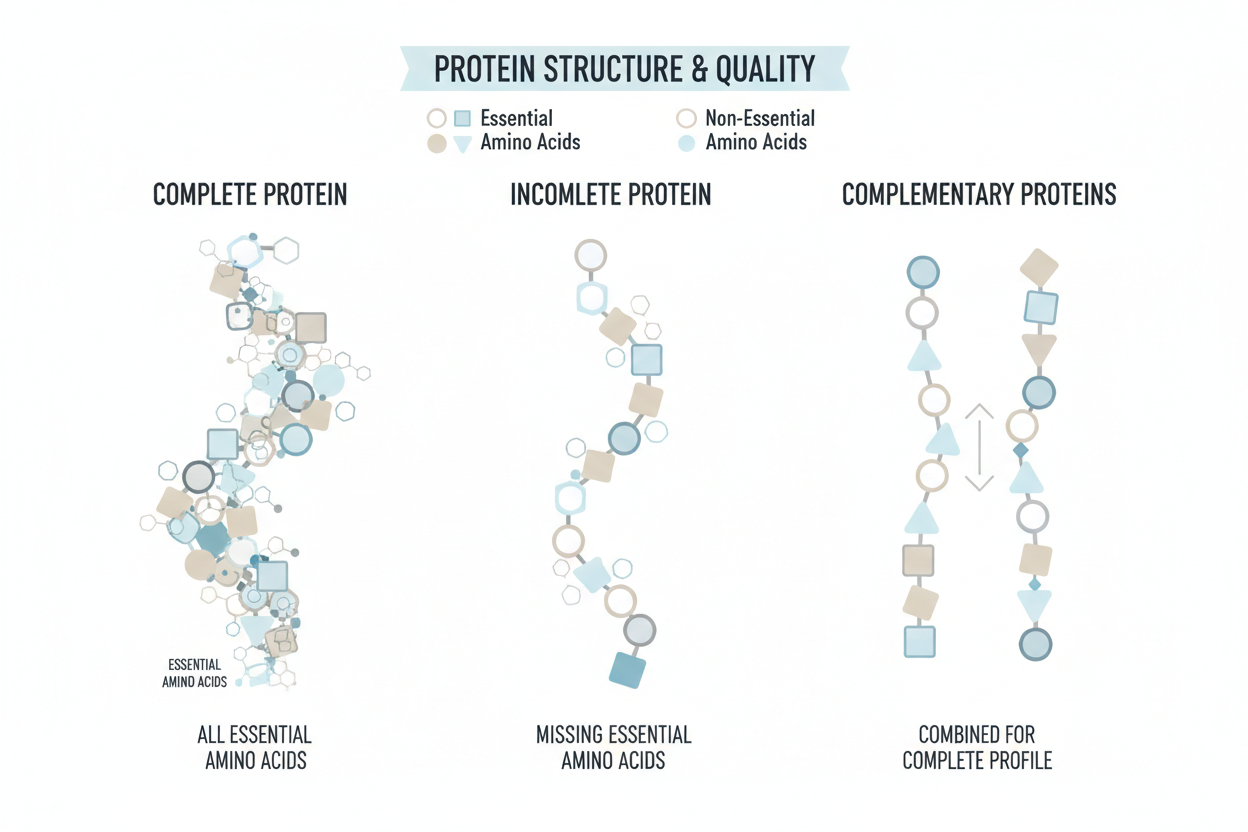
Plant proteins and animal proteins are both composed of amino acid chains arranged in specific sequences. These sequences determine the structure of the protein before digestion.
Once eaten, the body does not use proteins as whole molecules. It breaks them down into amino acids.
Differences in Amino Acid Composition
Plant and animal proteins differ in their amino acid profiles.
This means the relative amounts and combinations of amino acids can vary between sources. Some proteins contain higher proportions of certain amino acids, while others contain different distributions.
These differences reflect how the proteins are built in plants versus animals, not how the body ultimately handles amino acids after digestion.
Digestion Removes Source Identity
During digestion, the source of protein is effectively removed.
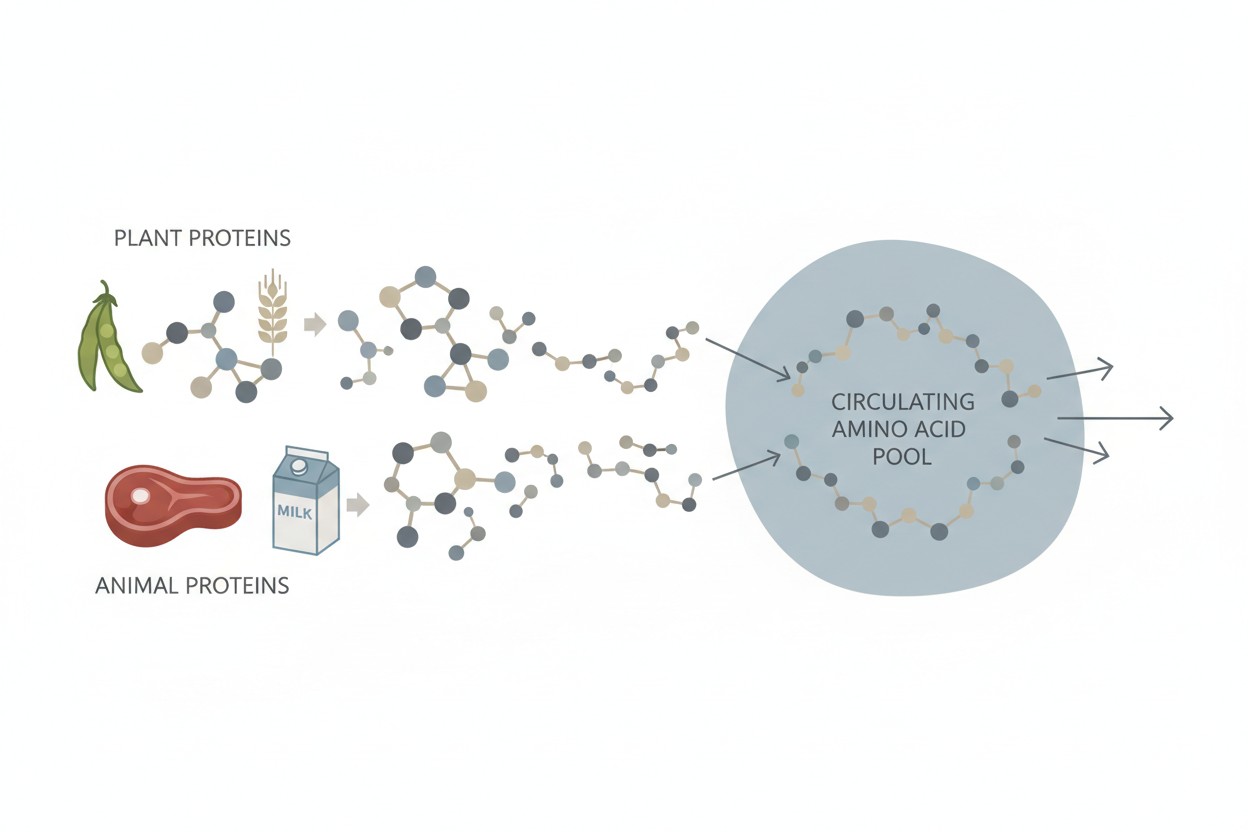
Protein from plants and animals is broken down into amino acids and small peptide units. After absorption, amino acids enter the circulating amino acid pool without carrying information about their original source.
From this point forward, amino acids from plant and animal proteins are handled the same way by the body.
Amino Acid Availability After Digestion
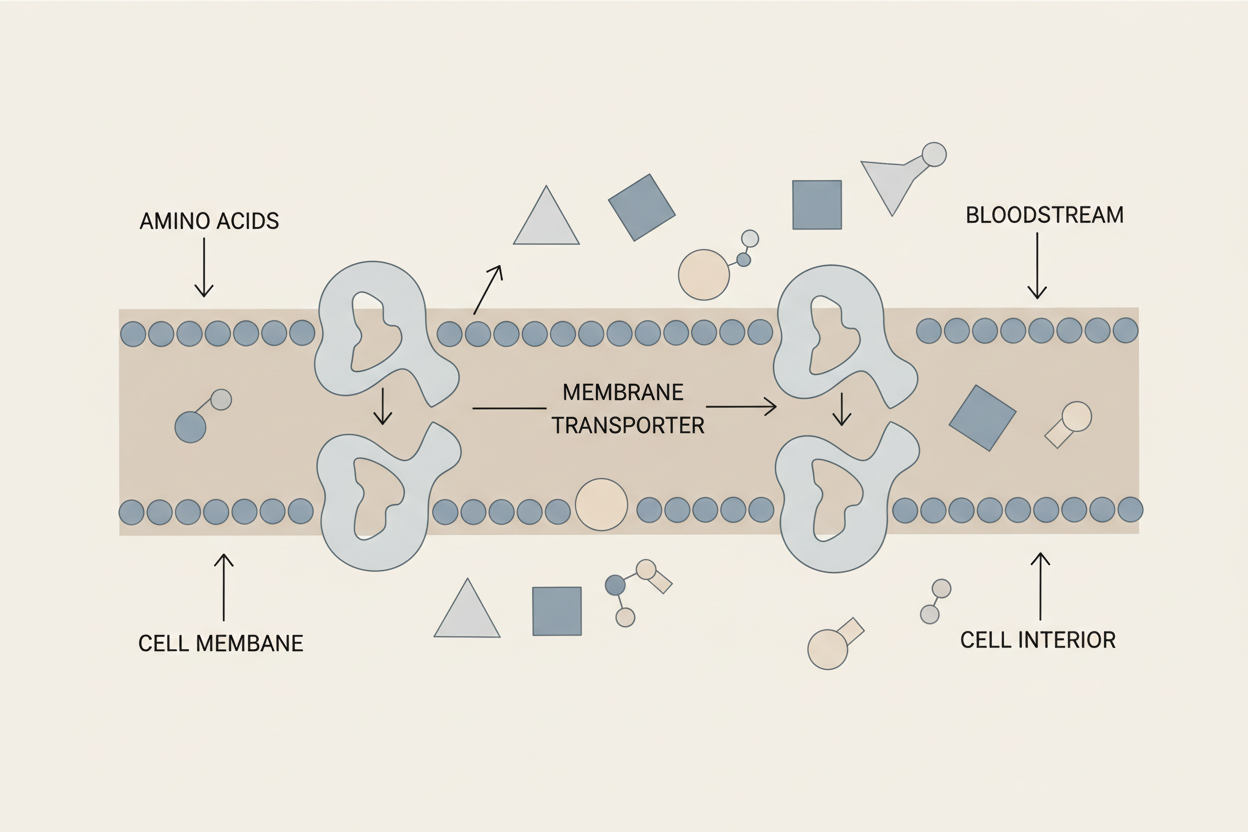
Once absorbed, amino acids from all protein sources become available through the same transport and circulation systems.
Cells draw from the shared amino acid pool based on normal biological priorities. Amino acids are assembled into proteins according to genetic instructions, not dietary origin.
This shared handling underscores why protein fundamentals focus on amino acids rather than protein sources alone.
Composition Influences Discussion, Not Function
Differences in amino acid composition are often discussed in nutrition education.
These discussions help explain why protein sources are compared and categorized. However, composition differences do not change the basic biological role of amino acids once they are absorbed and circulating.
Function depends on cellular regulation and protein construction, not source label.
How This Fits Into Protein Fundamentals
Protein Fundamentals explains how protein moves from food into functional components inside the body.
Understanding amino acids in plant and animal proteins adds context to discussions of digestion, absorption, availability, and protein construction. It keeps the focus on how amino acids are handled biologically rather than how foods are classified.
The explanation remains grounded in structure and process.
Part of the Nutrition Foundations Series
This article is part of our Nutrition Foundations series, where we explain how different macronutrients are digested and used by the body.
👉 Visit the Nutrition Foundations hub to explore more articles in this series.
Related Articles in This Series
About Earth Fuel
Earth Fuel is built around one principle: simple protein. Nothing extra. We focus on clear formulation, ingredient transparency, and structural integrity across every stage of the protein lifecycle. Learn more about our approach and formulation philosophy on the
Earth Fuel homepage
Frequently Asked Questions
Q: Are amino acids different in plant and animal proteins
A: The types and proportions of amino acids can vary, but amino acids themselves are the same molecules.
Q: Does the body treat plant and animal amino acids differently
A: No. After digestion and absorption, amino acids are handled through the same biological systems.
Q: Are plant proteins missing amino acids
A: Different proteins have different amino acid compositions. This article focuses on structure rather than evaluation.
Q: Do amino acids keep their source identity
A: No. Once absorbed, amino acids enter a shared circulating pool.
Q: Is this article comparing protein quality
A: No. It explains amino acid composition and handling without ranking sources.
Q: Does this article recommend protein sources
A: No. It focuses on foundational understanding.

Written by Earth Fuel