Amino Acids and Protein Quality
Protein quality is often discussed at a high level, but at its foundation, protein quality is closely tied to amino acids. Because proteins are built from amino acids, the presence, balance, and availability of those amino acids shape how protein is understood in nutrition education.
This article explains how amino acids relate to protein quality using clear, foundational language. The focus is on composition and biological process rather than outcomes, performance, or recommendations.
Protein Quality Starts With Amino Acids
Protein quality begins at the amino acid level.
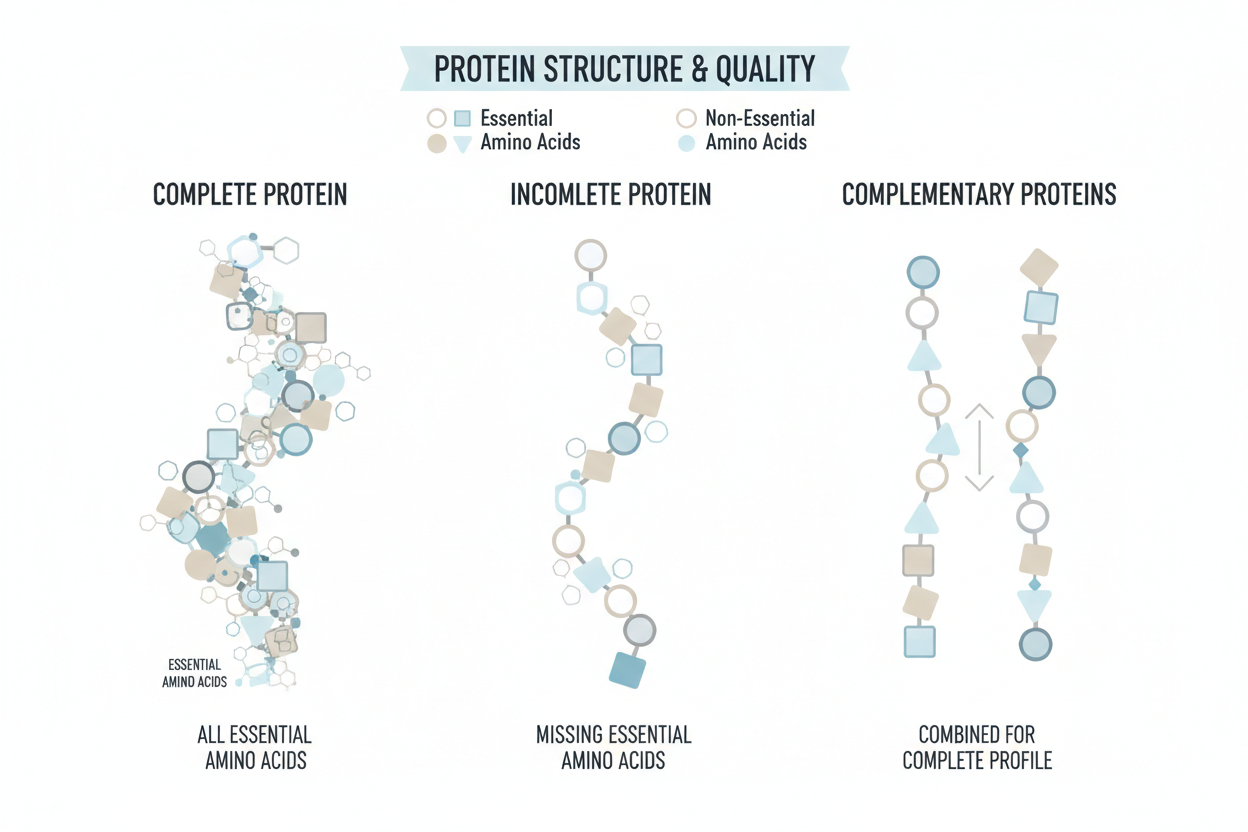
Every protein is made from a specific combination of amino acids arranged in a defined sequence. This composition determines the structure of the protein before digestion and influences how it is broken down into amino acids during digestion.
Protein quality discussions are therefore rooted in amino acid composition rather than protein quantity alone.
Amino Acid Composition and Protein Structure
Different proteins contain different amino acid profiles.
Some proteins provide a broader range of amino acids, while others emphasize certain amino acids more than others. These differences shape how proteins are categorized and compared in nutrition education.
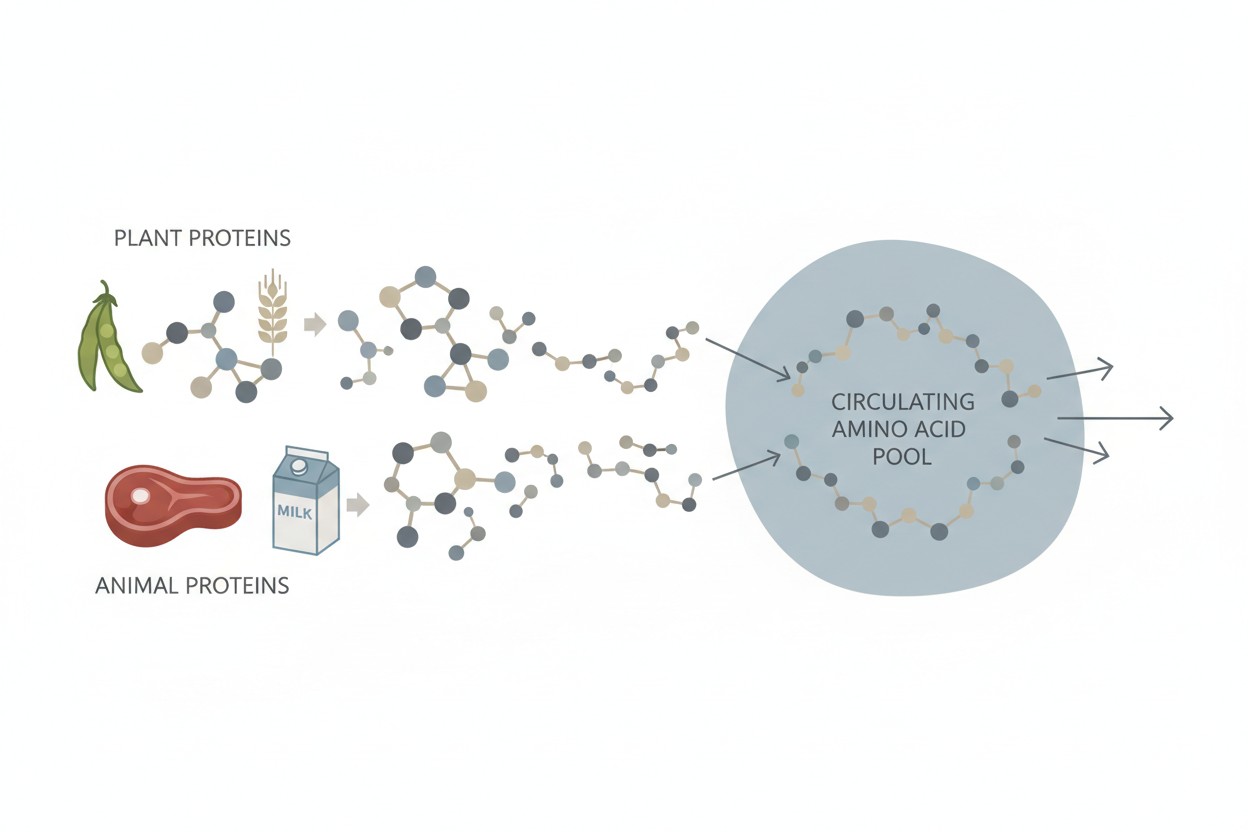
Once digested, proteins release amino acids into circulation, but the original composition helps explain how those amino acids become available together.
Availability Matters Alongside Composition
Protein quality is not determined by composition alone.
Amino acids must be digested, absorbed, and transported into circulation before they can be used. Availability connects protein digestion and absorption with the concept of quality by explaining whether amino acids become accessible to the body.
This reinforces why protein quality is discussed as part of a larger system rather than a single metric.
Protein Quality Is a Descriptive Concept
Protein quality describes characteristics of protein sources.
It is used to explain differences in amino acid profiles, digestibility, and availability without assigning outcomes or rankings. From a foundational perspective, protein quality helps organize information about proteins rather than predict results.
This descriptive framing keeps protein fundamentals focused on understanding rather than evaluation.
Amino Acids and Shared Biological Use
Once absorbed, amino acids from all protein sources enter the same circulating pool.
Cells use amino acids based on normal biological priorities rather than source labels. This shared use underscores why protein quality discussions stop at composition and availability rather than extending into function.
Protein quality explains what is provided, not how the body decides to use it.
How This Fits Into Protein Fundamentals
Protein Fundamentals explains how protein moves from food into functional components inside the body.
Amino acids and protein quality help connect digestion, absorption, availability, and composition into a coherent framework. This topic supports broader understanding of protein without shifting into guidance or outcomes.
The explanation remains grounded in structure and process.
Part of the Nutrition Foundations Series
This article is part of our Nutrition Foundations series, where we explain how different macronutrients are digested and used by the body.
👉 Visit the Nutrition Foundations hub to explore more articles in this series.
Related Articles in This Series
About Earth Fuel
Earth Fuel is built around one principle: simple protein. Nothing extra. We focus on clear formulation, ingredient transparency, and structural integrity across every stage of the protein lifecycle. Learn more about our approach and formulation philosophy on the
Earth Fuel homepage
Frequently Asked Questions
Q: Is protein quality the same as protein amount
A: No. Protein quality refers to amino acid composition and availability, not quantity.
Q: Does protein quality determine how protein is used
A: No. Protein quality describes characteristics of protein sources, while use is regulated at the cellular level.
Q: Are amino acids the reason proteins differ in quality
A: Yes. Differences in amino acid composition are central to protein quality discussions.
Q: Does digestion affect protein quality
A: Digestion influences amino acid availability, which is part of how protein quality is described.
Q: Is protein quality a ranking system
A: No. It is a descriptive concept used to explain differences between proteins.
Q: Does this article recommend high quality proteins
A: No. It explains how protein quality is defined at a foundational level.

Written by Earth Fuel