Amino Acids and Protein Digestion
Protein digestion is the process that breaks dietary protein down into amino acids so they can be absorbed and used by the body. Amino acids are not present in usable form until this digestion process occurs, which makes protein digestion a critical step in protein fundamentals.
Protein digestion leads to amino acid absorption and use. This article explains how amino acids move through the body:
https://getearthfuel.com/blogs/learn/amino-acids-and-nutrient-transport
This article explains how amino acids relate to protein digestion using clear, foundational language. The focus is on biological process and sequence rather than outcomes, performance, or recommendations.
Protein Digestion Prepares Amino Acids for Use
Protein digestion exists to release amino acids.
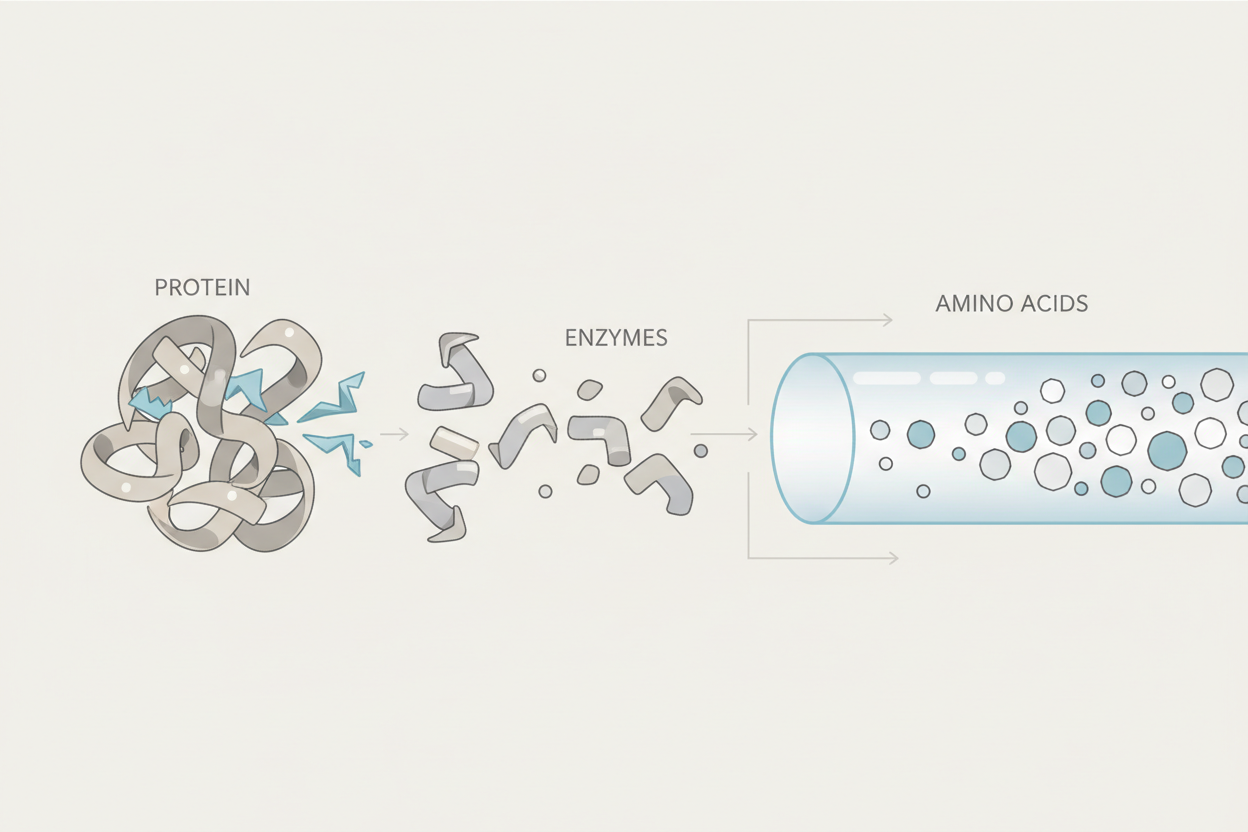
Dietary protein enters the digestive system as large, complex molecules. Through digestion, these molecules are progressively broken down into smaller units, including individual amino acids and short peptide chains.
Only after this breakdown can amino acids move toward absorption and circulation.
Digestion Begins Before Absorption
Amino acids are not absorbed immediately after protein is eaten.
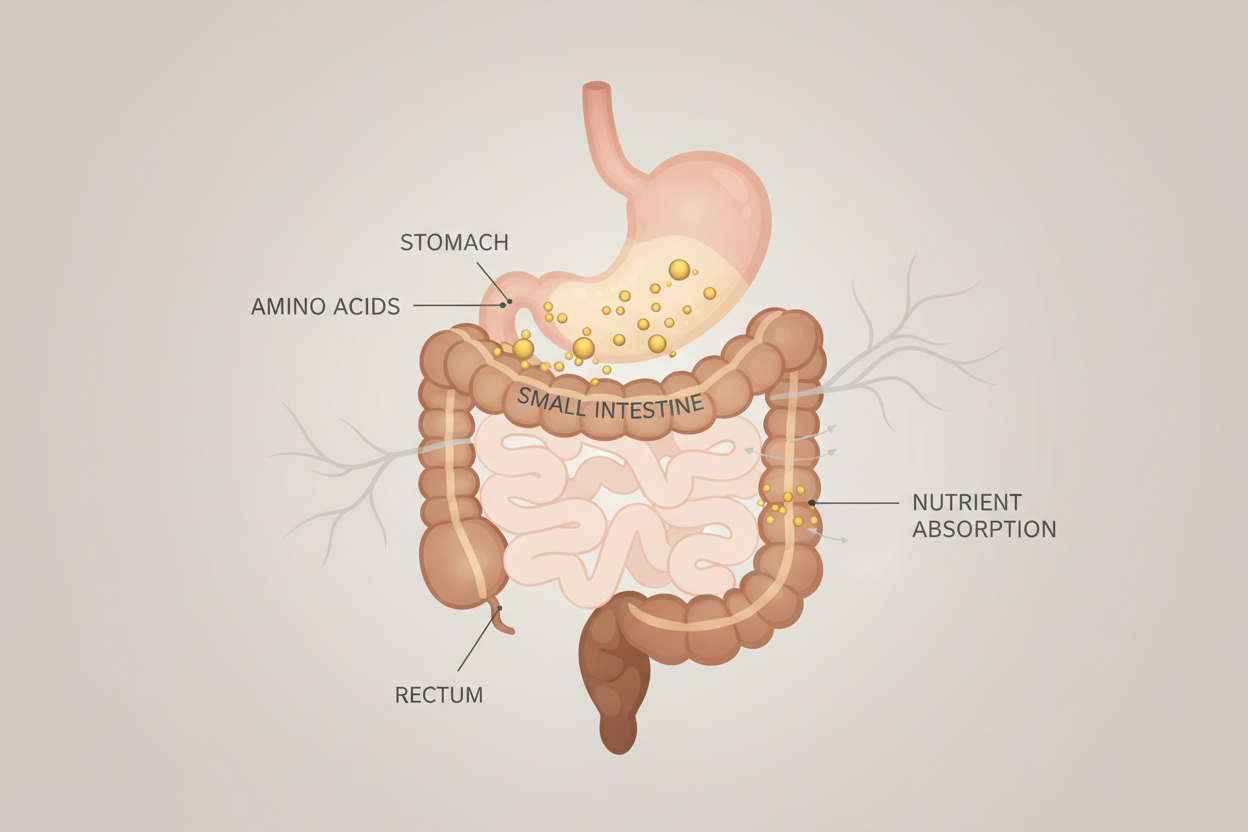
Protein digestion begins in the stomach, where protein structures are altered and partially broken down. Digestion then continues in the small intestine, where proteins are further reduced into absorbable forms.
This step by step breakdown is necessary to make amino acids accessible.
Amino Acids and Peptides During Digestion
During protein digestion, amino acids appear alongside small peptide units.
Some amino acids are released as individual molecules, while others remain temporarily linked in short chains. Both forms are part of normal digestion and contribute to amino acid availability after absorption.
You can also explore how protein is used after digestion:
https://getearthfuel.com/blogs/learn/protein-metabolism-explained-simply
This dual pathway allows protein digestion to handle different protein structures efficiently.
Digestion Determines What Reaches Absorption
Protein digestion influences which amino acids are available for absorption.
If proteins are not broken down into appropriate forms, absorption cannot proceed. Digestion therefore sets the stage for amino acid transport across the intestinal lining.
In this way, digestion and absorption are closely connected but still distinct steps.
Protein Digestion Is a Regulated Process
Protein digestion follows regulated biological patterns.
Digestive enzymes, stomach activity, and intestinal processes work together to break proteins down in an organized sequence. Amino acids appear gradually as digestion progresses rather than all at once.
This regulation supports steady movement from digestion to absorption.
How This Fits Into Protein Fundamentals
Protein Fundamentals explains how protein moves from food into functional components inside the body.
Amino acids and protein digestion represent the transition from dietary intake to biological availability. This topic connects digestion mechanics with later discussions about absorption, availability, and protein use inside cells.
The explanation remains focused on process rather than outcomes.
Part of the Nutrition Foundations Series
This article is part of our Nutrition Foundations series, where we explain how different macronutrients are digested and used by the body.
👉 Visit the Nutrition Foundations hub to explore more articles in this series.
Related Articles in This Series
About Earth Fuel
Earth Fuel is built around one principle: simple protein. Nothing extra. We focus on clear formulation, ingredient transparency, and structural integrity across every stage of the protein lifecycle. Learn more about our approach and formulation philosophy on the
Earth Fuel homepage
Frequently Asked Questions
Q: Are amino acids present before digestion begins
A: No. Amino acids must be released from protein through digestion before they can be absorbed.
Q: Does protein digestion happen in one place
A: No. Protein digestion occurs across multiple stages in the digestive tract.
Q: Are all amino acids released at the same time
A: No. Amino acids appear gradually as digestion progresses.
Q: Is protein digestion the same as protein absorption
A: No. Digestion breaks protein down, while absorption moves amino acids into circulation.
Q: Does protein digestion determine how amino acids are used
A: Digestion affects availability, while use depends on cellular regulation.
Q: Does this article explain digestion efficiency
A: No. It explains the digestion process rather than comparative efficiency.

Written by Earth Fuel