What Amino Acids Do Inside the Body
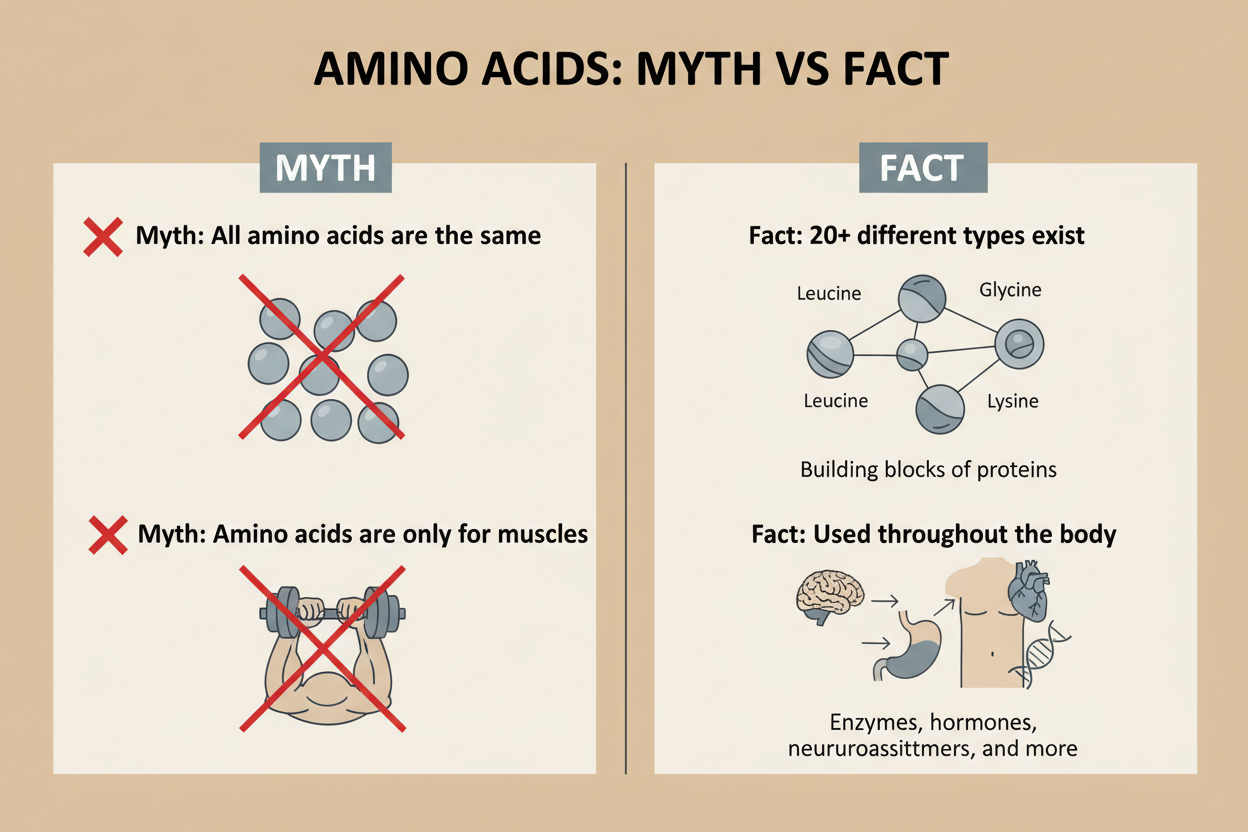
Amino acids are the components the body uses to build and maintain proteins. Once protein is digested and absorbed, amino acids become available to cells and are used as part of normal biological structure and activity.
This article explains what amino acids do inside the body in clear, foundational terms. The focus is on biological roles and processes, not outcomes, performance, or recommendations.
Amino Acids as Protein Building Materials
Inside the body, amino acids serve primarily as building materials.
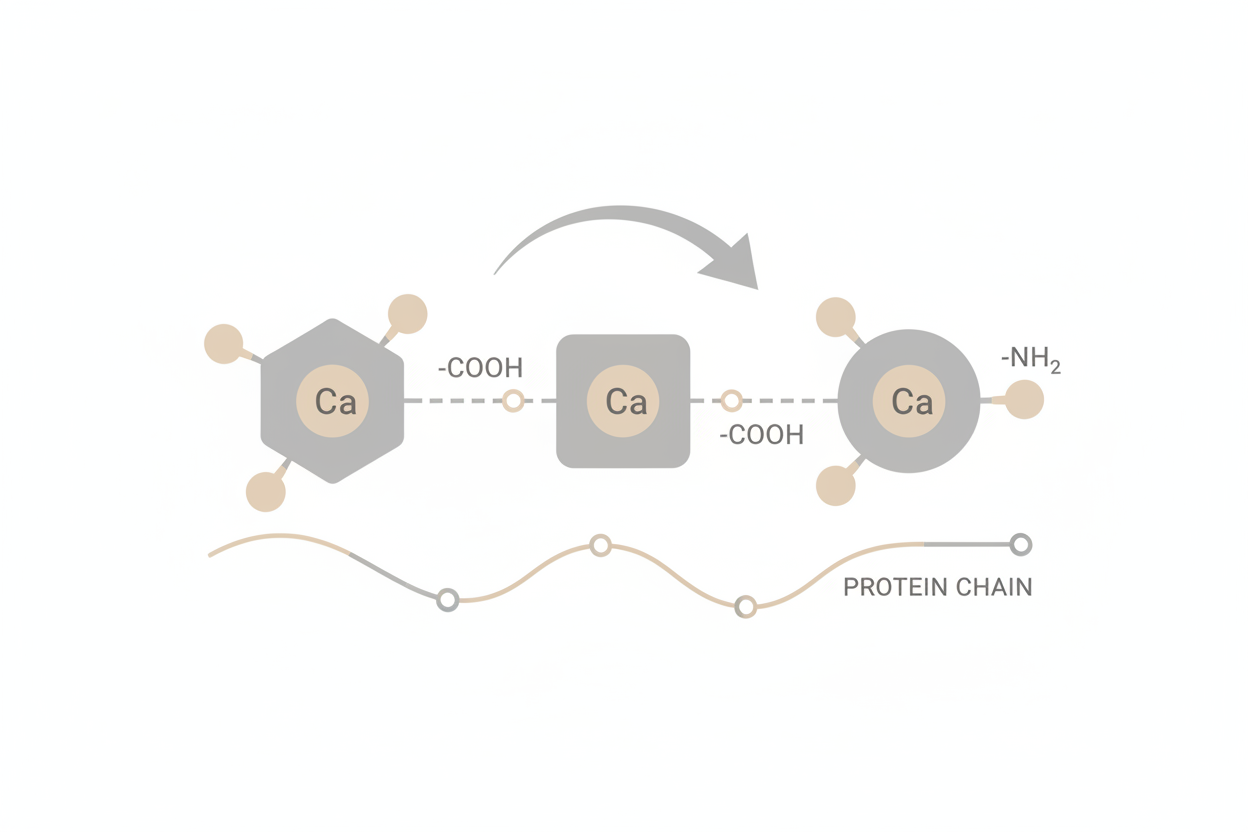
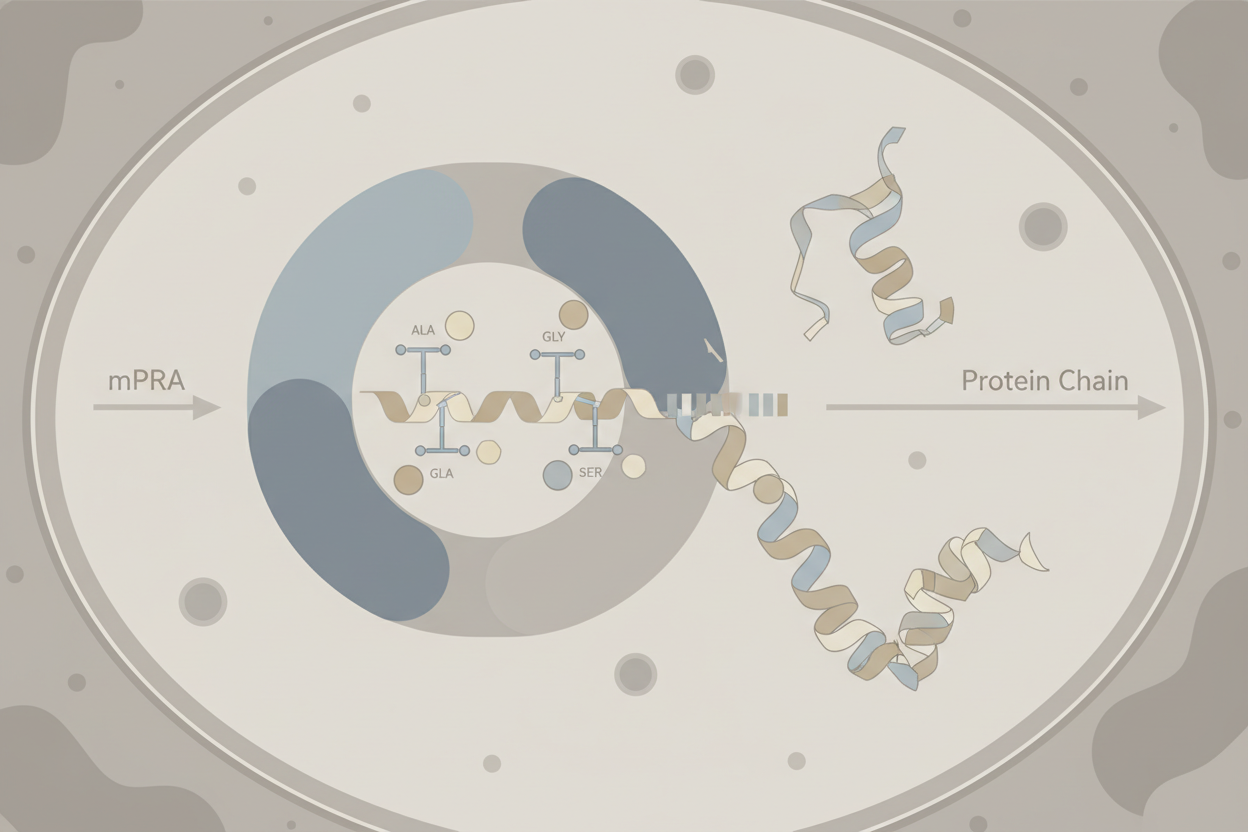
Cells assemble amino acids into proteins according to genetic instructions. Each protein has a specific structure and role, determined by the sequence of amino acids used to form it.
This construction process occurs continuously as proteins are created, maintained, and replaced over time.
Amino Acids and Structural Organization
Many proteins formed from amino acids contribute to physical structure.
These proteins help maintain the organization of cells and tissues by supporting internal frameworks and connections. Structural proteins are present throughout the body and are part of normal cellular integrity.
Amino acids are required for the ongoing maintenance of these structures.
Amino Acids in Enzymatic Processes
Some amino acids are assembled into enzymes.
Enzymes are proteins that facilitate chemical reactions involved in normal metabolism and cellular activity. While enzymes do not change permanently during these reactions, their structure depends on specific amino acid sequences.
Amino acids therefore play an indirect role in enabling routine biochemical processes.
Amino Acids and Transport Functions
Certain proteins built from amino acids function as transporters.
These proteins help move substances within cells or across cellular boundaries. Transport proteins are part of standard cellular operation and rely on precise amino acid arrangements to function properly.
Amino acids support the creation and maintenance of these transport systems.
Amino Acids and Ongoing Cellular Maintenance
Cells regularly replace older proteins with newly formed ones.
As proteins are broken down and rebuilt, amino acids are reused as part of this normal renewal process. This ongoing cycle allows cells to maintain organization and adapt to routine changes without storing large reserves of protein.
Amino acids are central to this continuous maintenance.
How This Fits Into Protein Fundamentals
Understanding what amino acids do inside the body helps connect digestion, absorption, availability, and protein metabolism.
Protein Fundamentals focuses on how protein moves from food into functional components within cells. Amino acids are the link between dietary protein and the proteins that carry out everyday biological roles.
This perspective keeps the discussion grounded in process rather than outcomes.
Part of the Nutrition Foundations Series
This article is part of our Nutrition Foundations series, where we explain how different macronutrients are digested and used by the body.
👉 Visit the Nutrition Foundations hub to explore more articles in this series.
Related Articles in This Series
About Earth Fuel
Earth Fuel is built around one principle: simple protein. Nothing extra. We focus on clear formulation, ingredient transparency, and structural integrity across every stage of the protein lifecycle. Learn more about our approach and formulation philosophy on the
Earth Fuel homepage
Frequently Asked Questions
Q: Do amino acids only become proteins
A: Amino acids are primarily used to build proteins, which then carry out structural and functional roles inside cells.
Q: Are amino acids stored in the body
A: Amino acids circulate and are reused, but they are not stored in large dedicated reserves.
Q: Do all cells use amino acids the same way
A: All cells use amino acids to build proteins, but the specific proteins vary by cell type.
Q: Are amino acids active on their own
A: Amino acids function mainly as components of proteins rather than acting independently.
Q: Is this article describing health effects
A: No. It explains biological roles without discussing outcomes or effects.
Q: Do amino acids come directly from food
A: Dietary protein is digested into amino acids, which the body then uses.

Written by Earth Fuel