Amino Acids Explained Without Technical Language
Amino acids are often described using complex terms that make them feel difficult to understand. At their core, however, amino acids are simple components that the body uses every day to build and maintain proteins.
This article explains amino acids using plain language. The goal is to clarify what they are and how they fit into normal biology without technical jargon, numbers, or claims.
Amino Acids Are Protein Parts
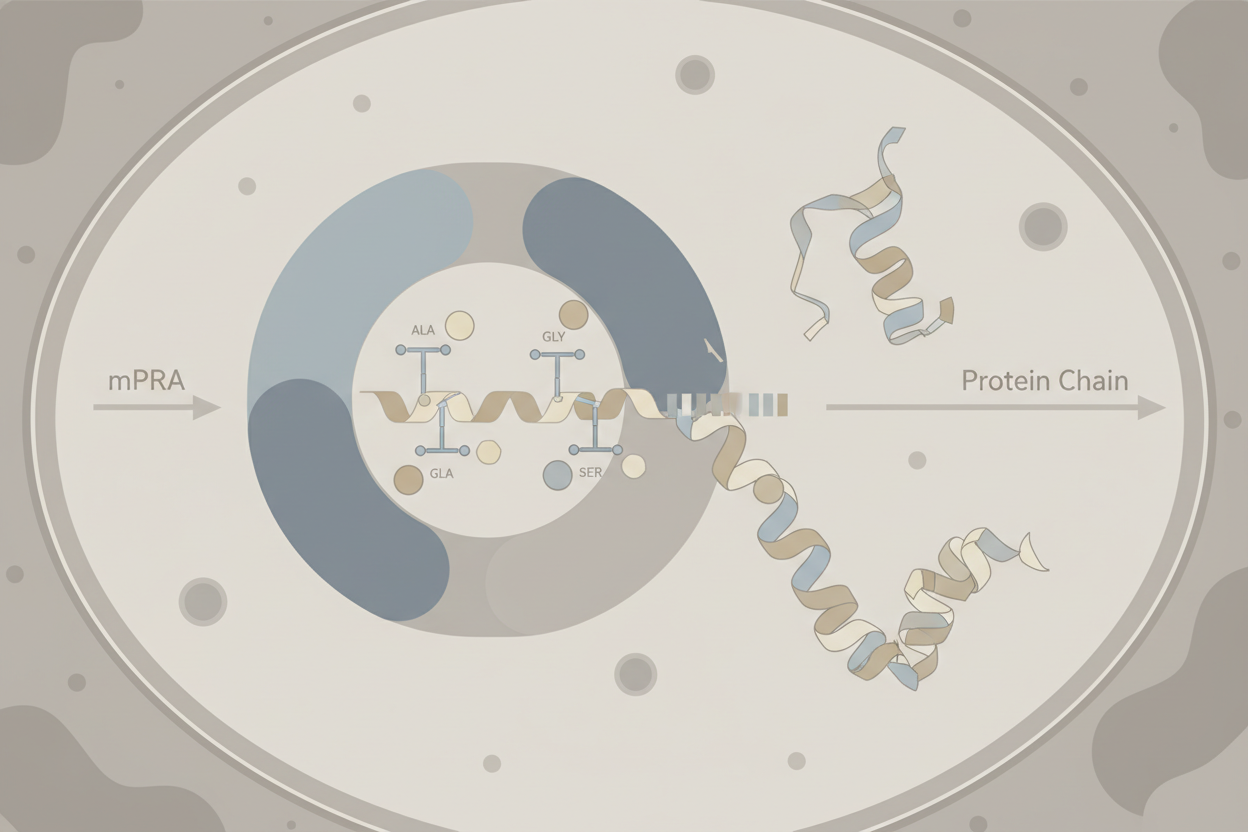
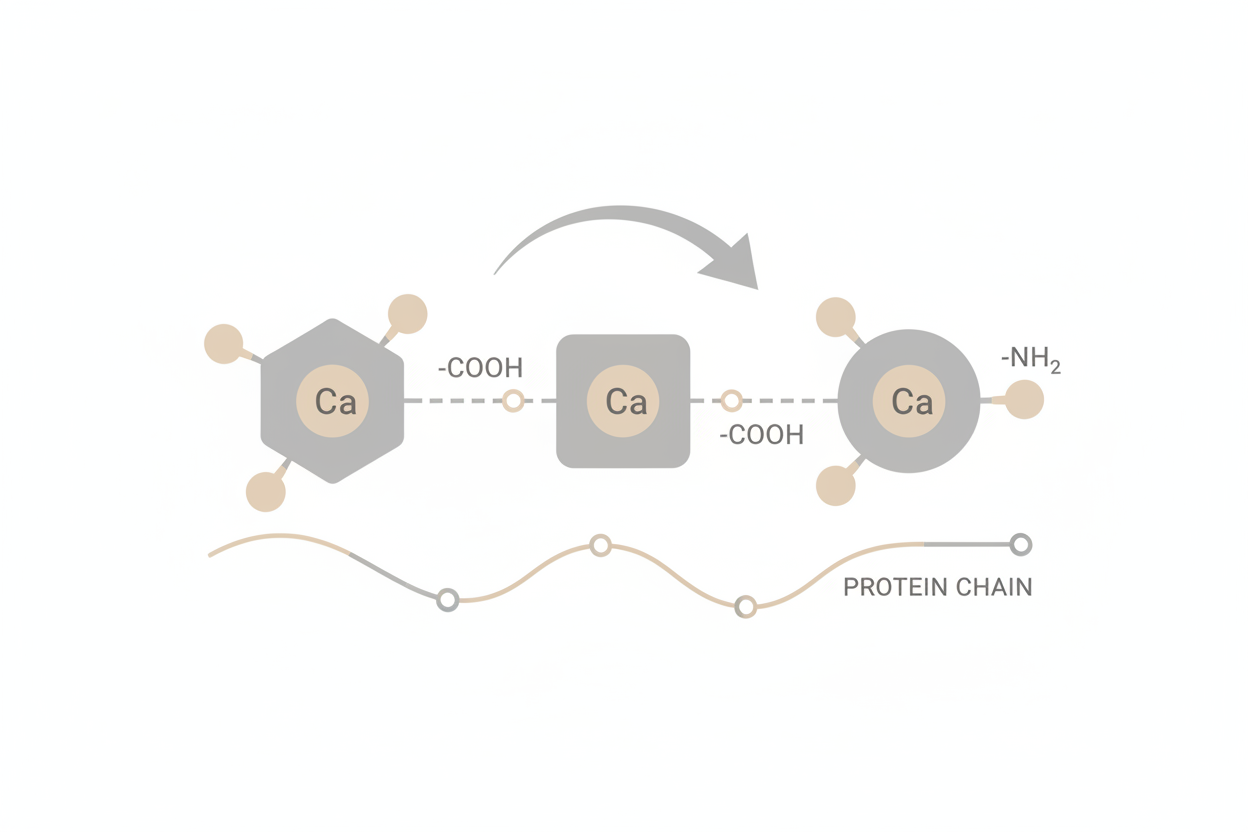
Proteins are made by linking amino acids together.
You can think of amino acids as individual pieces that connect to form longer chains. Each chain folds into a specific shape, and that shape determines what the protein does inside the body.
When people talk about protein, they are really talking about how amino acids are combined and used.
Where Amino Acids Come From
Amino acids come from dietary protein.
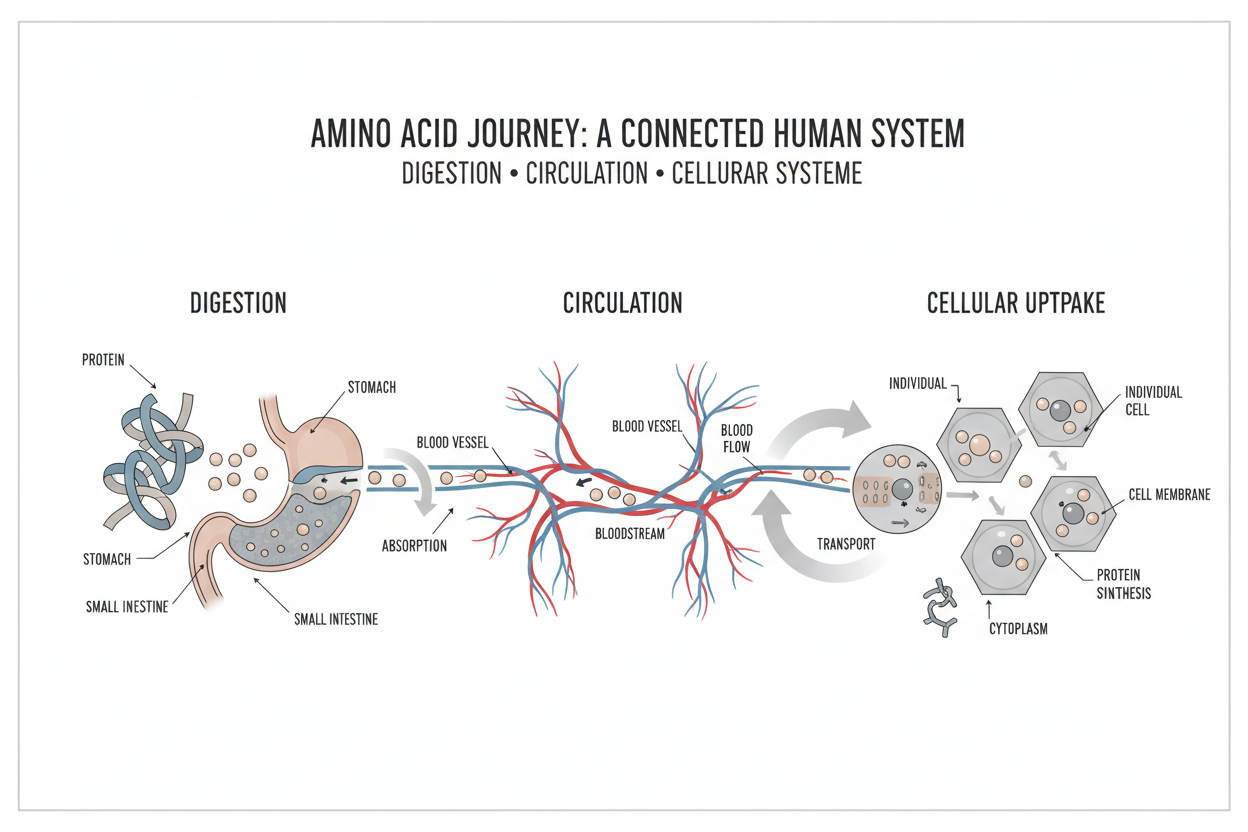
When protein is eaten, the digestive system breaks it down into amino acids. These amino acids are absorbed and enter circulation, where they can be used by cells.
Some amino acids can also be produced by the body using other compounds already present. Others must come from food. Once available, all amino acids are handled the same way by cells.
What Happens After Absorption
After absorption, amino acids move through the bloodstream.
They are not sent to a single location. Instead, they form a shared pool that different tissues draw from as needed. Cells use amino acids to build proteins according to normal biological priorities.
This process happens continuously throughout the day.
Amino Acids Work Together
Amino acids do not work one at a time.
Proteins require specific combinations of amino acids arranged in a precise order. If one piece is missing, the protein structure changes. This is why amino acids are often discussed in terms of balance and composition rather than individually.
Working together is a defining feature of how amino acids function.
Why Simple Language Matters Here
Amino acid biology does not require complicated explanations to be understood.
Using clear language helps connect amino acids to digestion, absorption, and protein use without turning the topic into something abstract or intimidating. This approach supports better understanding of protein fundamentals as a whole.
Part of the Nutrition Foundations Series
This article is part of our Nutrition Foundations series, where we explain how different macronutrients are digested and used by the body.
👉 Visit the Nutrition Foundations hub to explore more articles in this series.
Related Articles in This Series
About Earth Fuel
Earth Fuel is built around one principle: simple protein. Nothing extra. We focus on clear formulation, ingredient transparency, and structural integrity across every stage of the protein lifecycle. Learn more about our approach and formulation philosophy on the
Earth Fuel homepage
Frequently Asked Questions
Q: Are amino acids complicated molecules
A: They are small compounds that become complex only when combined into proteins.
Q: Do amino acids act on their own
A: Amino acids mainly function as parts of proteins rather than acting independently.
Q: Are amino acids only found in supplements
A: No. Amino acids come from all dietary protein sources.
Q: Does the body use all amino acids the same way
A: Once available, amino acids are used according to cellular needs, regardless of origin.
Q: Is this article giving advice on intake
A: No. It explains concepts using plain language.
Q: Why avoid technical terms here
A: Clear language helps explain protein fundamentals without confusion.

Written by Earth Fuel