Understanding Amino Acids From a Systems View
Amino acids are often explained as individual building blocks, but they function within a larger, coordinated system. Looking at amino acids from a systems view helps clarify how digestion, circulation, cellular use, and regulation work together rather than as isolated steps.
This article explains amino acids as part of an integrated biological system, using clear language and focusing on processes rather than outcomes or claims.
Amino Acids Move Through Connected Systems
Amino acids do not operate in isolation.
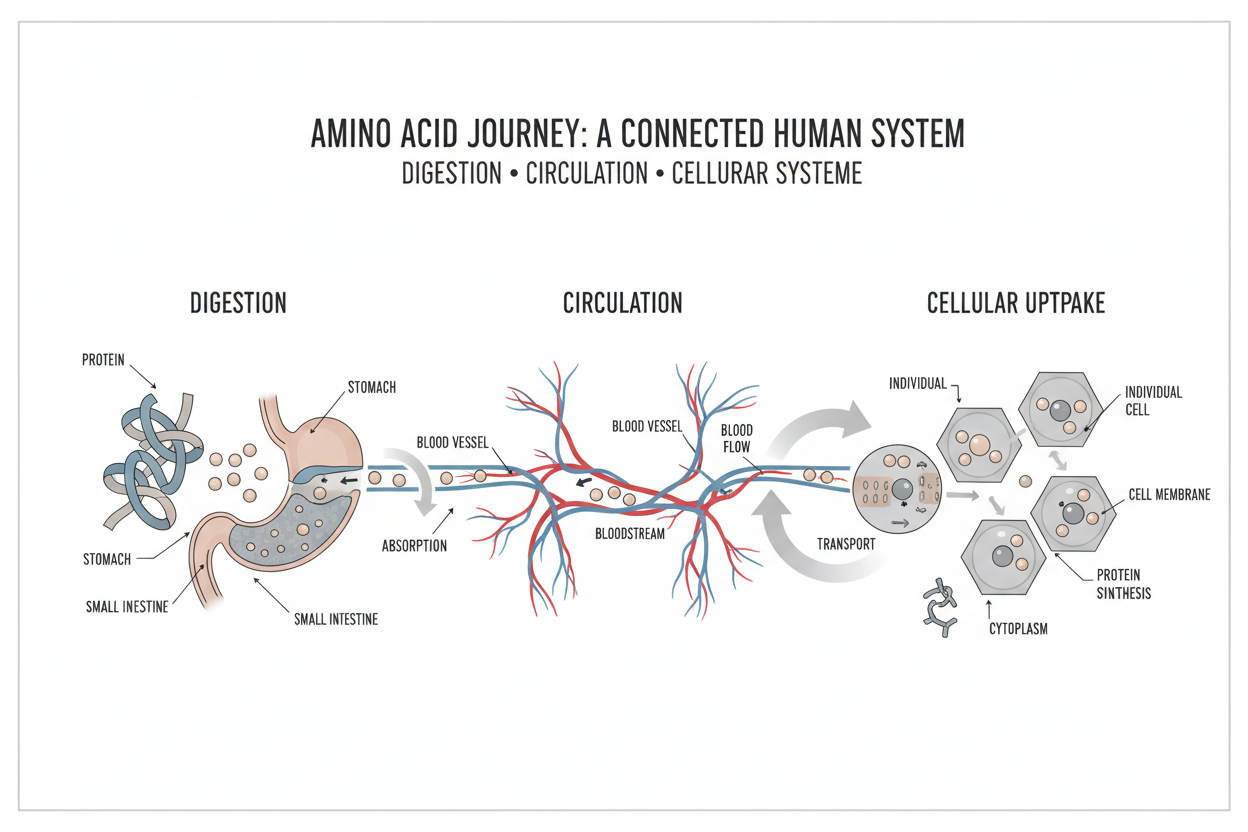
After dietary protein is digested, amino acids are absorbed into circulation and become part of a shared pool. This pool connects digestion, transport, metabolism, and cellular use into one continuous system.
Each step influences the next, creating flow rather than separate actions.
The Circulating Amino Acid Pool
Once absorbed, amino acids enter the bloodstream.
From there, they are available to tissues throughout the body. Cells draw from this circulating pool based on normal biological priorities rather than fixed rules or timing.
This shared access allows the body to allocate amino acids dynamically as part of routine regulation.
Cells Use Amino Acids Based on Structure and Need
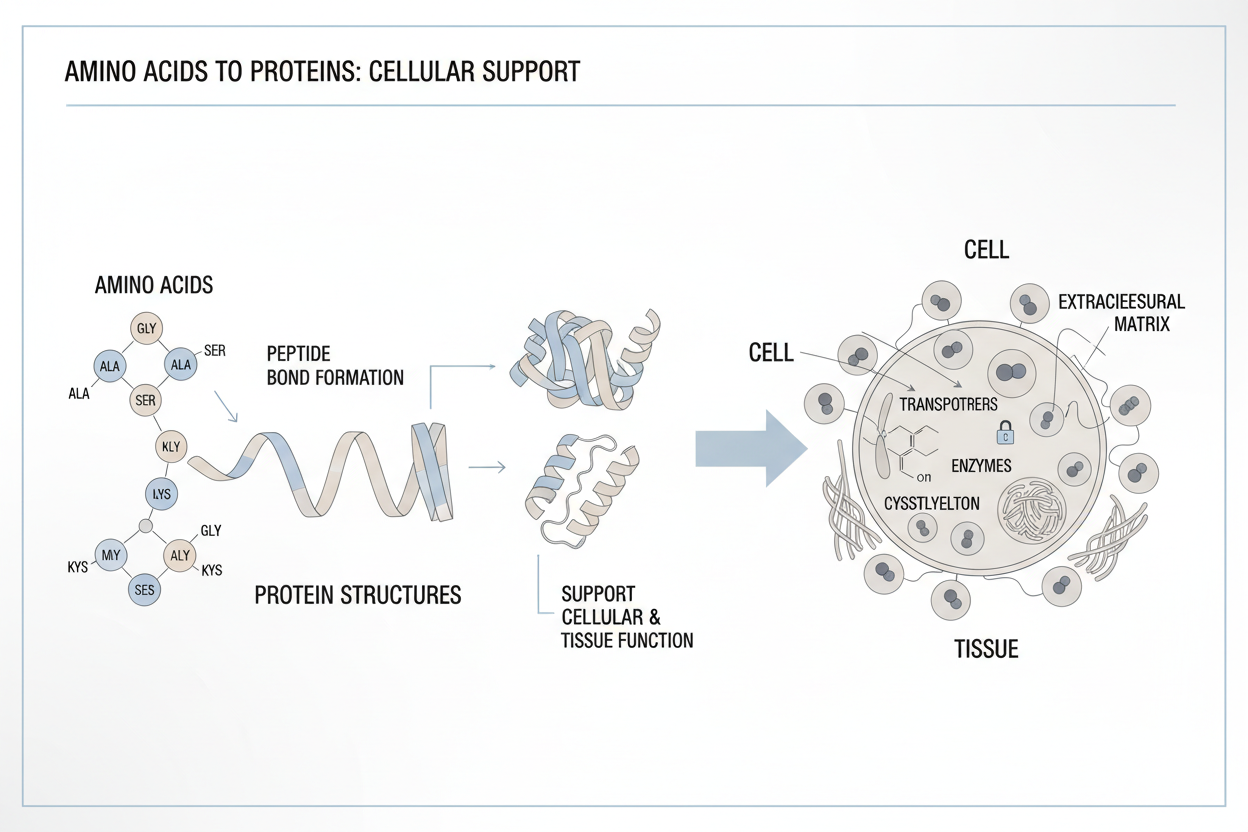
Inside cells, amino acids are assembled into proteins according to genetic instructions.
Different cells require different proteins, but they all rely on the same underlying system of amino acid availability and transport. This means amino acids support many functions simultaneously without being dedicated to a single role.
The system adapts continuously as proteins are built, maintained, and replaced.
Balance and Availability Work Together
A systems view highlights the relationship between availability and balance.
Amino acids must be present and accessible, but they must also be available in compatible proportions for protein construction. These factors work together rather than independently.
Understanding this interaction helps explain why amino acid topics are discussed in layers within protein fundamentals.
Regulation Happens Automatically
Amino acid handling is regulated internally.
Transport, allocation, and use are guided by established biological mechanisms rather than conscious control. This regulation keeps the system stable while allowing flexibility as conditions change throughout the day.
From an educational perspective, this reinforces why amino acid biology is described conceptually rather than numerically.
How This Fits Into Protein Fundamentals
Viewing amino acids as part of a system connects earlier topics such as digestion, absorption, availability, and cellular protein use.
Protein Fundamentals focuses on how protein moves through the body as an integrated process. A systems view helps tie these elements together into a cohesive understanding.
Part of the Nutrition Foundations Series
This article is part of our Nutrition Foundations series, where we explain how different macronutrients are digested and used by the body.
👉 Visit the Nutrition Foundations hub to explore more articles in this series.
Related Articles in This Series
About Earth Fuel
Earth Fuel is built around one principle: simple protein. Nothing extra. We focus on clear formulation, ingredient transparency, and structural integrity across every stage of the protein lifecycle. Learn more about our approach and formulation philosophy on the
Earth Fuel homepage
Frequently Asked Questions
Q: What does a systems view mean
A: It means looking at how amino acids move through and connect multiple biological processes rather than focusing on a single step.
Q: Do amino acids belong to one system only
A: No. They are part of digestion, circulation, metabolism, and cellular systems simultaneously.
Q: Is this the same as metabolism
A: Metabolism is one part of the system. A systems view includes digestion, transport, and cellular use as well.
Q: Does the body control amino acids consciously
A: No. Regulation occurs automatically through biological mechanisms.
Q: Does this article describe outcomes
A: No. It focuses on process and organization.
Q: Why use a systems view
A: It helps explain how amino acids function as part of an integrated whole.

Written by Earth Fuel