How Amino Acids Support Normal Body Function
Amino acids support normal body function by serving as the materials used to build and maintain proteins. Rather than acting as isolated agents, amino acids contribute through the proteins they form and the structures those proteins create within cells and tissues.
This article explains how amino acids support everyday biological function using clear, descriptive language. The focus is on foundational processes, not outcomes, performance, or recommendations.
Amino Acids Support Protein Formation
The primary way amino acids support body function is through protein formation.
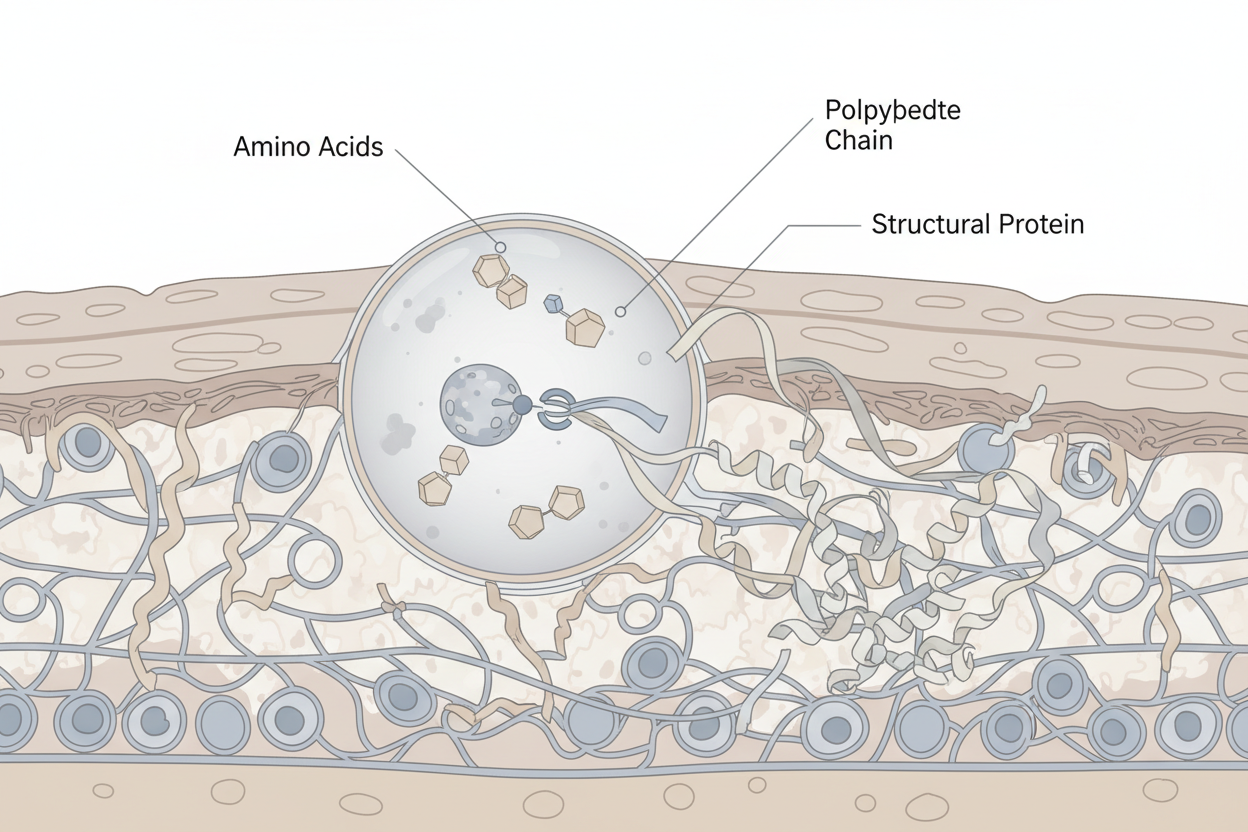
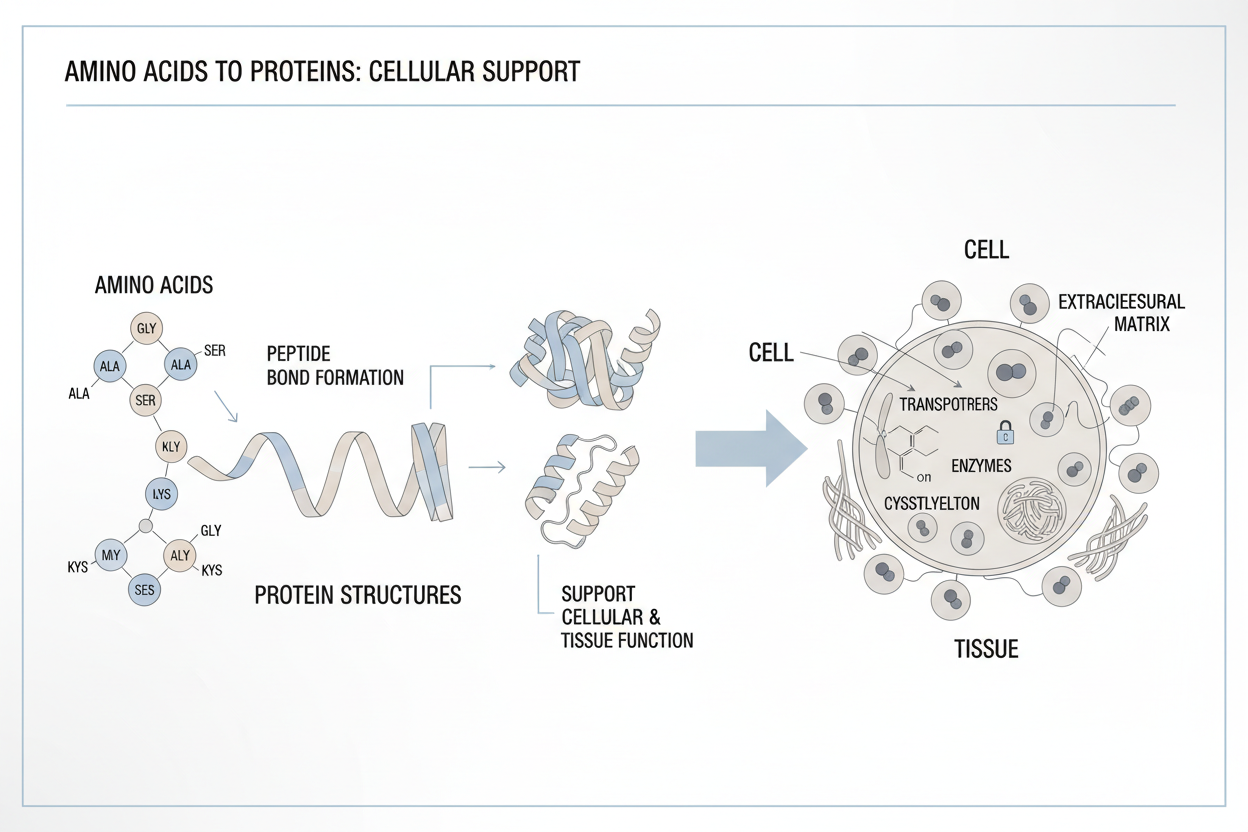
Cells assemble amino acids into proteins according to genetic instructions. These proteins become part of cellular structure, internal organization, and routine cellular activity.
Without a steady supply of amino acids, the body would not be able to build or maintain the proteins required for normal operation.
Structural Support at the Cellular Level
Many proteins formed from amino acids contribute to physical structure.
Inside cells, structural proteins help maintain shape and organization. At the tissue level, proteins provide framework and stability that allow cells to function together.
Amino acids indirectly support this structure by enabling the continuous production and replacement of these proteins.
Amino Acids and Functional Proteins
Some proteins built from amino acids serve functional roles.
These include enzymes, transport proteins, and regulatory proteins that help manage internal cellular processes. While these proteins differ in role, they all rely on specific amino acid sequences to function properly.
Amino acids support function by enabling the creation and maintenance of these protein structures.
Continuous Maintenance and Renewal
Proteins are not permanent.
Over time, proteins are broken down and replaced as part of normal biological maintenance. Amino acids are reused during this cycle to build new proteins that maintain cellular organization.
This ongoing renewal allows the body to support normal function without storing excess protein.
Support Happens Through Systems, Not Single Actions
Amino acids support body function through interconnected systems.
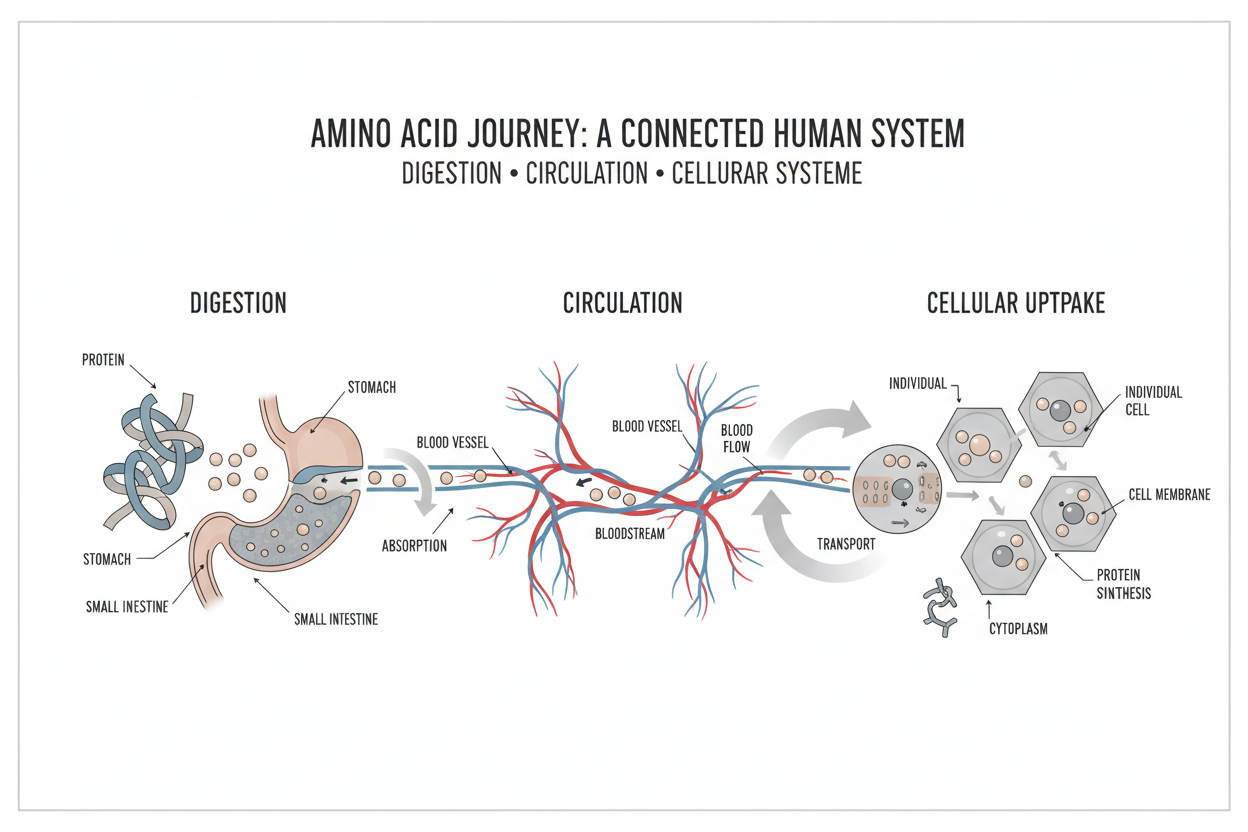
Digestion, absorption, circulation, and cellular use work together to ensure amino acids are available where needed. No single amino acid acts alone or independently of these systems.
This systems based support is central to understanding protein fundamentals.
How This Fits Into Protein Fundamentals
Protein Fundamentals focuses on how protein moves from food into functional components within the body.
Amino acids are the link between dietary protein and the proteins that support normal biological structure and activity. Understanding this connection helps clarify why amino acids are foundational to nutrition education.
Part of the Nutrition Foundations Series
This article is part of our Nutrition Foundations series, where we explain how different macronutrients are digested and used by the body.
👉 Visit the Nutrition Foundations hub to explore more articles in this series.
Related Articles in This Series
About Earth Fuel
Earth Fuel is built around one principle: simple protein. Nothing extra. We focus on clear formulation, ingredient transparency, and structural integrity across every stage of the protein lifecycle. Learn more about our approach and formulation philosophy on the
Earth Fuel homepage
Frequently Asked Questions
Q: Do amino acids directly perform functions in the body
A: Amino acids primarily support function by forming proteins rather than acting independently.
Q: Are amino acids used only in muscles
A: No. Amino acids are used throughout the body in all tissues and cells.
Q: Do amino acids work one at a time
A: No. Amino acids work together as part of protein structures.
Q: Is this article describing health outcomes
A: No. It explains biological processes without discussing outcomes.
Q: Are amino acids optional nutrients
A: Amino acids are required for protein formation and normal biological maintenance.
Q: Does this article provide intake guidance
A: No. It focuses on understanding, not recommendations.

Written by Earth Fuel