Amino Acid Myths Most People Believe
Amino acids are often discussed using simplified or misleading ideas. Over time, certain assumptions have become common in nutrition conversations, even when they do not accurately describe how amino acids function in the body.
This article addresses several common amino acid myths using calm, factual explanations. The goal is clarity, not correction through claims or recommendations.
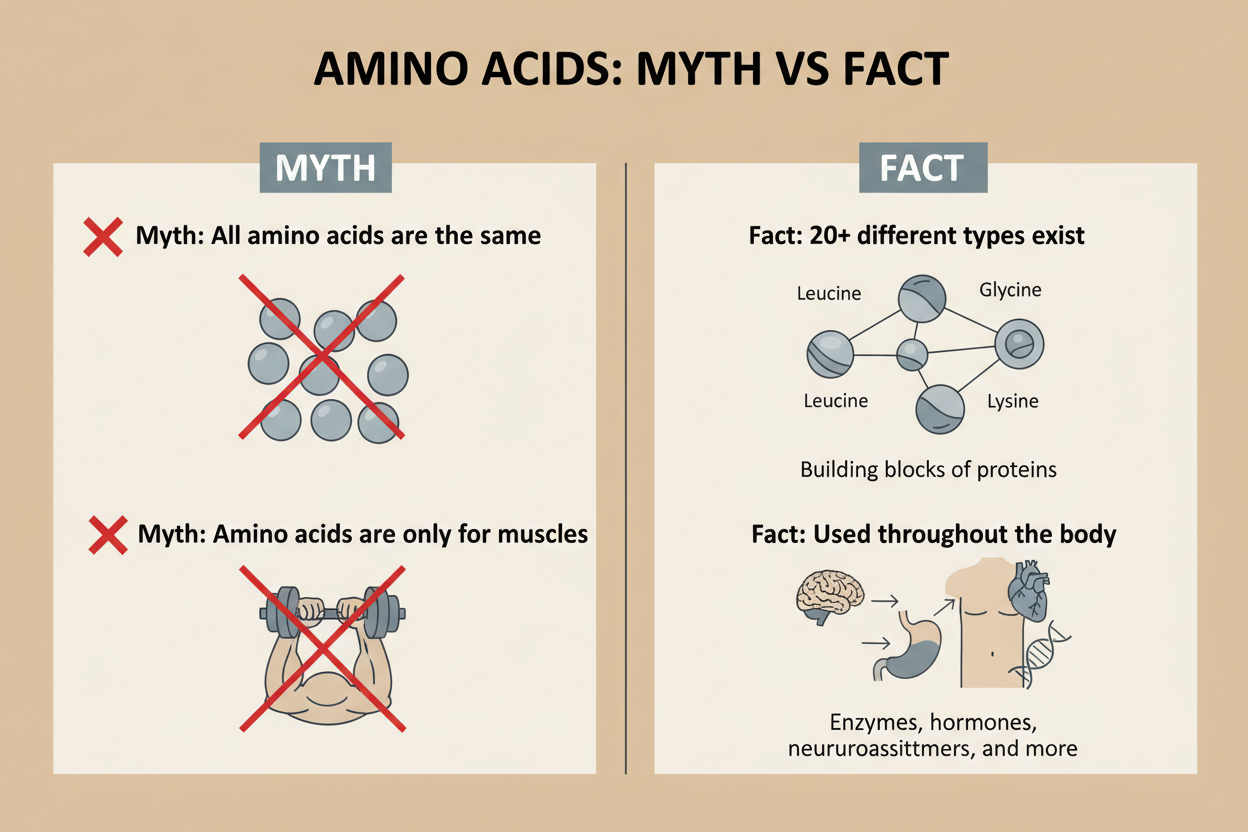
Myth 1: Amino Acids Only Matter for Athletes
Amino acids are sometimes framed as relevant only to training or performance contexts.
In reality, amino acids are involved in everyday biological structure and cellular processes. All individuals rely on amino acids as the building materials for proteins that support normal cellular organization.
Their role is foundational, not activity specific.
Myth 2: More Amino Acids Automatically Means Better Use
It is common to assume that increasing amino acid intake leads directly to increased use.
However, amino acid use is regulated by normal metabolic processes. Cells draw from the circulating amino acid pool based on structural and functional needs, not simply on availability alone.
Presence does not guarantee incorporation.
Myth 3: Essential Amino Acids Are the Only Ones That Matter
Essential amino acids are often emphasized because they must come from food.
While this distinction is useful for understanding dietary sourcing, both essential and non essential amino acids are used together during protein construction. Non essential does not mean optional or unimportant.
All amino acids contribute to protein structure.
Myth 4: Amino Acids Act Independently
Amino acids do not function in isolation.
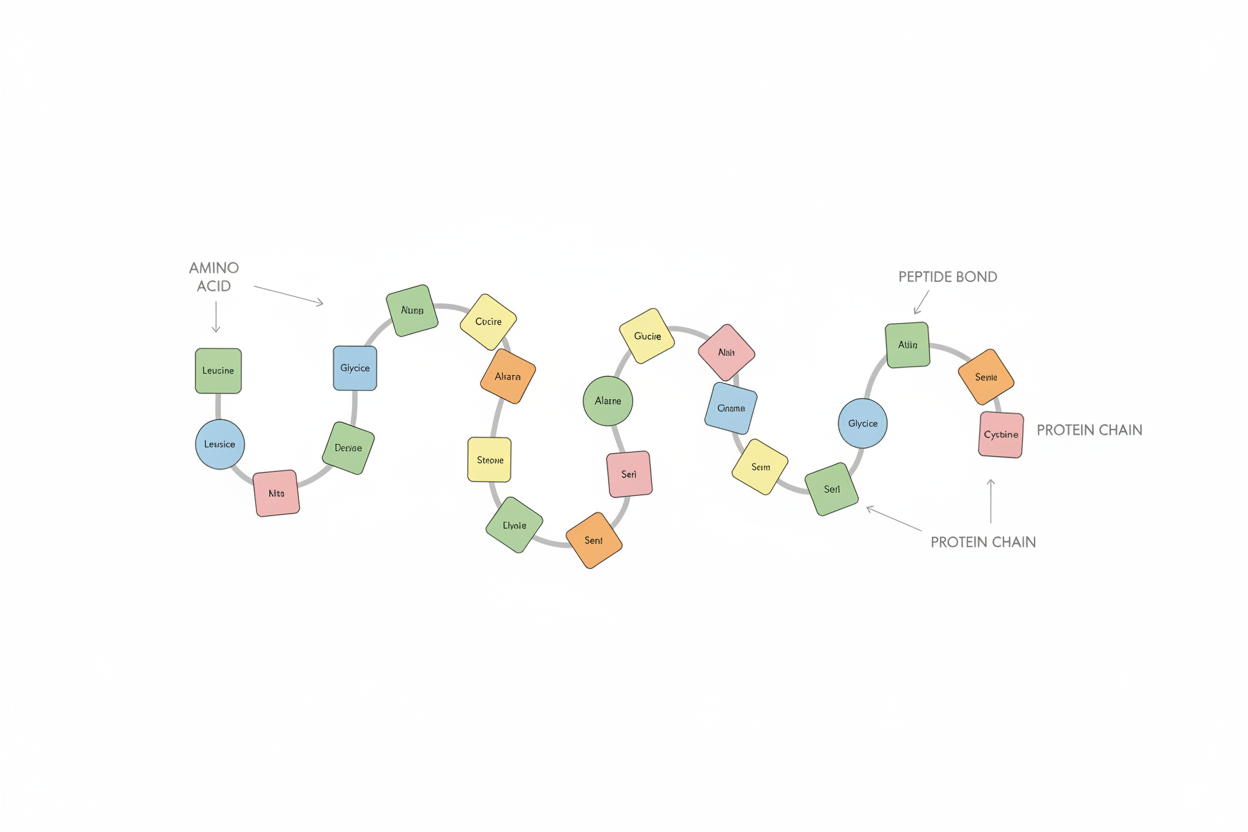
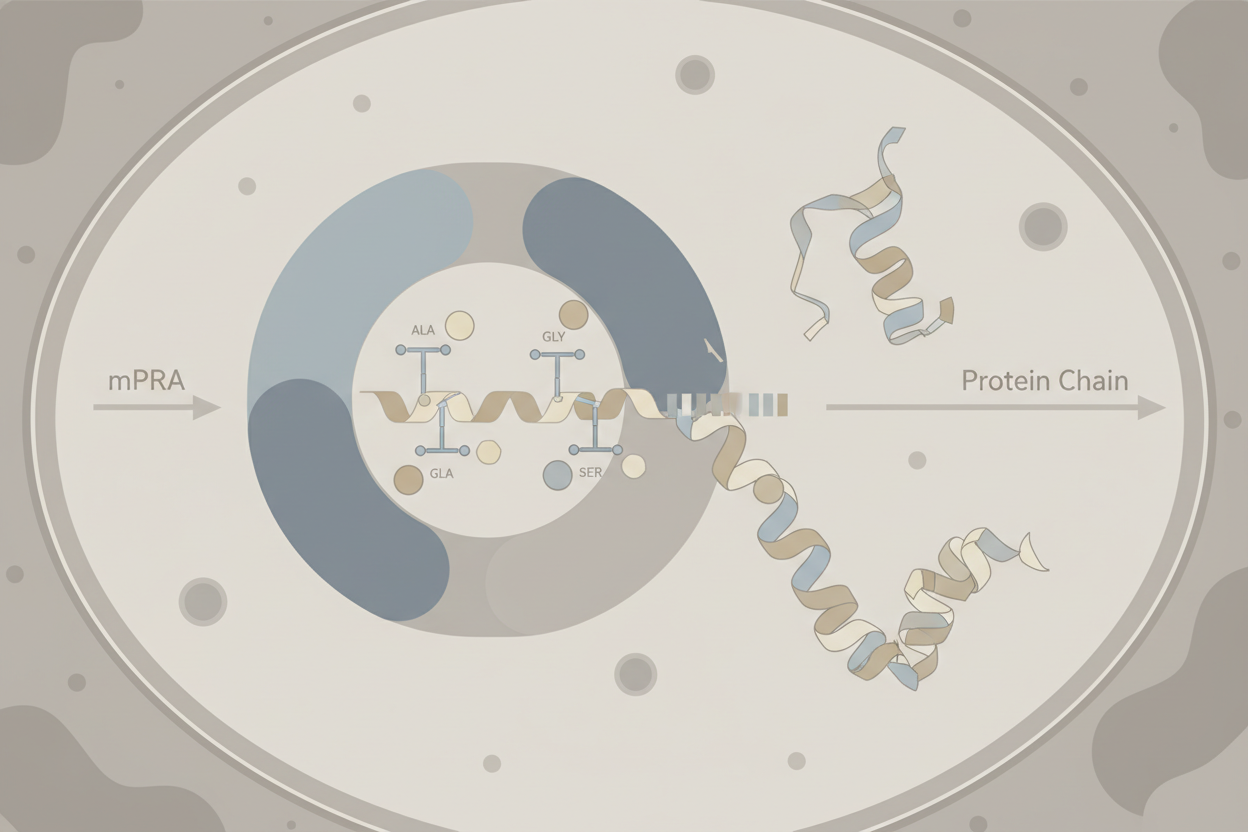
Proteins are built from specific combinations of amino acids arranged in precise sequences. For this reason, amino acids work in relation to one another rather than as standalone components.
This interdependence is a key feature of protein biology.
Myth 5: Amino Acid Concepts Require Complex Tracking
Amino acid biology is often presented as something that requires constant calculation or monitoring.
From a foundational perspective, amino acid handling is managed internally through regulated biological systems. Nutrition education focuses on understanding these systems rather than tracking individual amino acids.
How This Fits Into Protein Fundamentals
Clarifying amino acid myths helps reinforce earlier topics within Protein Fundamentals.
Digestion, absorption, availability, balance, and ratios all describe how amino acids move through the body and are used in protein construction. Removing common misconceptions makes these concepts easier to understand as a connected system.
Part of the Nutrition Foundations Series
This article is part of our Nutrition Foundations series, where we explain how different macronutrients are digested and used by the body.
👉 Visit the Nutrition Foundations hub to explore more articles in this series.
Related Articles in This Series
About Earth Fuel
Earth Fuel is built around one principle: simple protein. Nothing extra. We focus on clear formulation, ingredient transparency, and structural integrity across every stage of the protein lifecycle. Learn more about our approach and formulation philosophy on the
Earth Fuel homepage
Frequently Asked Questions
Q: Are amino acid myths common
A: Yes. Simplified explanations can lead to misunderstandings over time.
Q: Do amino acids only matter in specific diets
A: No. Amino acids are relevant to all dietary patterns because they are part of normal protein biology.
Q: Is this article challenging protein intake advice
A: No. It focuses on clarifying biological concepts, not giving guidance.
Q: Are amino acids used one at a time
A: No. Amino acids work together as part of protein structures.
Q: Does this article recommend supplements
A: No. It explains concepts without recommending products.
Q: Are myths the same as misinformation
A: Myths often arise from oversimplification rather than intentional misinformation.

Written by Earth Fuel