Protein Powder Additives Explained
Protein powders are formulated using a variety of ingredients that work together to create the final product. While the primary ingredient in a protein powder is the protein source itself, additional ingredients are often included to influence taste, texture, mixing behavior, and overall formulation stability.
These additional ingredients are commonly referred to as additives. In the context of protein powders, additives are components included alongside the protein ingredient to help create a consistent and usable nutrition product.
Understanding protein powder additives helps clarify how protein powders are designed and how different ingredients contribute to formulation structure.
This article explains protein powder additives using neutral, science based language. The focus remains on ingredient function, formulation structure, and manufacturing considerations rather than performance claims.
What Additives Are in Protein Powders
Protein powder additives are ingredients that support the structure and preparation behavior of the final product.
While protein provides the nutritional component, additives may be used to influence characteristics such as:
• flavor
• texture
• mixability
• formulation stability
These ingredients allow protein powders to maintain consistent performance during storage and preparation.
Protein powders are physical mixtures of ingredients rather than single compounds. As a result, additives may be used to ensure the ingredients disperse evenly when mixed with liquids.
The physical behavior of protein powder mixtures is discussed in How Protein Ingredients Affect Mixability, which explains how ingredient structure influences how powders disperse during preparation.
Understanding how additives function helps explain why protein powders often contain more than just protein.
Why Additives Are Used in Protein Powders
Additives are commonly included in protein powders to support formulation consistency.
Protein ingredients alone may not always produce the texture, flavor, or mixing behavior expected by consumers. As a result, additional ingredients may be used to help stabilize the product.
Some additives are used to help ingredients blend together during manufacturing. Others may help maintain the structure of the powder during storage.
The interaction between ingredients in protein powder formulations is explained in Ingredient Interactions in Protein Powders, which describes how multiple ingredients behave when combined.
Manufacturers design protein powder formulations to maintain consistency across production batches.
Additives may therefore contribute to formulation stability and preparation performance.
Common Types of Additives in Protein Powders
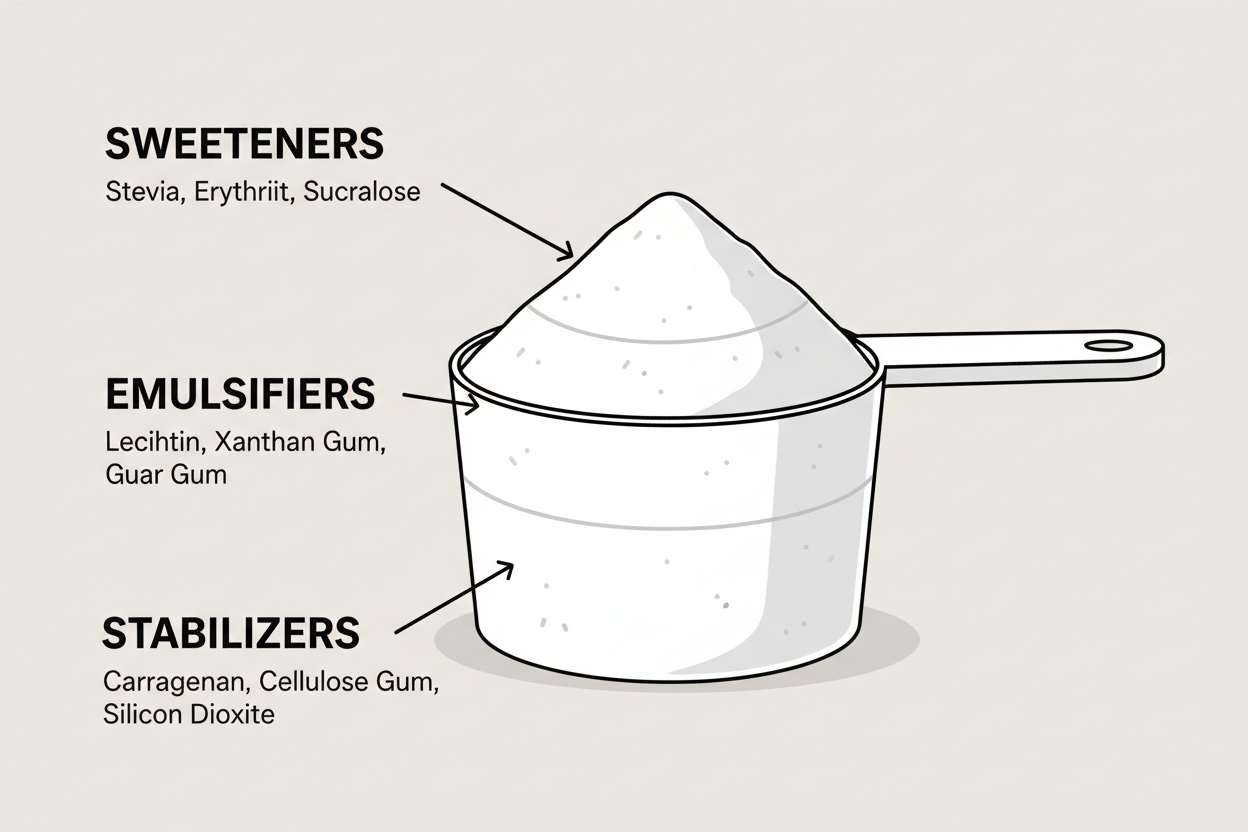
Additives used in protein powders generally fall into several functional categories.
These categories include ingredients used to influence:
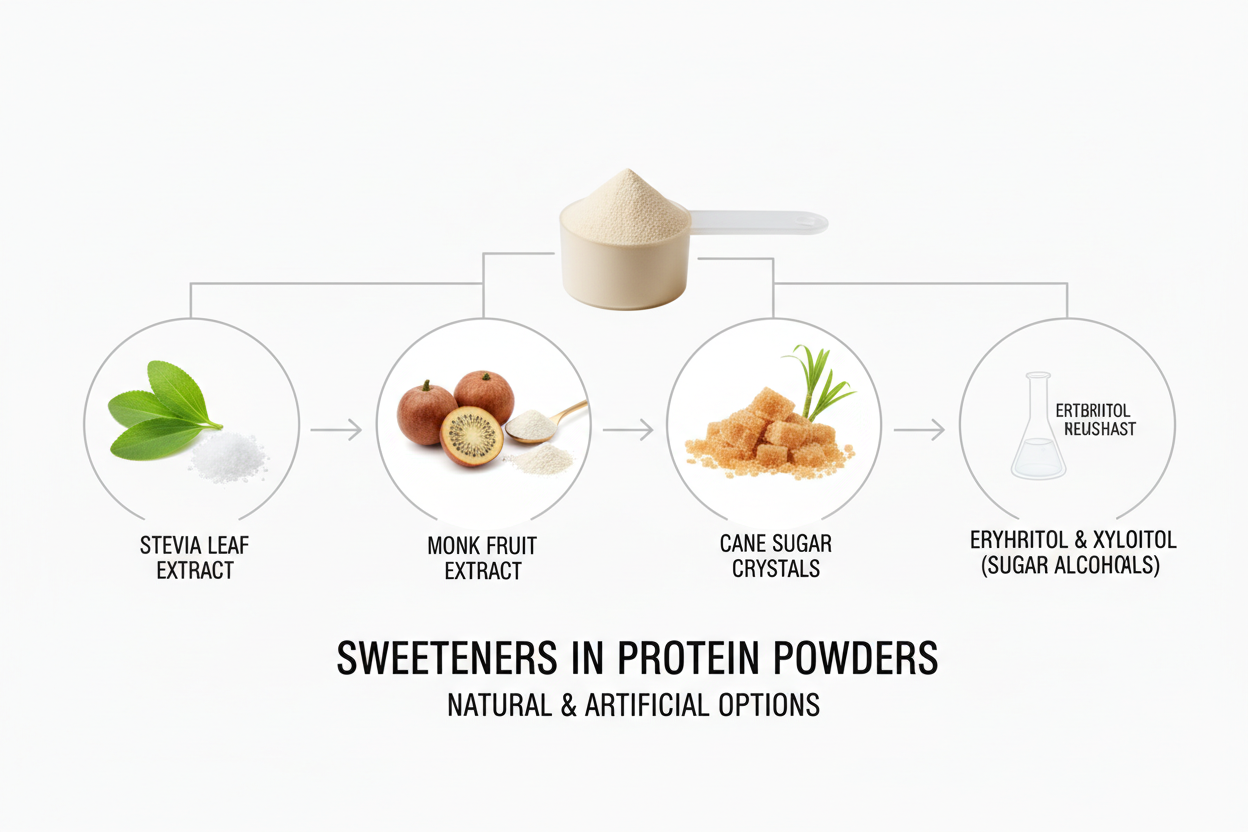
• sweetness
• flavor
• thickness
• emulsification
• structural stability
Each additive type performs a specific function within the formulation.
For example, some ingredients influence sweetness, while others influence the physical texture of the powder when mixed with liquids.
The structural behavior of protein ingredients within formulations is discussed in Protein Ingredient Function in Protein Powders, which explains how ingredients contribute to formulation design.
Understanding these functional categories helps clarify why different additives may appear on ingredient labels.
Additives and Ingredient Transparency
Ingredient transparency has become an important topic within modern nutrition products.
Consumers increasingly review ingredient labels to understand how products are formulated and what components are included.
Learning how to evaluate protein powder ingredient labels can help clarify how different ingredients contribute to the final formulation.
Guidance on interpreting ingredient labels is explained in What to Look for on a Protein Powder Ingredient Label, which explores how ingredient lists are structured.
Ingredient transparency allows consumers to better understand how protein powders are produced and how different ingredients contribute to the formulation.
Understanding the role of additives is part of developing a clearer picture of how protein powders are designed.
Protein Powder Formulation and Ingredient Design
Protein powder formulations are designed by combining multiple ingredients that work together to produce a consistent product.
Protein ingredients provide amino acids that support nutrition, while additives may contribute to formulation structure and preparation behavior.
The compatibility of ingredients within protein powders is discussed in Protein Ingredient Compatibility Explained, which explains how ingredients interact when combined.
Understanding protein powder additives therefore helps clarify how protein powders function as formulated products rather than single ingredient materials.
Recognizing the role of these ingredients provides useful context for understanding how protein powders are designed and manufactured.
Part of the Protein Ingredient Science Series
This article is part of the Earth Fuel Protein Ingredient Science series, where we examine how protein ingredients are sourced, processed, and used in modern protein powder formulations.
The series explores how ingredient structure, processing methods, and formulation design influence the behavior of protein ingredients.
Related Articles in This Series
Protein Ingredient Function in Protein Powders
How Protein Ingredients Affect Mixability
Ingredient Interactions in Protein Powders
Protein Ingredient Compatibility Explained
What to Look for on a Protein Powder Ingredient Label
About Earth Fuel
Earth Fuel is built around one principle: simple protein. Nothing extra. We focus on clean ingredients, transparent sourcing, and clear formulation practices across every stage of the protein lifecycle. Learn more about the formulation and ingredients behind Earth Fuel plant protein powder.
Frequently Asked Questions
What are protein powder additives
Protein powder additives are ingredients included in formulations to support flavor, texture, mixability, and formulation stability.
Do protein powders contain ingredients besides protein
Yes. Many protein powders contain additional ingredients that influence formulation structure and preparation behavior.
Why are additives used in protein powders
Additives may help support product consistency, texture, and mixing behavior.
Are additives the same as protein ingredients
No. Protein ingredients provide amino acids, while additives influence formulation characteristics.
Can protein powders be made without additives
Some protein powders emphasize simplified formulations with fewer additional ingredients.

Written by Earth Fuel