Protein Ingredient Compatibility Explained
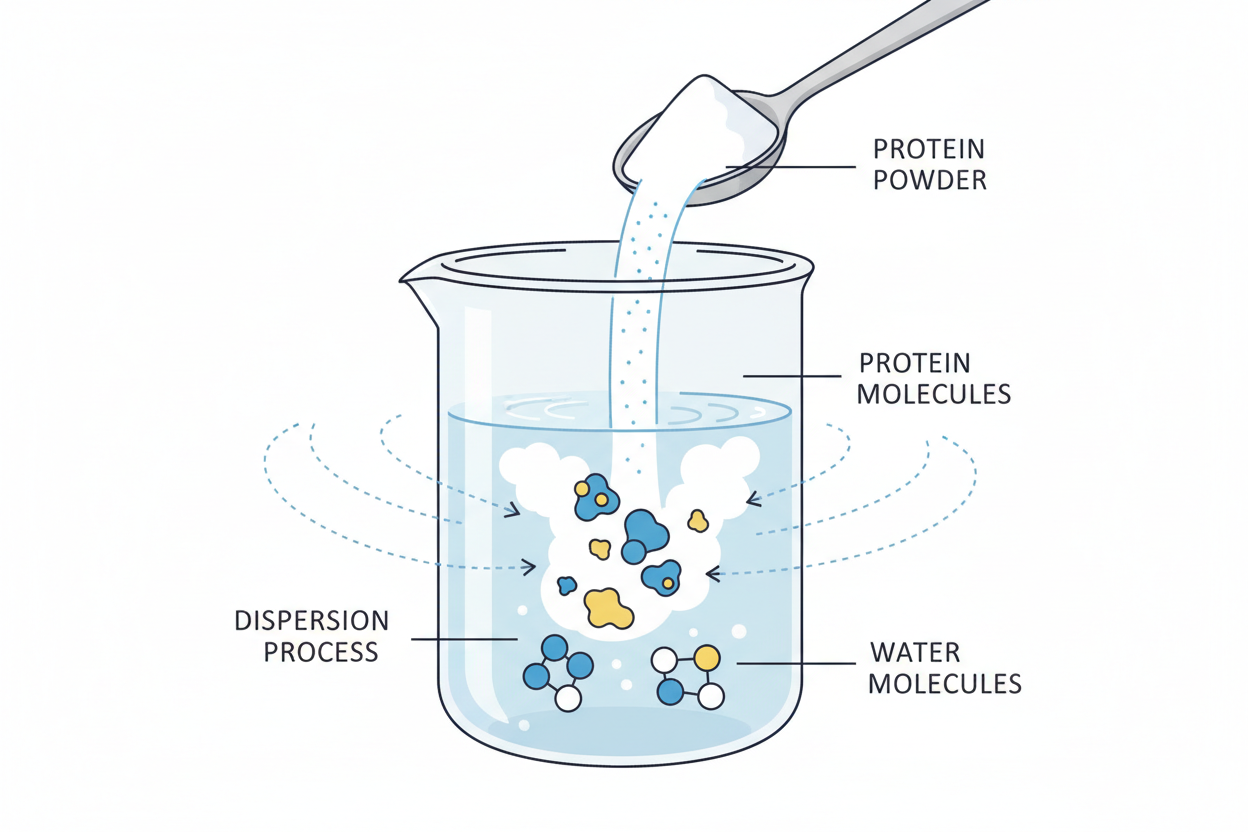
Protein ingredient compatibility refers to how well a protein ingredient functions alongside other components within a formulation without causing undesirable physical interactions. Compatibility focuses on structural behavior during blending, storage, and preparation rather than biological performance.
This article explains protein ingredient compatibility using neutral, foundational language. The emphasis remains on formulation stability, structural relationships, and predictable handling.
What Protein Ingredient Compatibility Means
Compatibility describes how different ingredients behave when combined in a single system.
In protein powders, compatibility involves the interaction between protein particles and additional components such as:
• Flavor systems
• Sweeteners
• Stabilizers
• Flow agents
• Micronutrients
When ingredients are compatible, they disperse uniformly and maintain predictable physical properties. When compatibility issues arise, the result may include separation, clumping, or inconsistent texture.
Compatibility concerns structural alignment rather than nutritional value.
Physical Property Alignment
Compatibility is influenced by alignment of physical characteristics.
Particle size, density, moisture content, and surface properties all contribute to how ingredients behave together. When these variables are similar across components, uniform blending is easier to achieve.
If one ingredient has significantly finer particles than another, separation may occur during transport. Differences in density can also cause layering within the container over time.
Matching physical properties supports consistent formulation performance.
Moisture Sensitivity and Interaction
Moisture sensitivity plays a central role in compatibility.
If one ingredient absorbs moisture more readily than another, localized clumping may occur. Moisture migration between components can influence texture and flow characteristics during storage.
Controlling ambient humidity and selecting appropriate packaging materials helps reduce moisture related compatibility issues.
Compatibility therefore depends on both ingredient selection and environmental management.
Chemical Stability Within Defined Limits
While compatibility primarily refers to physical behavior, certain ingredients may also interact at a chemical level under specific conditions.
For example, exposure to heat or light may influence how certain micronutrients behave in combination with protein. These interactions are evaluated during formulation development to ensure ingredients remain within specification limits.
Protein ingredient compatibility does not alter amino acid sequence. It describes how ingredients coexist structurally within a system.
Processing and Blending Considerations
Processing methods influence compatibility outcomes.
Uniform blending techniques help distribute ingredients evenly throughout the mixture. Controlled mixing speeds and time intervals reduce the risk of segregation.
Pre blending smaller components before introducing protein may improve overall compatibility in complex formulations.
Manufacturers evaluate compatibility through physical testing and observation to ensure consistent product behavior.
Compatibility Versus Function
Compatibility and function are related but distinct concepts.
Function refers to how protein contributes to properties such as viscosity or emulsification. Compatibility refers to how protein behaves alongside other ingredients without causing instability.
A protein ingredient may have strong functional properties yet require careful formulation to maintain compatibility within a multi component system.
Maintaining clear definitions prevents confusion between structural behavior and biological interpretation.
How This Fits Into Protein Fundamentals
Protein Fundamentals explains how protein behaves from sourcing through finished formulation.
Compatibility represents the integration stage of the protein lifecycle. It clarifies how ingredients interact structurally within a powdered system before preparation.
Understanding compatibility adds context to discussions of variability, stability, mixability, and ingredient interactions.
The explanation remains grounded in structural and manufacturing principles.
Part of the Nutrition Foundations Series
This article is part of our Nutrition Foundations series, where we explain how protein ingredients behave during formulation and preparation.
Visit the Nutrition Foundations hub to explore more articles in this series.
Related Articles in This Series
How Protein Ingredients Affect Mixability
Protein Ingredient Function in Protein Powders
Ingredient Interactions in Protein Powders
Protein Ingredient Stability Explained
Protein Ingredient Variability Explained
About Earth Fuel
Earth Fuel is built around one principle: simple protein. Nothing extra. We focus on clear formulation, ingredient transparency, and structural integrity across every stage of the protein lifecycle. Learn more about our approach and formulation philosophy on the
Earth Fuel homepage
Frequently Asked Questions
Q: What does protein ingredient compatibility refer to
A: It refers to how protein behaves alongside other ingredients within a formulation.
Q: Does compatibility affect amino acid composition
A: No. Compatibility concerns structural interaction, not molecular identity.
Q: Can moisture influence compatibility
A: Yes. Moisture migration between ingredients can affect texture and flow behavior.
Q: Is compatibility the same as function
A: No. Function refers to structural contribution, while compatibility refers to how ingredients coexist.
Q: Can incompatible ingredients be reformulated
A: Yes. Adjusting particle size, moisture levels, or blending processes can improve compatibility.
Q: Does compatibility affect digestion
A: This article focuses on formulation behavior rather than biological digestion.

Written by Earth Fuel