How Plant Protein Digestion Differs
Plant protein digestion follows the same basic biological process as other dietary proteins, but several structural and compositional differences influence how the digestive system processes plant based sources. These differences relate to protein structure, ingredient composition, fiber content, and processing methods.
Understanding plant protein digestion helps explain why different protein sources may feel different in the digestive system even though the body ultimately breaks all proteins down into amino acids.
This article explains how plant protein digestion differs using neutral, science based language. The focus remains on digestive mechanisms, structural properties, and ingredient characteristics rather than performance claims.
What Plant Protein Digestion Means
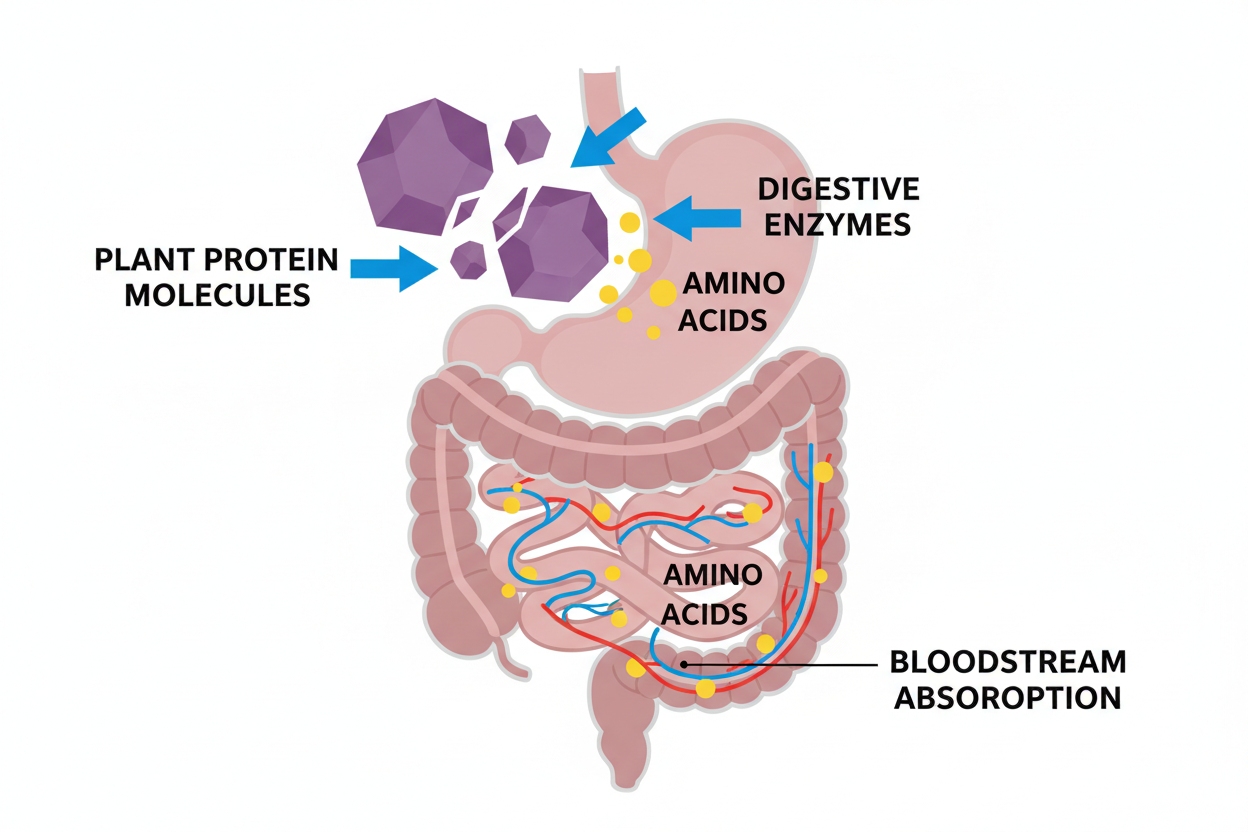
Plant protein digestion refers to the process through which plant derived proteins are broken down into amino acids that the body can absorb and use.
Digestion begins in the stomach where stomach acid and enzymes start breaking large protein structures into smaller peptide fragments. The process continues in the small intestine where additional enzymes further break these peptides into individual amino acids.
These amino acids are then absorbed through the intestinal wall and transported into circulation where they support normal biological functions throughout the body.
A detailed overview of this process is explained in How the Body Digests Plant Based Protein, which explores the stages of protein breakdown from ingestion to absorption.
While all proteins follow the same digestive pathway, plant proteins differ slightly in their structure and composition. These differences can influence how digestive enzymes interact with the protein during breakdown.
Understanding these structural differences helps explain why plant protein digestion may feel different compared with dairy based protein sources.
Structural Differences in Plant Proteins
Protein structure plays an important role in digestion.
Proteins consist of long chains of amino acids that fold into complex three dimensional shapes. Before digestive enzymes can separate these amino acids, the protein structure must first unfold.
Plant proteins often contain additional plant compounds such as fiber or naturally occurring plant molecules that interact with digestive enzymes during this process.
These structural characteristics can influence the speed at which enzymes access peptide bonds and begin breaking proteins into smaller fragments.
Different protein sources therefore exhibit different digestion behaviors based on their structure and composition.
The broader concept of how protein source influences digestibility is discussed in Digestibility Differences Between Protein Sources, which compares structural characteristics across multiple protein types.
These structural factors do not determine nutritional value by themselves, but they do influence how digestion proceeds during the early stages of protein breakdown.
The Role of Processing in Digestibility
Protein powders undergo multiple processing steps before becoming finished ingredients.
Plant proteins are typically extracted from whole food sources through filtration, separation, drying, and milling processes. These steps concentrate the protein while removing other components such as starch and fiber.
Several processing variables influence how a protein ingredient behaves during digestion:
• particle size
• filtration level
• moisture control
• structural stability
Smaller and more uniform particles expose greater surface area to digestive enzymes. This increased accessibility may support more efficient enzymatic interaction during digestion.
Ingredient purity also plays a role. Simpler ingredient systems reduce the number of competing compounds present during digestion.
The relationship between ingredient composition and digestive behavior is discussed further in Ingredient Quality and Digestibility in Protein Powders, which explains how formulation choices influence protein digestion.
Processing does not change the fundamental amino acid composition of the protein, but it can influence how easily digestive enzymes access the protein structure.
Digestion Compared With Absorption
Protein digestion and protein absorption are closely related but represent two different stages of the nutritional process.
Digestion refers to the breakdown of proteins into amino acids. Absorption refers to the transport of those amino acids through the intestinal wall and into circulation.
The steps that occur during digestion are explored in What Happens to Protein During Digestion, which explains how enzymes and digestive fluids gradually dismantle protein structures after food enters the stomach.
Once digestion is complete, amino acids pass through specialized transport mechanisms located in the lining of the small intestine.
These transport systems move amino acids into the bloodstream where they become available for metabolic processes throughout the body.
The next stage of this process is explained in Protein Absorption and Bioavailability Explained, which discusses how amino acids are absorbed and used once digestion is complete.
Understanding the distinction between digestion and absorption helps clarify how different protein sources interact with the digestive system.
How This Fits Into Protein Nutrition
Plant protein digestion represents one step within the broader cycle of protein metabolism.
All dietary proteins are ultimately reduced to amino acids before entering circulation. Once absorbed, these amino acids participate in many biological processes including enzyme production, structural tissue maintenance, and cellular communication.
Differences between protein sources primarily arise during the digestive stage where structural characteristics influence how enzymes interact with the protein matrix.
Recognizing these structural differences provides a clearer framework for understanding how various protein ingredients behave during digestion.
Within the broader context of nutrition science, plant protein digestion reflects the interaction between ingredient structure, digestive enzymes, and gastrointestinal physiology.
Part of the Digestibility Series
This article is part of the Earth Fuel Digestibility series, where we explore how protein ingredients interact with the digestive system.
The series explains how structure, formulation, and ingredient sourcing influence the digestion process from ingestion through absorption.
Related Articles in This Series
How the Body Digests Plant Based Protein
What Happens to Protein During Digestion
Protein Absorption and Bioavailability Explained
Digestibility Differences Between Protein Sources
Ingredient Quality and Digestibility in Protein Powders
About Earth Fuel
Earth Fuel is built around one principle: simple protein. Nothing extra. We focus on clean ingredients, transparent sourcing, and clear formulation practices across every stage of the protein lifecycle. Learn more about our approach and formulation philosophy on the Earth Fuel homepage.
Frequently Asked Questions
What is plant protein digestion
Plant protein digestion is the process through which plant derived proteins are broken down into amino acids that the body can absorb and use.
Does plant protein digest differently than whey protein
Yes. Structural differences and ingredient composition may influence how digestive enzymes interact with plant proteins compared with dairy proteins.
Does plant protein digest more slowly than whey
Some plant proteins may digest at a slightly slower pace due to structural differences and fiber content, although digestion efficiency varies by ingredient and processing method.
Does processing affect plant protein digestion
Yes. Filtration, drying, and particle size influence how easily digestive enzymes access protein structures.
Does plant protein digestion change amino acid absorption
No. Once proteins are broken down into amino acids, absorption occurs through the same biological transport systems regardless of the original protein source.

Written by Earth Fuel