Digestibility Differences Between Protein Sources
Digestibility refers to how efficiently protein is broken down into amino acids during digestion. Different protein sources exhibit structural and compositional differences that influence how enzymes interact with them.
This article explains digestibility differences between protein sources using neutral, foundational language. The focus remains on structural characteristics and biological processes rather than recommendations or performance claims.
What Digestibility Means
Digestibility describes the proportion of consumed protein that is broken down and absorbed as amino acids.
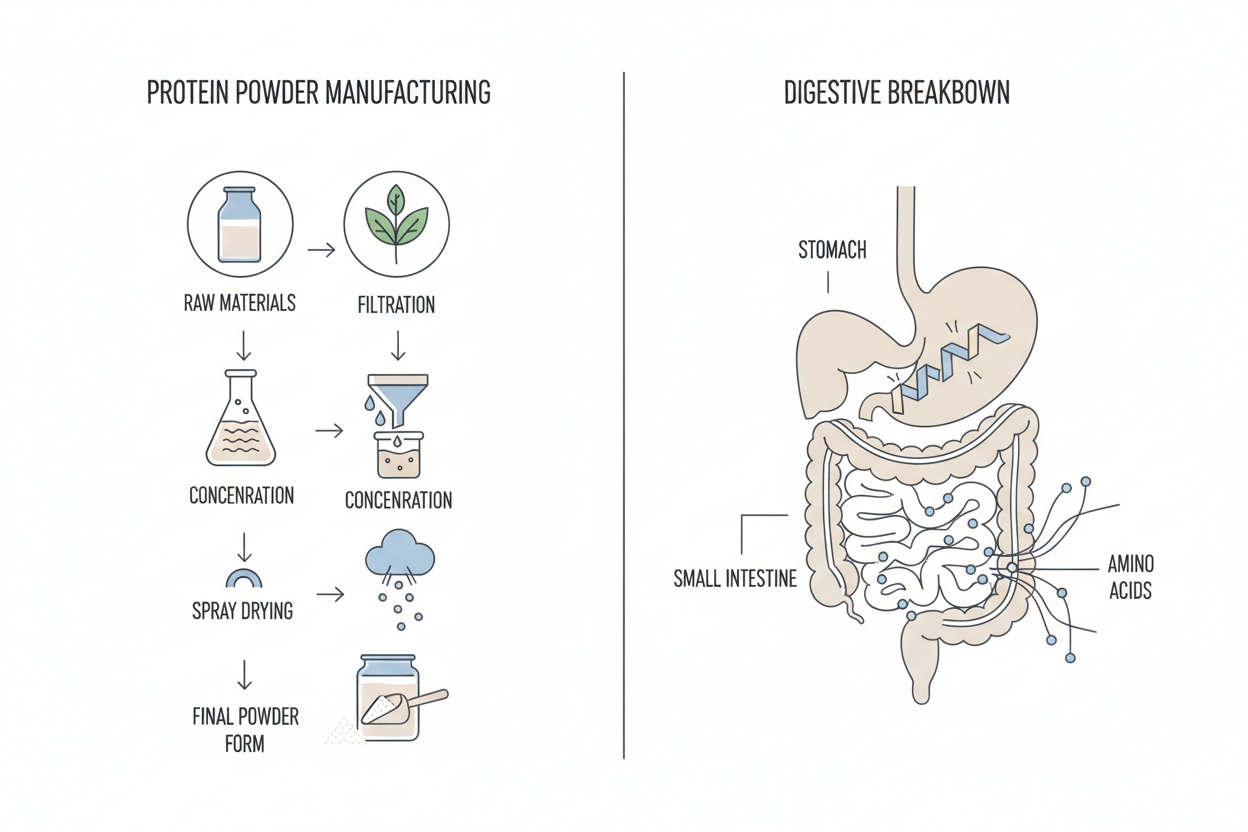
During digestion, enzymes in the stomach and small intestine break protein chains into smaller peptides and individual amino acids. These amino acids are then absorbed and used by the body.
Digestibility is influenced by protein structure, fiber content, and the presence of other naturally occurring compounds.
Structural Differences Between Protein Sources
Protein sources differ in structure.
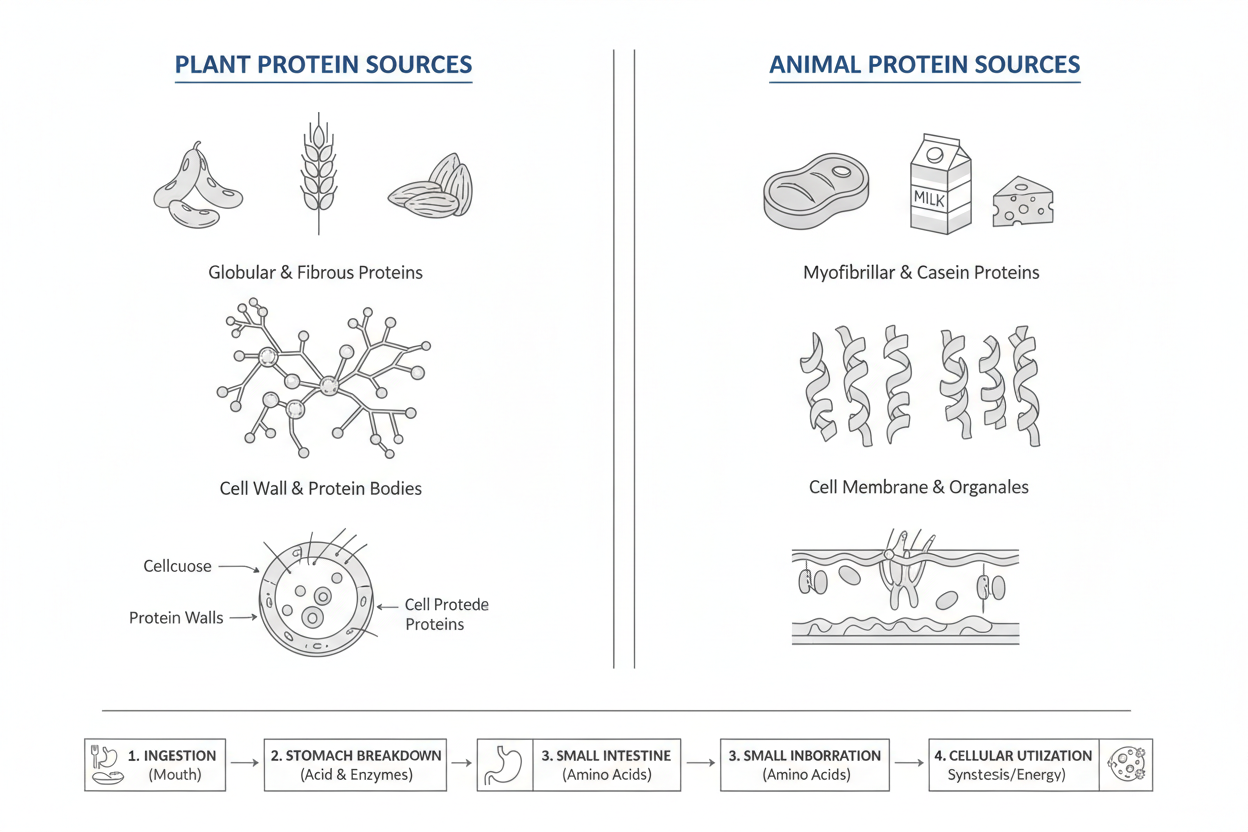
Animal derived proteins such as dairy or egg proteins typically contain minimal fiber and are highly refined before consumption.
Plant derived proteins originate from seeds, legumes, or grains. These sources may naturally contain fiber and other plant compounds that influence structure and digestion dynamics.
These inherent differences affect how digestive enzymes access protein molecules.
Fiber and Matrix Effects
Plant proteins exist within a plant matrix.
Even after extraction and concentration, small amounts of fiber or residual plant material may remain. These structural components can influence how digestive enzymes interact with protein during breakdown.
Animal derived proteins generally do not contain fiber in the same way.
This distinction contributes to digestibility differences between sources.
Amino Acid Profiles and Digestibility
Amino acid composition differs across protein sources.
While digestibility refers to breakdown efficiency, amino acid profile refers to the types and proportions of amino acids present.
Some evaluation methods consider both digestibility and amino acid composition when assessing protein quality.
However, digestibility itself focuses on how protein is broken down, not which amino acids are present.
Processing and Source Differences
Processing methods vary between protein sources.
Dairy proteins may undergo filtration and drying. Plant proteins may involve separation from fiber and starch components before concentration.
Processing can influence structural properties such as solubility and particle size. However, the inherent characteristics of the source material remain a primary factor in digestibility differences.
Understanding source structure helps clarify why digestion rates may vary.
Rate of Digestion
Protein sources may differ in digestion rate.
Some proteins break down more rapidly in the digestive system, while others break down more gradually. This difference relates to structural properties, solubility, and how tightly protein chains are folded.
Digestion rate is distinct from protein quantity or label claims.
Structural variation influences how quickly enzymes access peptide bonds.
Digestibility Does Not Equal Superiority
Differences in digestibility do not automatically indicate superiority.
Each protein source has distinct structural characteristics shaped by biological origin. These characteristics influence digestion dynamics without determining overall value.
Maintaining neutral evaluation helps preserve clarity when discussing protein fundamentals.
How This Fits Into Protein Fundamentals
Protein Fundamentals explains how protein moves from source to absorption.
Digestibility differences add context to discussions about processing, variability, and structural behavior. They describe biological interaction rather than marketing comparison.
Understanding source differences completes another component of the protein lifecycle.
Part of the Nutrition Foundations Series
This article is part of our Nutrition Foundations series, where we explain how macronutrients are sourced, processed, and broken down by the body.
👉 Visit the Nutrition Foundations hub to explore more articles in this series.
Related Articles in This Series
Ingredient Processing and Digestibility
Protein Ingredient Variability Explained
Protein Ingredient Consistency Explained
Ingredient Interactions in Protein Powders
How Protein Powder Ingredients Are Made
About Earth Fuel
Earth Fuel is built around one principle: simple protein. Nothing extra. We focus on clear formulation, ingredient transparency, and structural integrity across every stage of the protein lifecycle. Learn more about our approach and formulation philosophy on the
Earth Fuel homepage
Frequently Asked Questions
Q: Does higher digestibility mean better protein
A: Digestibility describes breakdown efficiency and does not alone determine overall value.
Q: Are plant proteins less digestible than animal proteins
A: Plant and animal proteins differ structurally, which can influence digestion dynamics.
Q: Does fiber affect protein digestibility
A: Fiber within plant matrices may influence enzyme interaction with protein.
Q: Can processing eliminate digestibility differences
A: Processing can influence structure but does not remove inherent source characteristics.
Q: Does digestibility change amino acid composition
A: Digestibility affects breakdown efficiency, not amino acid identity.
Q: Is digestibility the same as absorption
A: Digestibility refers to breakdown; absorption refers to amino acid uptake after breakdown.

Written by Earth Fuel