Protein Ingredient Variability Explained
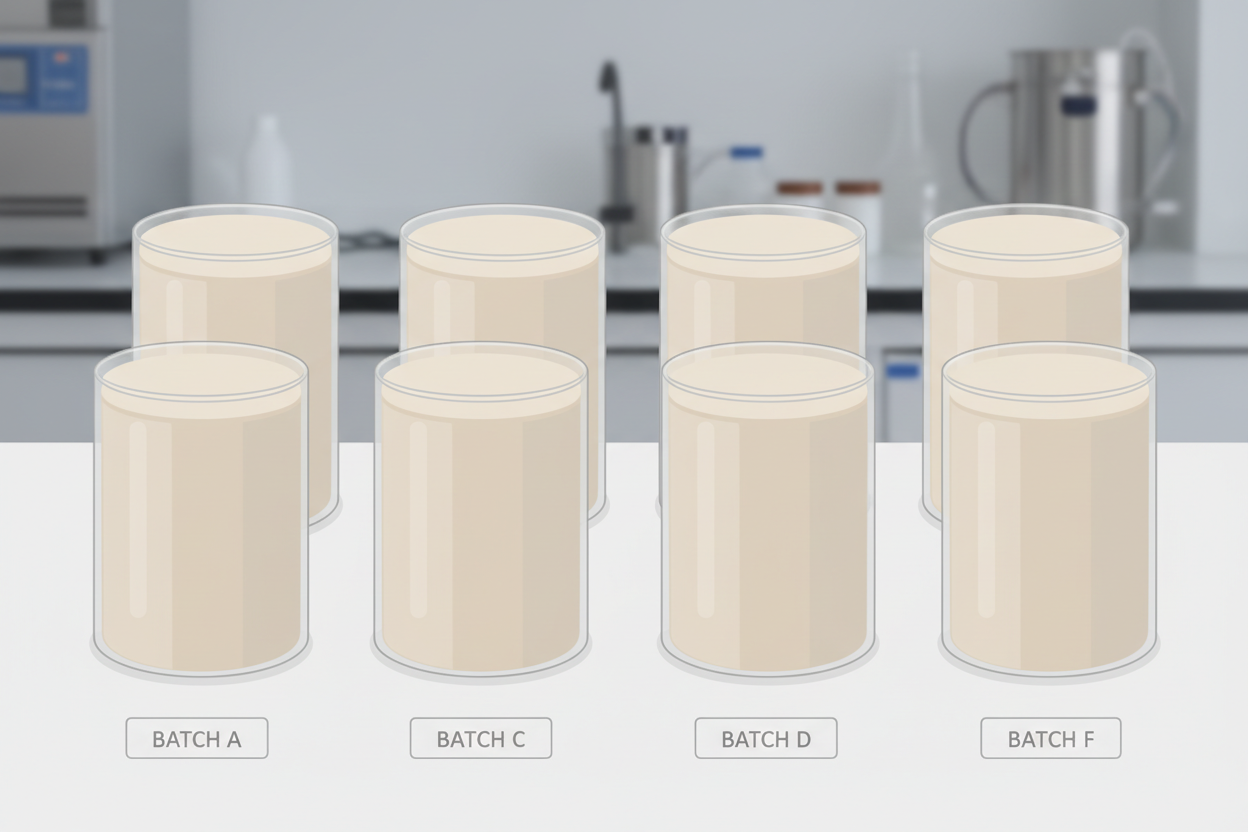
Protein ingredient variability refers to differences that can occur between batches of the same protein ingredient. Variability describes natural and processing related differences in physical characteristics, composition ranges, and handling behavior.
This article explains protein ingredient variability in neutral, foundational language. The emphasis is on manufacturing realities and ingredient behavior, not performance claims or recommendations.
What Protein Ingredient Variability Means
Variability describes measurable differences within defined ranges.
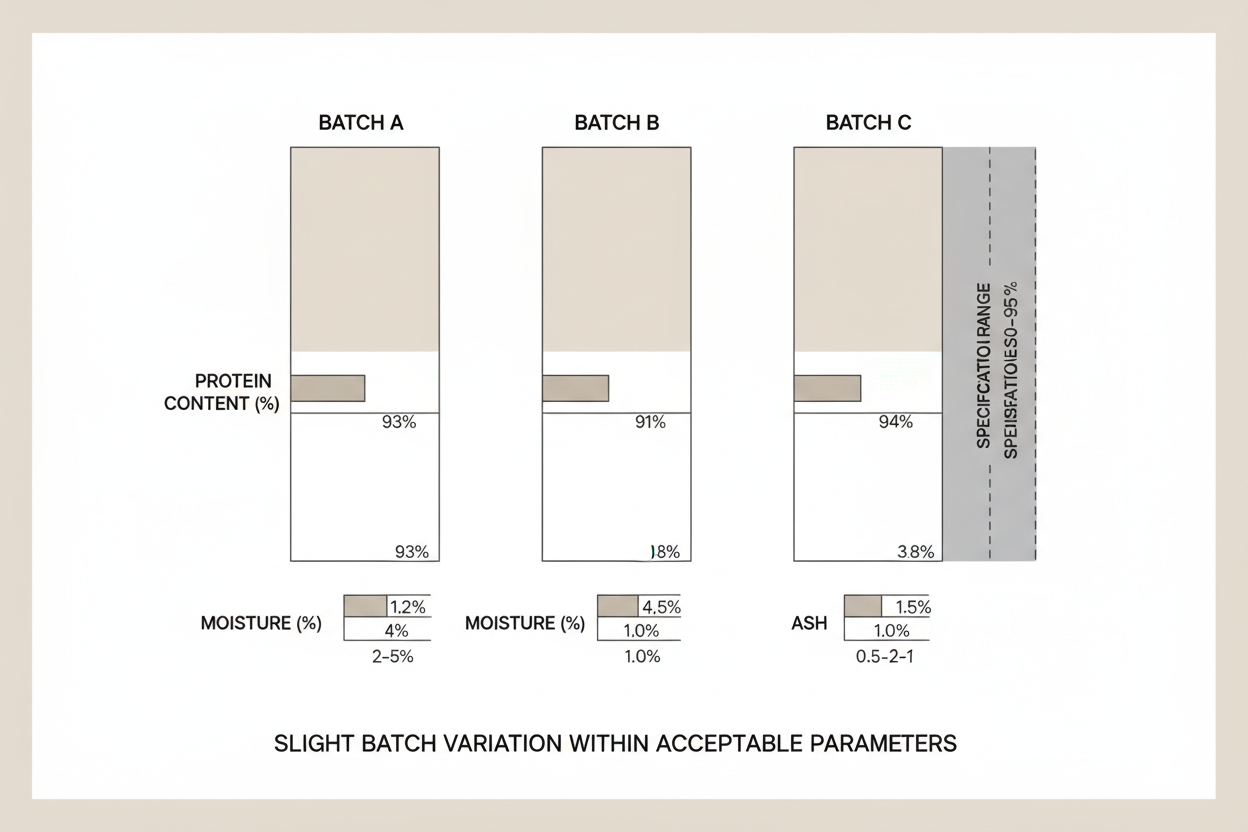
For protein ingredients, variability may include small changes in moisture content, particle size distribution, color, density, or minor compositional shifts that fall within specification limits.
These differences occur despite standardized manufacturing procedures.
Variability is a natural part of working with agricultural raw materials.
Sources of Ingredient Variability
Protein ingredients are derived from biological sources.
Plant proteins are influenced by:
• Growing conditions
• Soil composition
• Seasonal factors
• Harvest timing
• Storage conditions
Even when processing methods remain stable, upstream agricultural variation can introduce minor differences in the raw material.
These variations do not represent defects. They reflect natural input variability before processing.
Processing and Controlled Ranges
Manufacturers use processing controls to manage variability within defined limits.
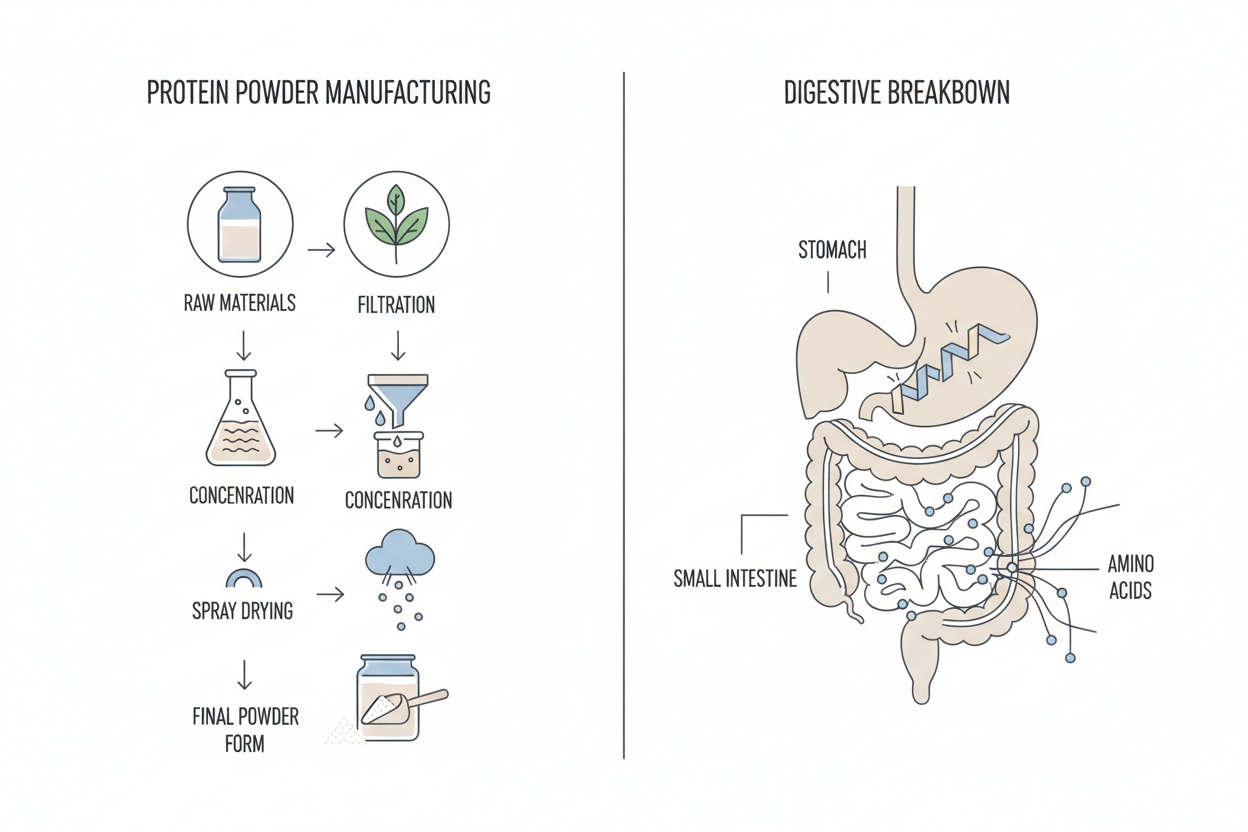
Standard operating procedures, filtration methods, drying temperatures, and quality control testing are used to maintain ingredients within established specification ranges.
These controls reduce variability but do not eliminate it entirely.
Every production batch is measured against specification criteria before release.
Variability Versus Consistency
Variability and consistency are related but distinct concepts.
Consistency refers to uniform behavior within specification ranges.
Variability refers to the measurable differences that exist within those ranges.
An ingredient can exhibit minor variability while still maintaining overall consistency.
Understanding this distinction helps clarify how ingredient control functions in manufacturing environments.
Physical Characteristics Affected by Variability
Variability most often affects physical properties rather than biological function.
Examples include:
• Flow behavior
• Powder density
• Texture
• Color tone
• Moisture range
These factors influence handling and formulation during manufacturing but do not alter the fundamental identity of the protein.
Variability Does Not Alter Protein Structure
Minor batch variability does not change the core amino acid structure of protein.
Protein identity remains intact across batches that meet specification standards. Variability concerns measurable ranges rather than fundamental molecular differences.
Keeping physical variability separate from biological function helps maintain conceptual clarity.
Role of Quality Control
Quality control systems are designed to measure variability.
Batch testing confirms that ingredients remain within defined limits for moisture, microbial safety, and physical properties.
If a batch falls outside specification limits, it is not released.
Quality systems exist to manage variability within safe and predictable boundaries.
How This Fits Into Protein Fundamentals
Protein Fundamentals explains how protein moves from source to finished ingredient.
Understanding variability provides context for sourcing, stability, processing, and shelf life topics. It helps clarify why natural ingredients are managed through specifications rather than absolute uniformity.
This explanation remains focused on manufacturing structure and handling principles.
Part of the Nutrition Foundations Series
This article is part of our Nutrition Foundations series, where we explain how macronutrients are sourced, processed, and handled before consumption.
👉 Visit the Nutrition Foundations hub to explore more articles in this series.
Related Articles in This Series
Protein Ingredient Consistency Explained
Protein Ingredient Stability Explained
Protein Ingredient Shelf Life Explained
Protein Powder Processing Methods Explained
How Protein Powder Ingredients Are Made
About Earth Fuel
Earth Fuel is built around one principle: simple protein. Nothing extra. We focus on clear formulation, ingredient transparency, and structural integrity across every stage of the protein lifecycle. Learn more about our approach and formulation philosophy on the
Earth Fuel homepage
Frequently Asked Questions
Q: Is variability the same as inconsistency
A: No. Variability refers to measurable differences within defined ranges. Inconsistency implies deviation beyond acceptable limits.
Q: Does variability mean lower quality
A: No. Minor variability is expected in agricultural ingredients and is managed through specifications.
Q: Can variability change amino acid composition
A: Minor variation may occur within natural ranges, but identity and structure remain intact within specification.
Q: Does processing eliminate variability
A: Processing reduces variability but cannot remove natural agricultural differences entirely.
Q: Is variability visible to consumers
A: Small differences in color or texture may occur, but ingredients remain within defined standards.
Q: Does variability affect digestion
A: This article focuses on manufacturing behavior rather than digestion.

Written by Earth Fuel