Ingredient Processing and Digestibility
Ingredient processing refers to the mechanical and physical steps used to extract, concentrate, dry, and standardize protein ingredients. Digestibility refers to how protein is broken down into amino acids after consumption.
This article explains the relationship between ingredient processing and digestibility using foundational, neutral language. The focus is on structural changes and handling principles rather than performance claims or recommendations.
What Ingredient Processing Means
Protein ingredients do not exist in finished form naturally.
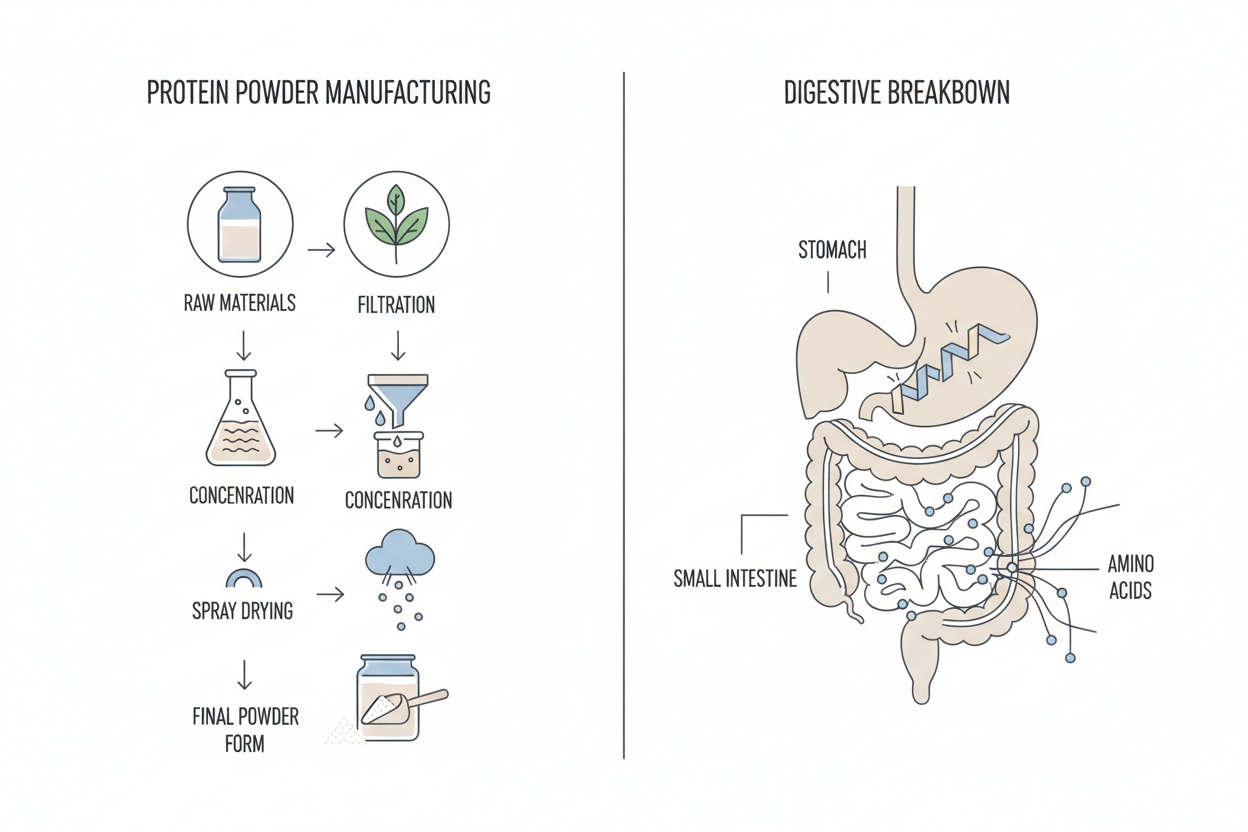
Raw materials such as seeds, legumes, or dairy undergo extraction and refinement to isolate protein fractions from other components like fiber, fat, or carbohydrates.
Processing stages may include:
• Mechanical separation
• Filtration
• Drying
• Milling
• Heat treatment
These steps create stable protein ingredients suitable for formulation and storage.
Processing alters the physical structure of raw materials but does not create new amino acids.
Protein Structure and Processing
Proteins are composed of amino acids arranged in specific sequences.
During processing, exposure to heat, pressure, or moisture can alter how protein chains are folded. This structural unfolding is often referred to as denaturation.
Denaturation changes the shape of protein molecules without altering their amino acid sequence.
This structural change can influence solubility and functional behavior in manufacturing environments.
Digestibility as a Separate Concept
Digestibility refers to how protein is broken down during digestion.
In the human digestive system, proteins are exposed to enzymes and acidic conditions that break them into smaller peptides and amino acids.
The digestive process is biological and distinct from manufacturing processes.
Ingredient processing and digestion occur in entirely different environments and serve different purposes.
How Processing Can Influence Digestibility
While digestion occurs in the body, certain aspects of ingredient processing can influence how easily enzymes access protein structures.
For example:
• Heat exposure may unfold protein chains
• Filtration may remove non protein components
• Milling may alter surface area
These structural differences can influence enzyme interaction rates during digestion.
However, processing does not fundamentally change amino acid identity.
Mechanical Versus Chemical Processing
Protein ingredients may be processed using mechanical or chemical methods.
Mechanical methods rely on physical separation such as grinding or filtration. Chemical assisted methods may use pH adjustments to isolate protein fractions.
Both methods aim to separate protein from other components while maintaining structural integrity within specification limits.
The choice of method affects physical characteristics such as solubility and texture.
Processing Does Not Create Protein Quality
Processing does not improve amino acid composition.
Protein quality is determined by amino acid profile and digestibility characteristics inherent to the source material.
Processing can influence how protein behaves in powder form, but it does not add or subtract essential amino acids.
Separating biological composition from processing method helps maintain conceptual clarity.
Digestibility Differences Between Protein Sources
Different protein sources naturally exhibit different digestibility characteristics.
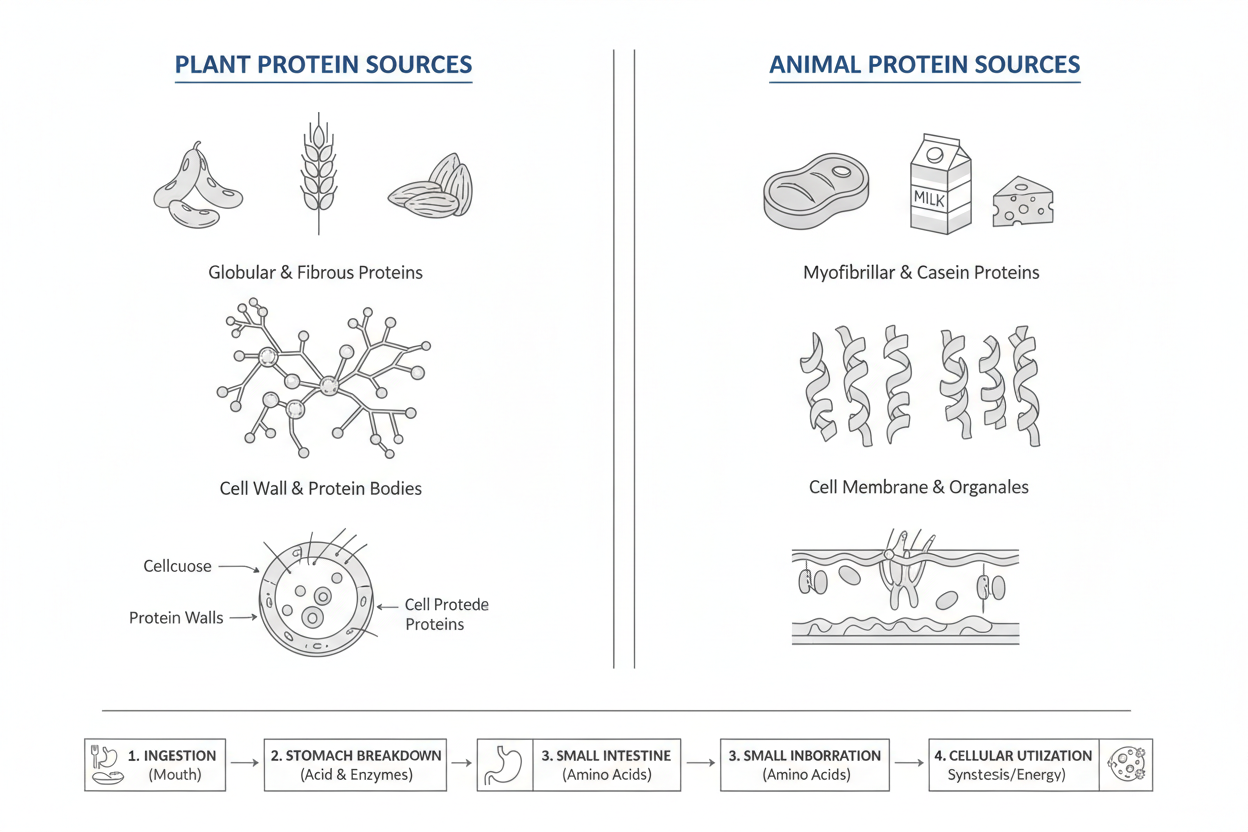
Animal derived proteins and plant derived proteins vary in structure and fiber content, which can influence enzyme interaction during digestion.
Understanding digestibility differences between protein sources adds context to processing discussions without introducing performance claims.
How This Fits Into Protein Fundamentals
Protein Fundamentals explains how protein moves from source to use.
Processing describes how protein is prepared for handling. Digestibility describes how protein is broken down after consumption.
Together, these concepts complete another part of the protein lifecycle.
The explanation remains focused on structure and handling principles.
Part of the Nutrition Foundations Series
This article is part of our Nutrition Foundations series, where we explain how macronutrients are sourced, processed, and used by the body.
👉 Visit the Nutrition Foundations hub to explore more articles in this series.
Related Articles in This Series
Protein Ingredient Variability Explained
Protein Ingredient Consistency Explained
Protein Ingredient Stability Explained
How Protein Powder Ingredients Are Made
About Earth Fuel
Earth Fuel is built around one principle: simple protein. Nothing extra. We focus on clear formulation, ingredient transparency, and structural integrity across every stage of the protein lifecycle. Learn more about our approach and formulation philosophy on the
Earth Fuel homepage
Frequently Asked Questions
Q: Does processing change amino acids
A: Processing may alter protein structure but does not change amino acid sequence.
Q: Is denaturation harmful
A: Denaturation refers to structural unfolding and is not inherently harmful.
Q: Does processing determine protein quality
A: Protein quality is primarily determined by amino acid profile and digestibility characteristics of the source.
Q: Are plant proteins processed differently than animal proteins
A: Processing methods differ based on source material properties.
Q: Does processing affect how protein is digested
A: Processing may influence structure, which can affect enzyme interaction rates, but digestion remains a biological process.
Q: Is all processing chemical
A: No. Many protein ingredients are processed using mechanical and filtration based methods.

Written by Earth Fuel