Protein Ingredient Consistency Explained
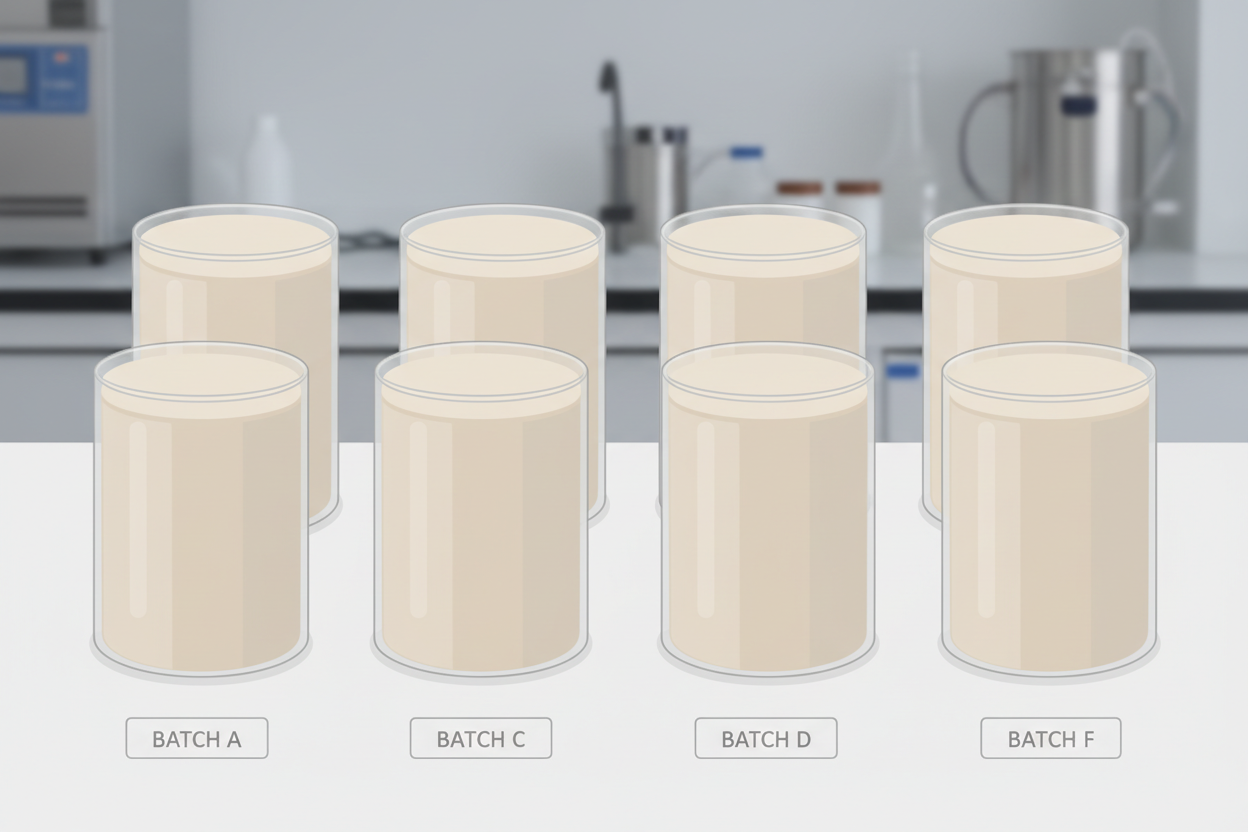
Protein ingredient consistency refers to how reliably a protein ingredient behaves from batch to batch. Consistency focuses on predictable physical characteristics such as texture, flow, and appearance rather than biological function, outcomes, or recommendations.
This article explains protein ingredient consistency using clear, foundational language. The emphasis is on manufacturing control and standardization, not performance or effects.
What Protein Ingredient Consistency Means
Consistency describes uniformity over time.
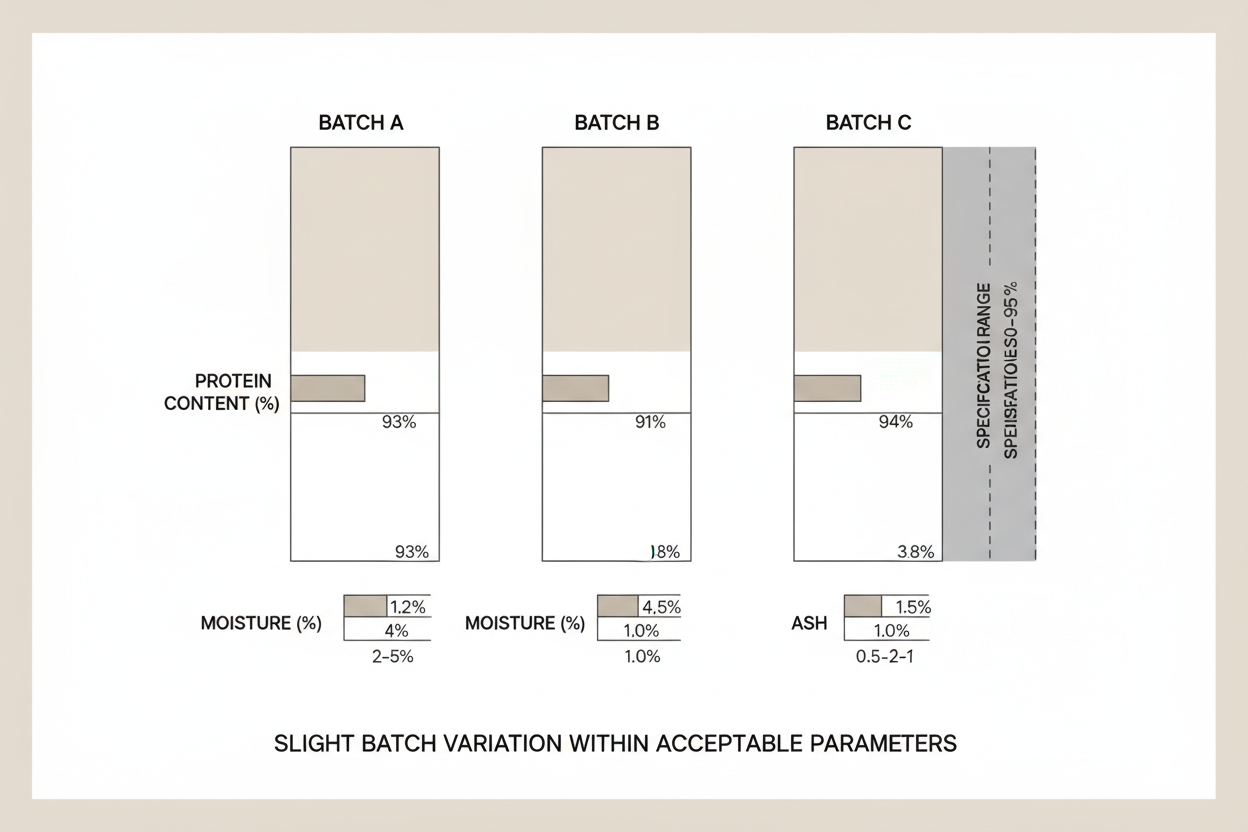
For protein ingredients, consistency means that each production batch meets the same defined specifications. These specifications may include particle size, moisture level, color, and flow behavior.
Consistency helps ensure that protein ingredients behave the same way during storage, handling, and formulation.
Consistency Begins With Raw Materials
Ingredient consistency starts with sourcing.
When raw materials are sourced from stable origins with defined characteristics, downstream processing becomes more predictable. Variability in raw materials can influence physical properties even when processing methods remain unchanged.
Consistent sourcing supports consistent finished ingredients.
Processing Controls and Standardization
Processing plays a central role in consistency.
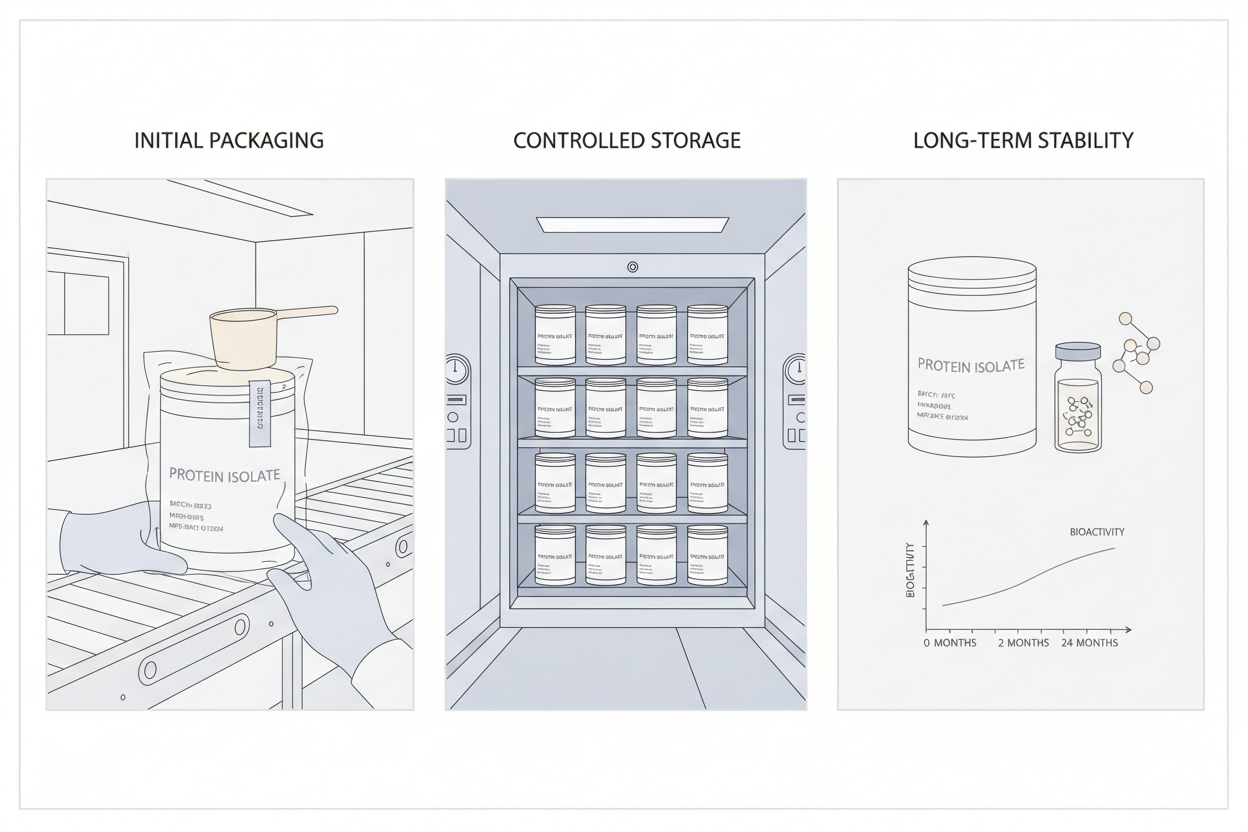
Manufacturers use controlled processing parameters such as temperature, filtration levels, and drying conditions to produce uniform protein ingredients. Standard operating procedures help ensure that each batch follows the same steps.
This control supports repeatable results rather than altering protein identity.
Moisture and Particle Size Control
Moisture content and particle size are key contributors to consistency.
If moisture levels vary, protein powder may clump or flow differently. If particle size varies, texture and mixing behavior may change. Processing and quality control steps are designed to manage these factors within defined ranges.
These controls affect physical behavior, not amino acid composition.
Quality Control and Batch Testing
Consistency is verified through quality control.
Batch testing confirms that protein ingredients meet predefined specifications before they are released for use. These checks help identify variation early and maintain predictable ingredient behavior.
Quality control supports reliability rather than biological function.
Why Consistency Matters in Manufacturing
Consistent ingredients support predictable formulation.
Manufacturers rely on ingredient consistency to ensure that finished products meet expectations across production runs. Inconsistent ingredients can introduce variability during mixing, measuring, or packaging.
This relevance is industrial rather than nutritional.
Consistency Does Not Affect Protein Biology
Protein ingredient consistency does not change how protein functions in the body.
Regardless of physical consistency, protein is broken down into amino acids during digestion. Consistency concerns handling and manufacturing rather than digestion or absorption.
Keeping these concepts separate helps clarify protein fundamentals.
How This Fits Into Protein Fundamentals
Protein Fundamentals explains how protein moves from source to use.
Understanding consistency adds context to sourcing, processing, stability, and shelf life topics by explaining how predictable ingredient behavior is maintained before consumption. It completes another part of the protein ingredient lifecycle without introducing claims.
The explanation remains focused on structure and handling.
Part of the Nutrition Foundations Series
This article is part of our Nutrition Foundations series, where we explain how different macronutrients are digested and used by the body.
👉 Visit the Nutrition Foundations hub to explore more articles in this series.
Related Articles in This Series
About Earth Fuel
Earth Fuel is built around one principle: simple protein. Nothing extra. We focus on clear formulation, ingredient transparency, and structural integrity across every stage of the protein lifecycle. Learn more about our approach and formulation philosophy on the
Earth Fuel homepage
Frequently Asked Questions
Q: Does consistency mean all protein powders look the same
A: No. Consistency refers to predictable behavior within a specific ingredient, not uniformity across all proteins.
Q: Is consistency the same as quality
A: No. Consistency describes uniformity, while quality includes multiple characteristics.
Q: Does consistency affect amino acids
A: No. Amino acid composition remains unchanged.
Q: Can consistency vary between batches
A: Small variation can occur, but specifications are used to manage it.
Q: Is consistency important for digestion
A: Consistency affects handling and formulation rather than digestion.
Q: Does this article recommend quality standards
A: No. It explains consistency concepts without recommendations.

Written by Earth Fuel