Protein Ingredient Function in Protein Powders
Protein ingredient function refers to the role protein plays within a powdered formulation beyond its nutritional composition. In manufacturing contexts, function describes how protein behaves structurally during mixing, storage, and preparation.
This article explains protein ingredient function in neutral, foundational language. The emphasis remains on physical and formulation behavior rather than biological performance or claims.
What Protein Ingredient Function Means
Function describes how an ingredient behaves within a system.
For protein powders, function includes characteristics such as:
• Water interaction
• Viscosity contribution
• Foam formation
• Emulsification behavior
• Texture influence
Protein ingredient function is distinct from amino acid composition. It does not refer to how protein supports biological processes, but rather how it contributes to structural properties within a product.
Functional behavior depends on both molecular structure and physical characteristics.
Structural Properties and Functional Behavior
Protein molecules are composed of chains of amino acids folded into three dimensional shapes.
These structures contain regions that interact differently with water, fats, and air. When introduced into a mixture, these regions influence how the protein behaves physically.
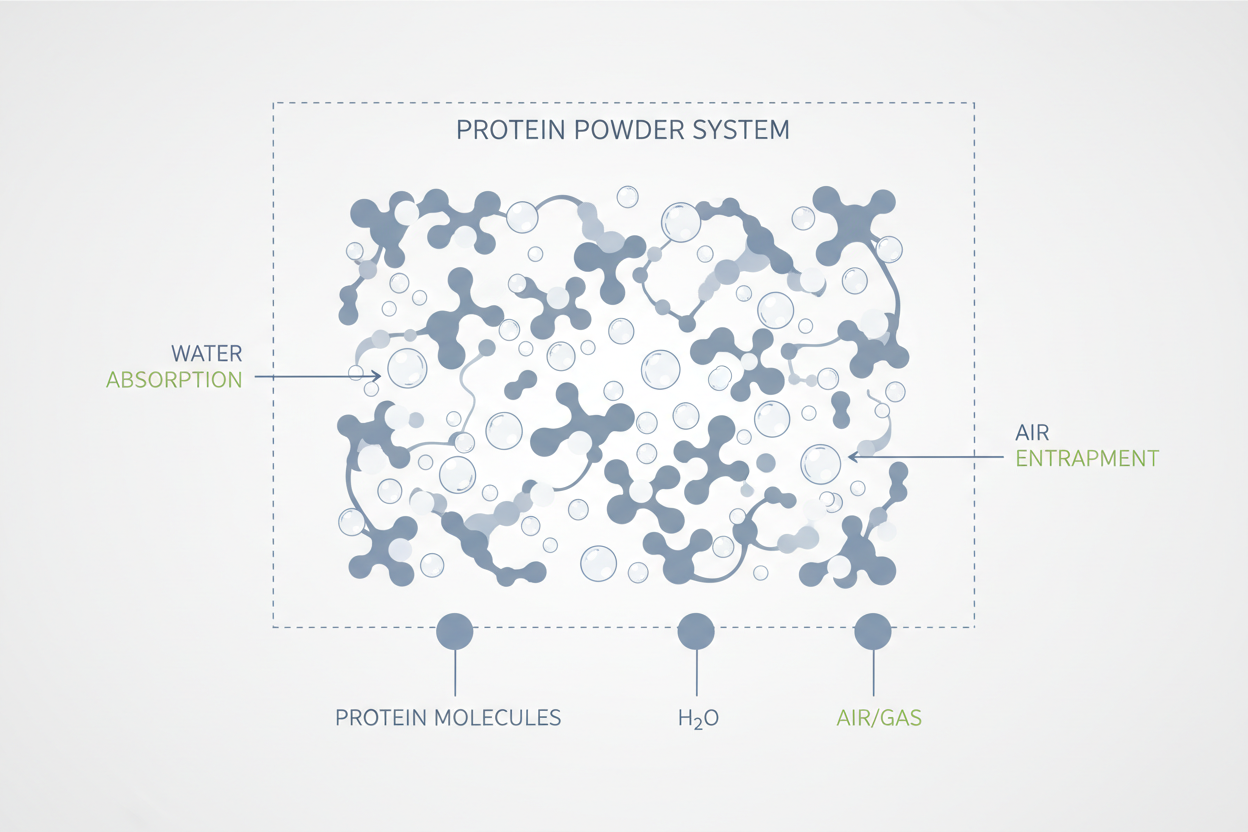
For example, some protein structures can trap air and contribute to foam formation. Others interact with fats to stabilize emulsions. Still others absorb water and increase viscosity.
These behaviors are mechanical and structural rather than nutritional.
Processing methods may alter how these structural regions are exposed, which can affect functional behavior in formulation.
Water Binding and Viscosity
Water interaction is one of the most relevant functional properties in protein powders.
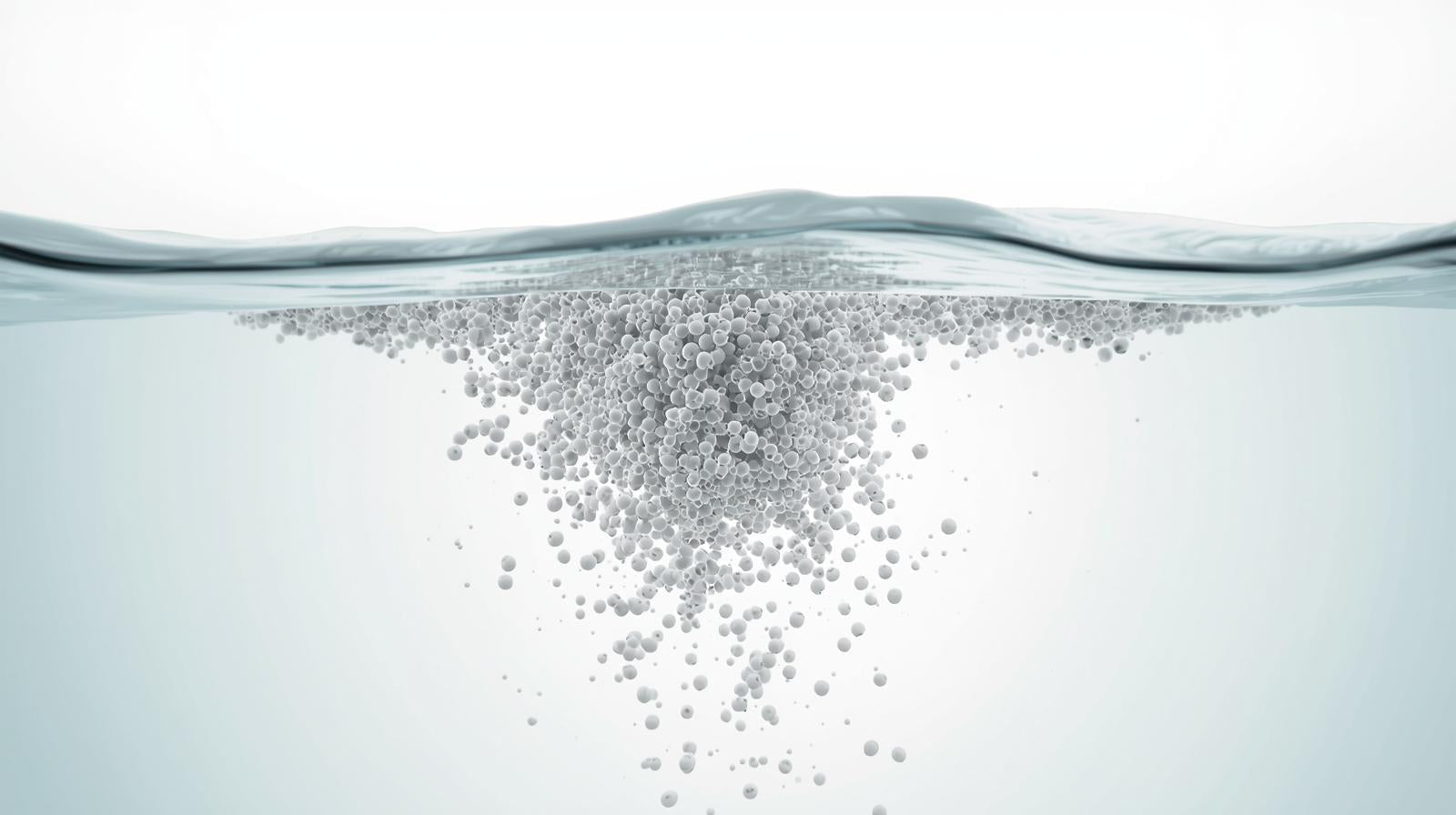
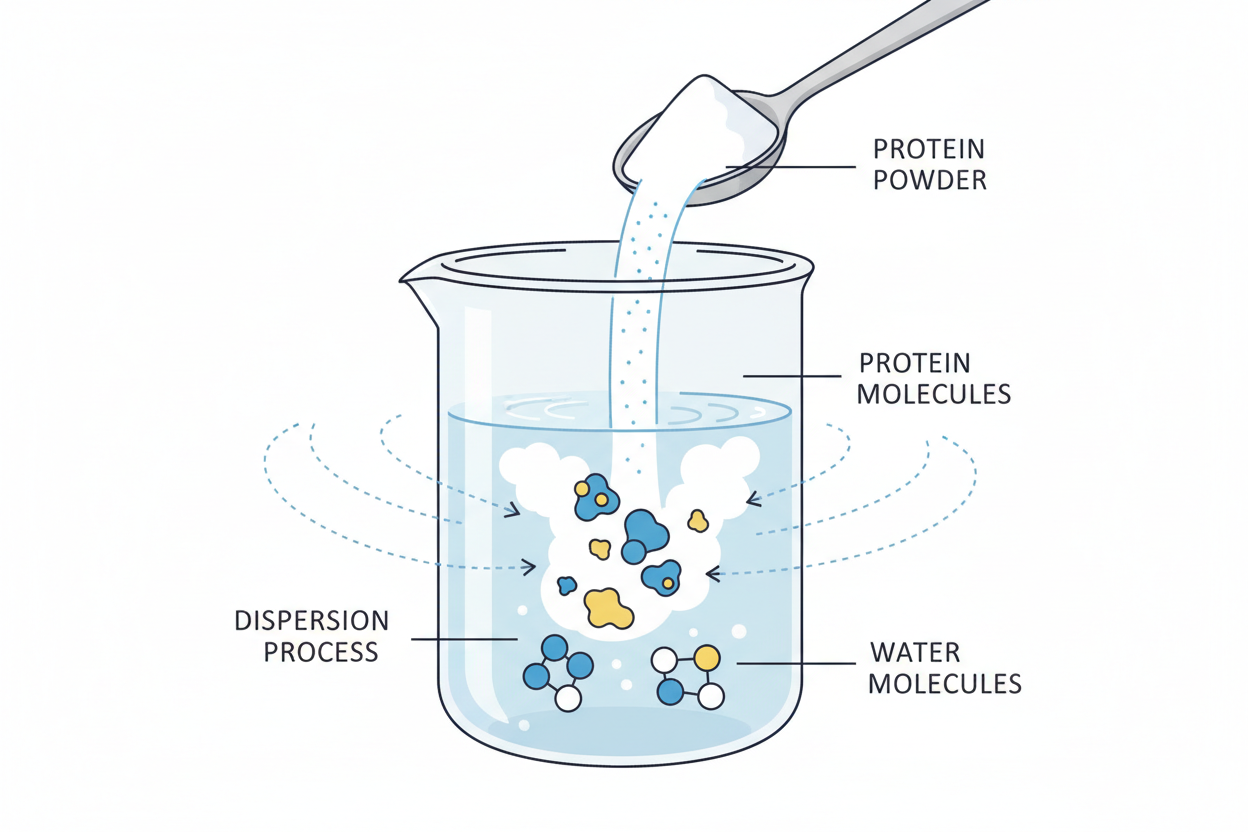
When protein particles are dispersed in liquid, they may bind water molecules. This interaction can influence thickness and mouthfeel.
Proteins with higher water binding capacity may contribute to increased viscosity. This does not change the protein’s amino acid structure but affects how the mixture behaves physically.
Water binding is influenced by:
• Protein structure
• Particle size
• Processing history
• Moisture content
Functional behavior therefore reflects both inherent structure and manufacturing control.
Emulsification and Foam Stability
Proteins can also function as emulsifiers.
An emulsifier helps stabilize mixtures of water and fat by interacting with both phases. Certain protein structures contain regions that interact with water and regions that interact with lipids, allowing them to stabilize interfaces.
Similarly, proteins may support foam stability by forming networks around air bubbles. This behavior depends on structural flexibility and surface activity.
These functional roles are commonly evaluated during product development to ensure predictable mixing and texture.
Function Versus Digestibility
Protein ingredient function is separate from digestibility.
Functional behavior describes physical performance in formulation. Digestibility describes enzymatic breakdown in the body.
A protein may demonstrate strong functional properties while maintaining the same amino acid sequence and biological identity.
Maintaining separation between structural function and biological processing helps clarify protein fundamentals.
How This Fits Into Protein Fundamentals
Protein Fundamentals explains how protein behaves from sourcing through finished product.
Ingredient function represents the formulation stage of the lifecycle. It describes how protein contributes to texture, stability, and structural characteristics within powdered systems.
Understanding functional behavior complements discussions of variability, consistency, solubility, and stability.
The explanation remains focused on structural handling rather than nutritional claims.
Part of the Nutrition Foundations Series
This article is part of our Nutrition Foundations series, where we explain how protein ingredients behave during processing and formulation.
Visit the Nutrition Foundations hub to explore more articles in this series.
Related Articles in This Series
Protein Ingredient Solubility Explained
Protein Ingredient Variability Explained
Protein Ingredient Consistency Explained
Ingredient Processing and Digestibility
How Protein Ingredients Affect Mixability
About Earth Fuel
Earth Fuel is built around one principle: simple protein. Nothing extra. We focus on clear formulation, ingredient transparency, and structural integrity across every stage of the protein lifecycle. Learn more about our approach and formulation philosophy on the
Earth Fuel homepage
Frequently Asked Questions
Q: What does protein ingredient function refer to
A: It refers to how protein behaves structurally within a formulation, not its biological role after digestion.
Q: Does functional behavior change amino acids
A: No. Functional behavior relates to structure and interaction, not amino acid sequence.
Q: Can processing affect protein function
A: Processing can influence structural properties that affect functional behavior.
Q: Is viscosity related to protein function
A: Yes. Water binding capacity can influence viscosity and texture.
Q: Are functional properties the same as nutrition
A: No. Functional properties describe physical behavior in a mixture.
Q: Does function affect digestibility
A: Function concerns formulation behavior, while digestibility concerns biological breakdown.

Written by Earth Fuel