Protein Ingredient Solubility Explained
Protein ingredient solubility refers to how well a protein ingredient disperses and dissolves in a liquid medium under defined conditions. Solubility is a physical property that influences how protein behaves during mixing and formulation rather than how it functions biologically after digestion.
This article explains protein ingredient solubility using foundational, neutral language. The focus remains on structural behavior, processing factors, and manufacturing considerations.
What Protein Ingredient Solubility Means
Solubility describes the ability of a substance to dissolve in a liquid.
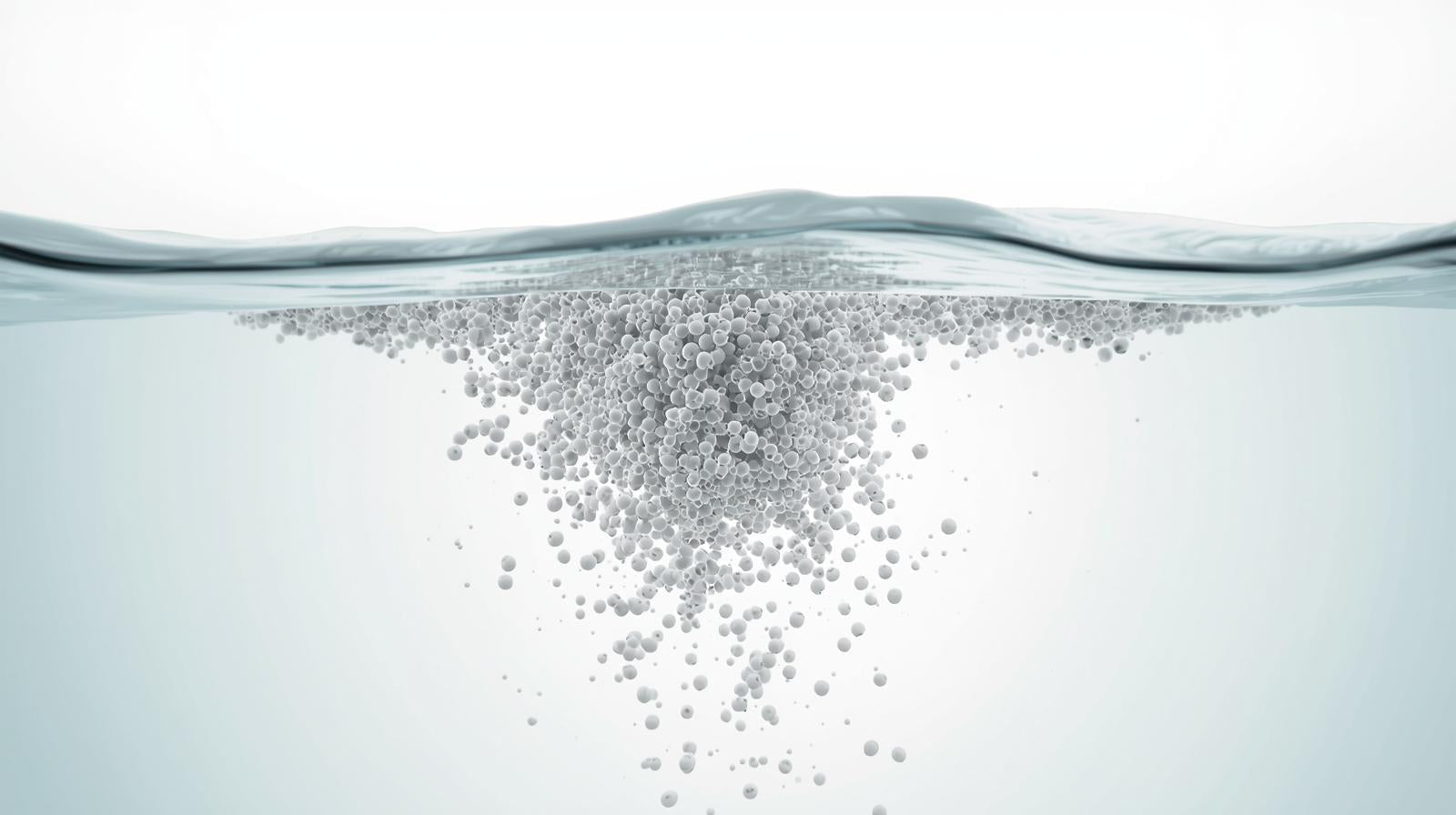
For protein ingredients, solubility typically refers to how protein particles disperse in water or other liquids. Complete dissolution at a molecular level is not always required. Instead, solubility in powdered protein systems often involves uniform dispersion without visible separation or sedimentation.
Solubility is influenced by:
• Protein structure
• Particle size
• Surface characteristics
• Processing conditions
• Liquid temperature
Protein ingredient solubility does not change amino acid sequence. It reflects how protein interacts physically with liquids during preparation.
Structural Factors That Influence Solubility
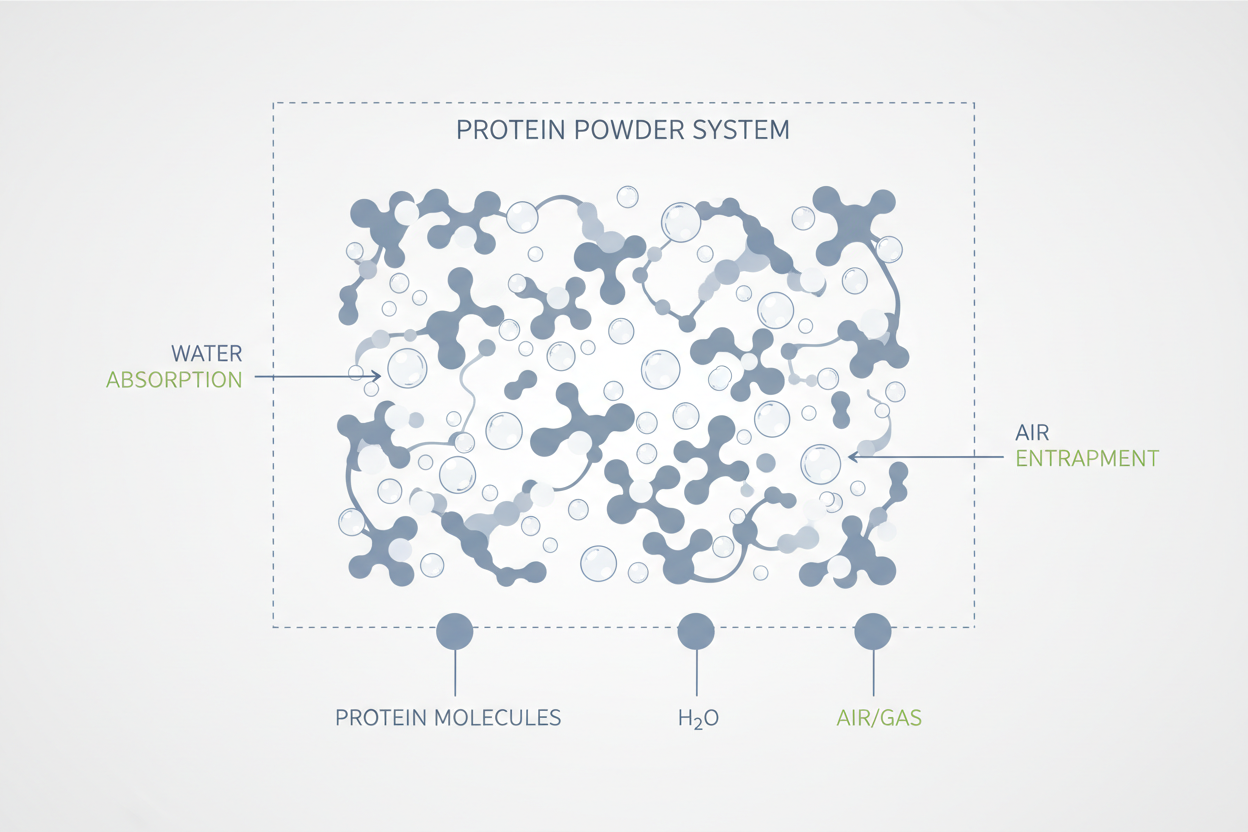
Protein molecules are composed of amino acid chains folded into specific structures.
During processing, heat and drying can alter how these chains are folded. Structural unfolding may expose hydrophilic or hydrophobic regions, influencing how the protein interacts with water.
Particle size also plays a role. Smaller particles generally disperse more easily than larger particles due to increased surface area. However, extremely fine particles may clump if moisture is present.
Surface characteristics, including charge and polarity, affect how protein particles attract or repel water molecules.
Solubility therefore depends on both molecular structure and physical form.
Processing and Solubility
Processing methods influence solubility characteristics.
Extraction, filtration, drying, and milling steps affect particle size distribution and structural arrangement. For example, spray drying temperature can influence how protein particles form and how easily they disperse later.
Mechanical processing tends to preserve structural integrity while shaping physical form. Chemical assisted isolation may alter surface properties that affect dispersion behavior.
Manufacturers monitor solubility during quality control to ensure predictable mixing performance.
Solubility testing typically involves standardized agitation in controlled temperature water to observe dispersion characteristics.
Solubility Versus Digestibility
Solubility and digestibility are separate concepts.
Solubility describes how protein behaves in liquid during preparation. Digestibility refers to how protein is broken down into amino acids within the digestive system.
A protein ingredient may demonstrate lower or higher solubility while maintaining the same amino acid composition.
Separating these concepts helps clarify structural behavior versus biological processing.
How Solubility Affects Mixability
In finished products, solubility contributes to mixability.
Protein ingredients that disperse uniformly are less likely to form visible clumps or sediment. Mixability depends not only on protein solubility but also on formulation factors such as particle size matching and moisture control.
Solubility supports consistent blending behavior in both manufacturing and consumer preparation.
How This Fits Into Protein Fundamentals
Protein Fundamentals explains how structural properties influence ingredient behavior before digestion.
Solubility represents one aspect of how protein interacts with liquids during preparation and formulation. It complements discussions of variability, consistency, processing, and stability.
The explanation remains focused on structural and handling characteristics rather than performance claims.
Part of the Nutrition Foundations Series
This article is part of our Nutrition Foundations series, where we explain how protein ingredients behave during processing and preparation.
Visit the Nutrition Foundations hub to explore more articles in this series.
Related Articles in This Series
Protein Ingredient Variability Explained
Protein Ingredient Consistency Explained
Ingredient Processing and Digestibility
Protein Ingredient Stability Explained
How Protein Ingredients Affect Mixability
About Earth Fuel
Earth Fuel is built around one principle: simple protein. Nothing extra. We focus on clear formulation, ingredient transparency, and structural integrity across every stage of the protein lifecycle. Learn more about our approach and formulation philosophy on the
Earth Fuel homepage
Frequently Asked Questions
Q: Does solubility change amino acid composition
A: No. Solubility refers to physical dispersion behavior, not amino acid structure.
Q: Is higher solubility always better
A: Solubility describes dispersion properties and does not alone determine ingredient quality.
Q: Does temperature affect protein solubility
A: Yes. Temperature can influence how protein disperses in liquid.
Q: Is solubility the same as mixability
A: Solubility contributes to mixability but they are not identical concepts.
Q: Can processing change solubility
A: Processing methods can influence particle size and structural behavior, which may affect solubility.
Q: Does solubility affect digestion
A: Solubility concerns liquid dispersion, while digestion occurs biologically in the body.

Written by Earth Fuel