Protein Ingredient Sourcing Explained
Protein ingredient sourcing refers to where protein ingredients come from and how raw materials are selected before processing begins. Sourcing focuses on origin, traceability, and consistency rather than outcomes, performance, or recommendations.
This article explains protein ingredient sourcing using clear, foundational language. The emphasis is on upstream decisions and supply chain structure, not evaluation or claims.
What Protein Ingredient Sourcing Means
Protein ingredient sourcing describes the selection of raw materials used to produce protein ingredients.
This includes the agricultural origin of the source material, how it is grown or produced, and how it enters the manufacturing supply chain. Sourcing happens before extraction, separation, or drying.
It sets the starting conditions for everything that follows.
Agricultural Origins of Protein Ingredients
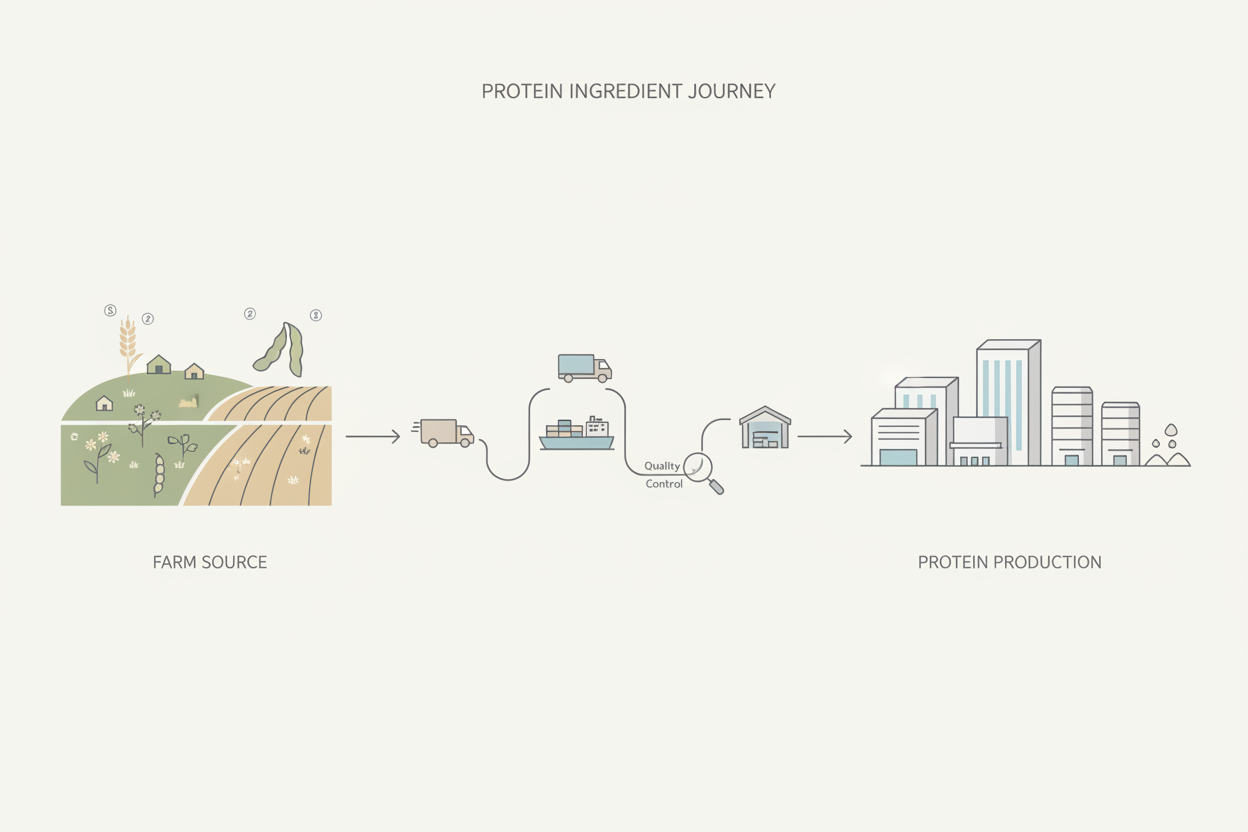
Protein ingredients begin at the farm or primary production site.
Plant based protein sources may include seeds, legumes, or grains grown in agricultural systems. Animal derived protein sources originate from livestock or dairy production. At this stage, protein exists within whole raw materials alongside other naturally occurring components.
Sourcing defines where these materials come from and how they are obtained.
Traceability and Supply Chain Flow
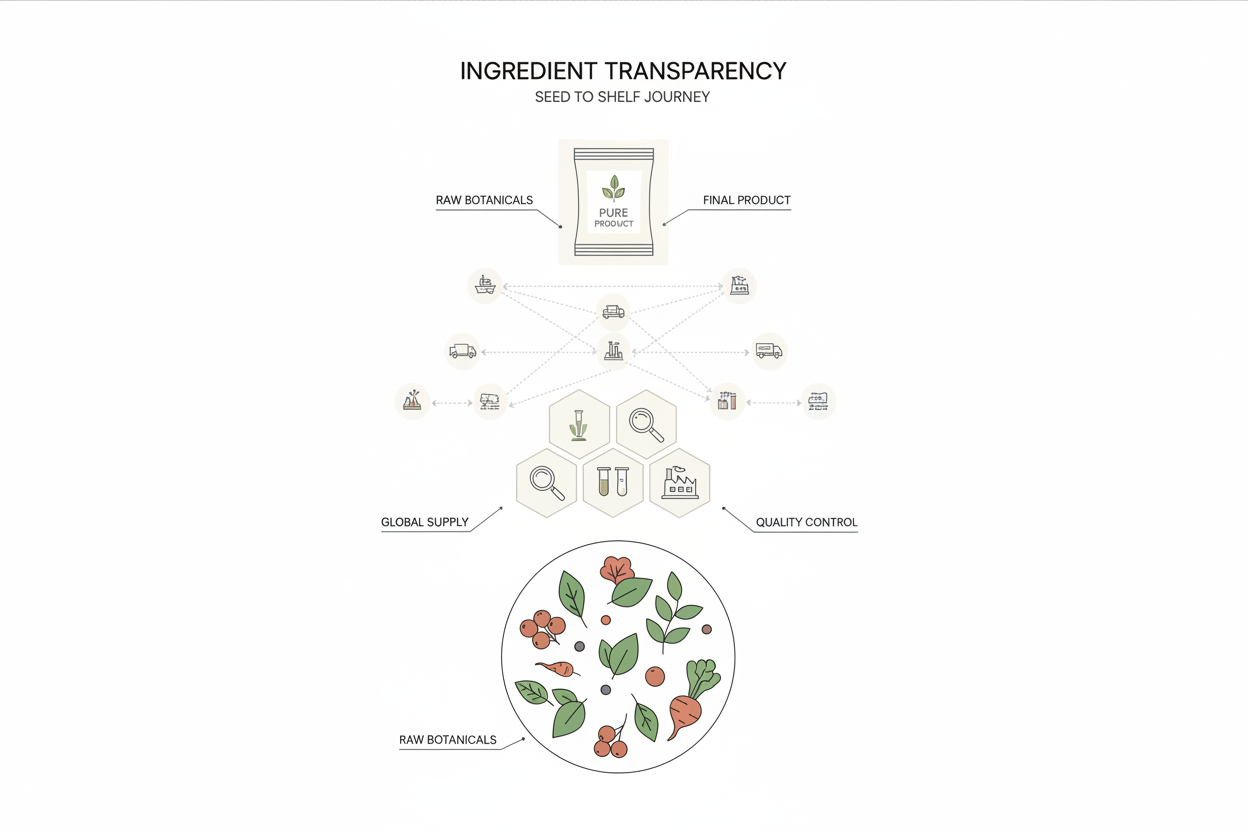
Sourcing includes traceability through the supply chain.
Raw materials move from production sites to processors through defined channels. Documentation and tracking help ensure that materials can be traced back to their origin.
Traceability supports consistency and accountability without altering the biological nature of protein.
Sourcing and Ingredient Consistency
Consistent sourcing supports consistent ingredients.
When raw materials are sourced from known origins with stable characteristics, downstream processing becomes more predictable. Variability in sourcing can influence physical characteristics such as texture, color, or solubility after processing.
Sourcing therefore plays a role in standardization without changing amino acid composition.
Sourcing Is Separate From Processing
Sourcing and processing are related but distinct.
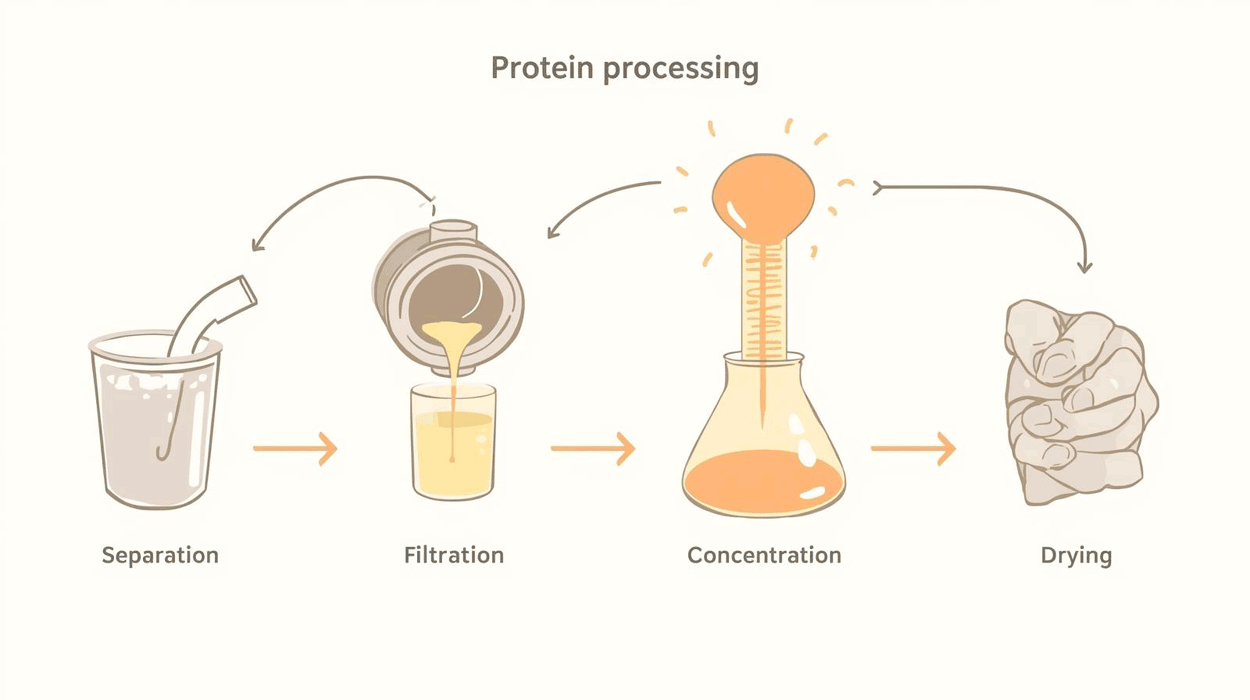
Sourcing determines where raw materials come from. Processing determines how protein is separated, concentrated, and prepared. Changes in sourcing do not automatically imply changes in processing methods.
Understanding this distinction helps clarify how protein ingredients are produced step by step.
Global and Regional Sourcing Considerations
Protein ingredient sourcing can involve global or regional supply chains.
Some ingredients are sourced locally, while others rely on international production and transport. These decisions are driven by availability, scale, and manufacturing requirements rather than biological function.
Regardless of origin, protein is ultimately handled through the same digestion and absorption systems.
How This Fits Into Protein Fundamentals
Protein Fundamentals explains how protein moves from source to use.
Understanding ingredient sourcing adds context to earlier discussions about processing and later discussions about quality and transparency. It explains the first step in the protein ingredient lifecycle without shifting into evaluation or claims.
The explanation remains grounded in structure and supply chain flow.
Part of the Nutrition Foundations Series
This article is part of our Nutrition Foundations series, where we explain how different macronutrients are digested and used by the body.
👉 Visit the Nutrition Foundations hub to explore more articles in this series.
Related Articles in This Series
About Earth Fuel
Earth Fuel is built around one principle: simple protein. Nothing extra. We focus on clear formulation, ingredient transparency, and structural integrity across every stage of the protein lifecycle. Learn more about our approach and formulation philosophy on the
Earth Fuel homepage
Frequently Asked Questions
Q: Does sourcing affect amino acids
A: No. Amino acid composition comes from the protein source itself rather than sourcing logistics.
Q: Is sourcing the same as ingredient quality
A: Sourcing describes origin and supply chain flow. Quality is discussed separately.
Q: Are protein ingredients always sourced locally
A: No. Sourcing may be local or global depending on production systems.
Q: Does sourcing change how protein is digested
A: No. Digestion depends on protein structure and processing, not geographic origin.
Q: Is sourcing the same as processing
A: No. Sourcing happens before processing begins.
Q: Does this article recommend sourcing choices
A: No. It explains sourcing concepts without recommendations.

Written by Earth Fuel