How Plant Proteins Are Extracted (Clean vs Chemical Methods)
Plant protein extraction is the process used to separate protein from plant based raw materials and convert it into a usable ingredient. This process focuses on isolating protein that already exists within plants rather than creating new protein.
How Is Vegan Protein Powder Made?
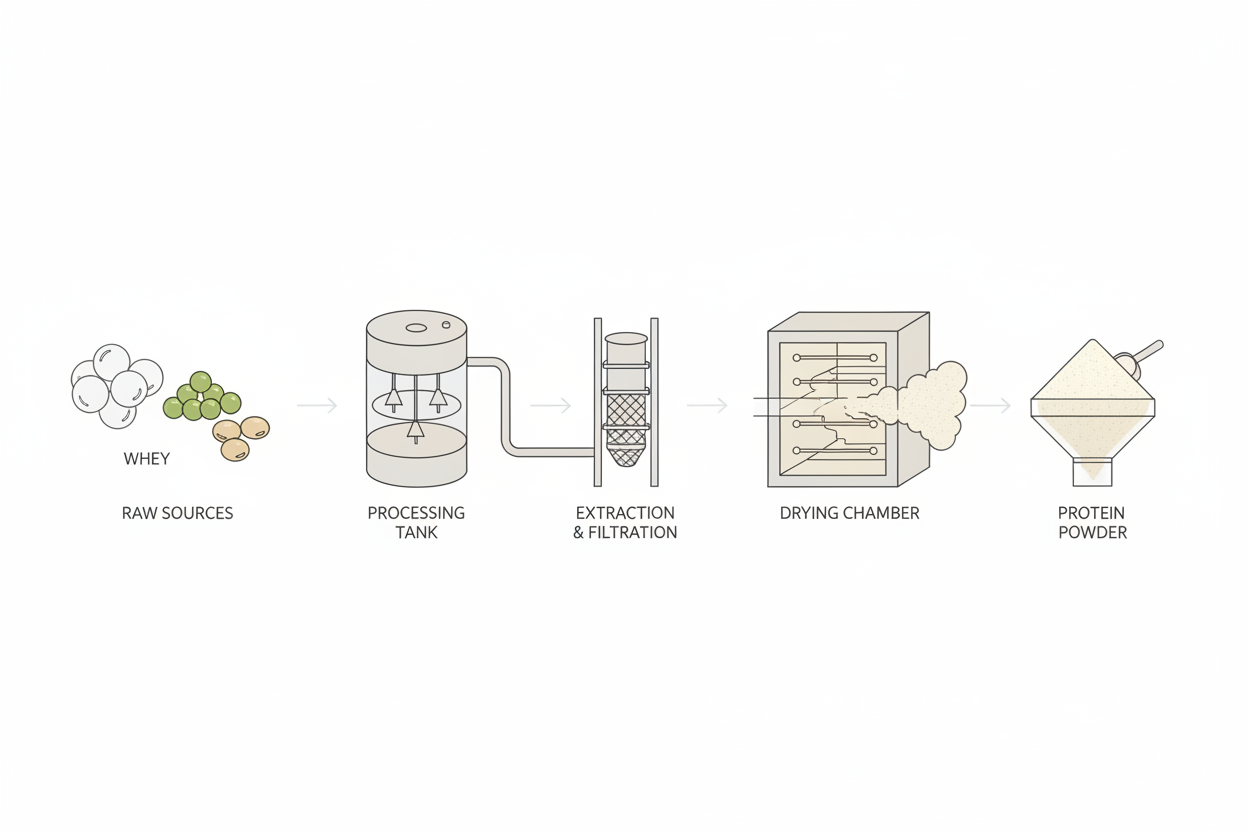
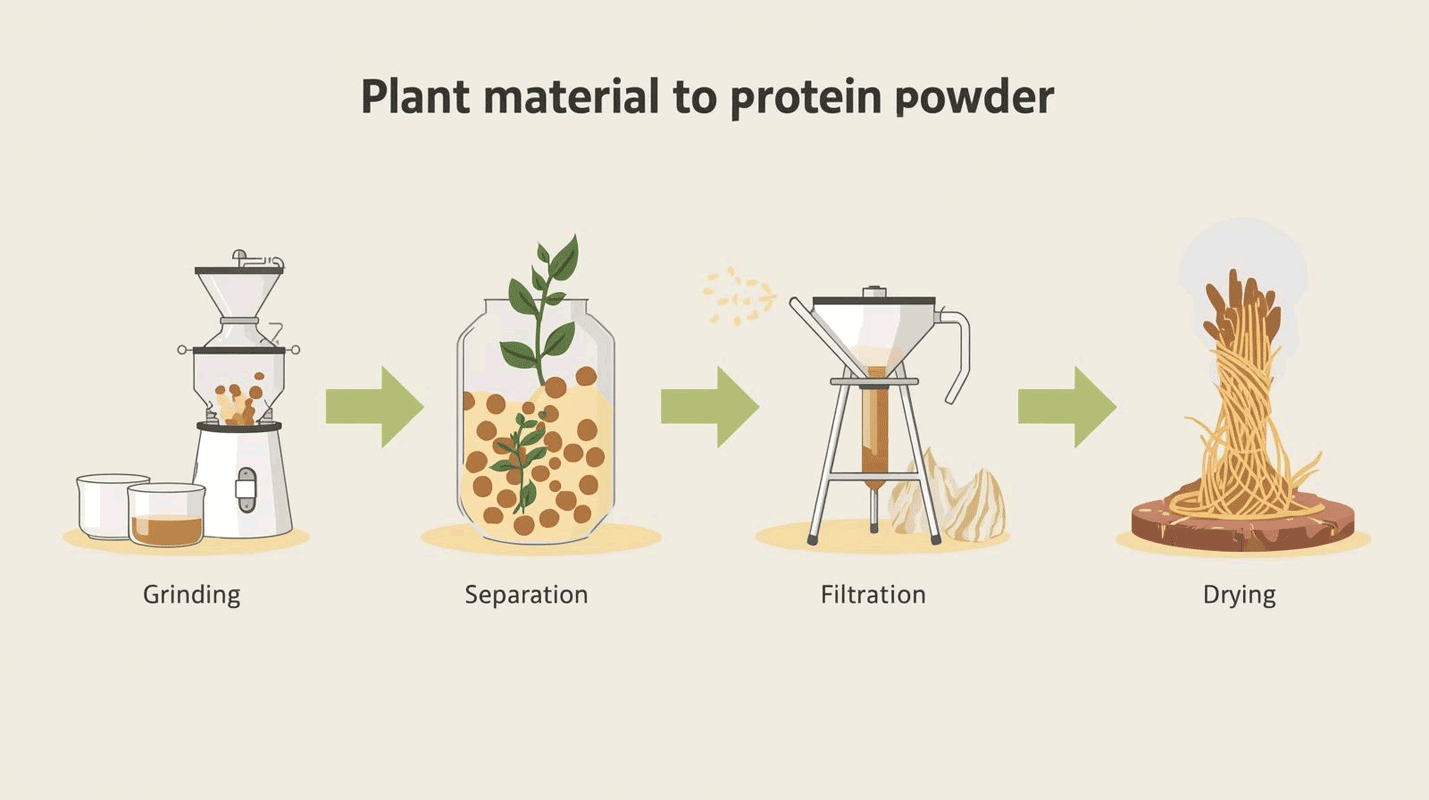
At its core, turning a raw plant into a scoop of high-quality supplement involves separating the protein molecules from the plant’s natural fibers, starches, and fats. This process typically follows four distinct manufacturing steps
- Harvesting & Cleaning: Raw ingredients like yellow split peas, pumpkin seeds, or almonds are harvested, sorted, and thoroughly washed.
- Grinding & Milling: The plant materials are mechanically ground down into a fine, nutrient-dense meal or flour.
- Separation & Filtration: Liquid or air currents are used to isolate and extract the pure protein from the surrounding starch and fiber.
- Drying into Powder: The concentrated liquid protein is gently spray-dried to evaporate all remaining moisture, leaving behind a clean, fine protein powder.
Plant protein extraction is the first stage of ingredient formation. To see how this fits into the full processing pipeline, review how protein powder ingredients are made:
https://getearthfuel.com/blogs/learn/how-protein-powder-ingredients-are-made
This article explains how plant proteins are extracted using clear, foundational language. The emphasis is on processing steps and structure, not outcomes, performance, or recommendations.
You can also explore how processing methods influence the final protein structure:
https://getearthfuel.com/blogs/learn/protein-powder-processing-methods-explained
Plant Proteins Begin Inside Whole Plants
Plant proteins originate within whole plant materials.
Seeds, legumes, grains, and other plant sources contain protein alongside fiber, starches, fats, and naturally occurring compounds. In their raw form, these components exist together as part of the plant’s structure.
Extraction focuses on separating protein from this complex matrix.
Grinding and Preparation
The extraction process typically begins with mechanical preparation.
Plant materials are cleaned and ground into smaller particles. This step increases surface area and makes it easier to access protein during later stages of extraction.
Grinding does not remove protein. It prepares the material for separation.
Separation Using Water Based Methods
Many plant protein extraction processes rely on water based separation.
Ground plant material is mixed with water to help dissolve and release protein from other components. Filtration or centrifugation steps then separate protein rich portions from fiber and other solids.
These steps may be repeated to increase protein concentration.
Concentration and Refinement
After initial separation, protein rich material may be further refined.
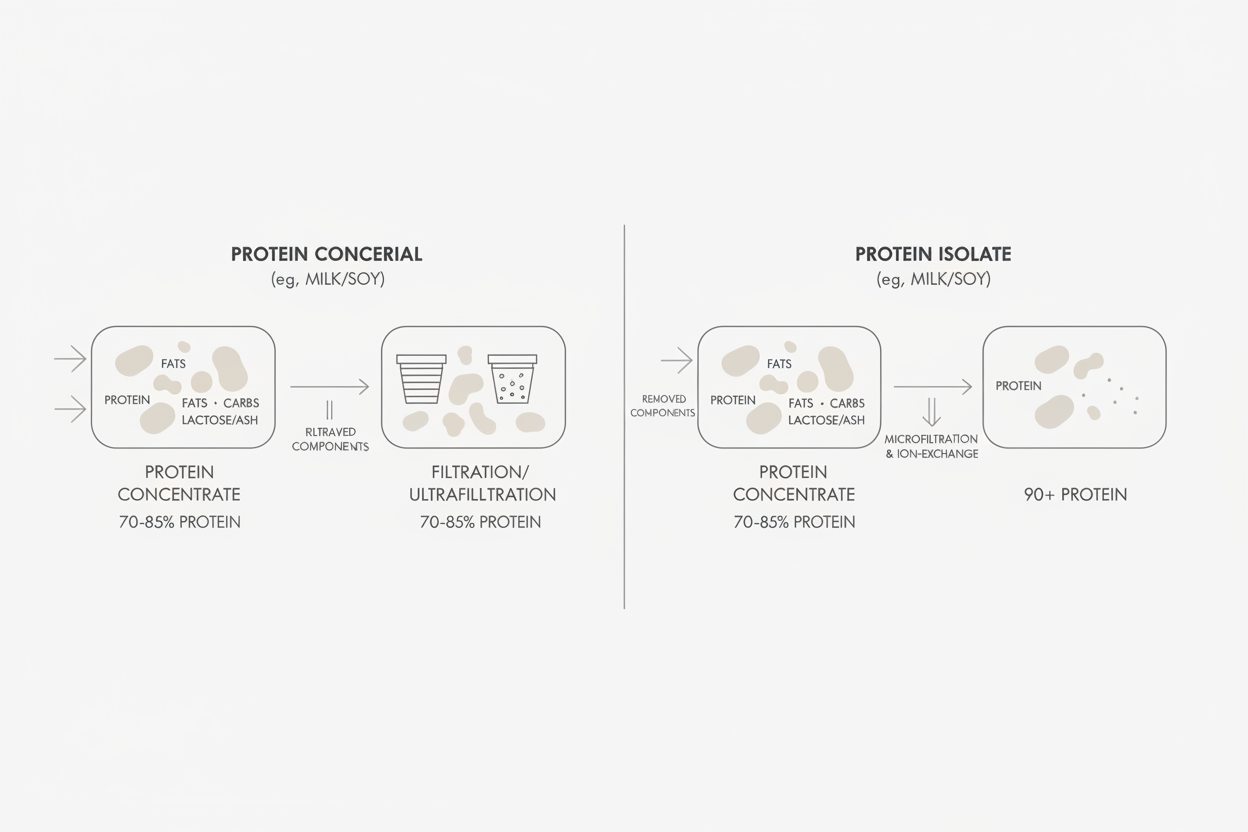
Additional filtration steps can remove remaining non protein components and adjust protein concentration. The extent of refinement determines whether the final ingredient is classified as a concentrate or isolate.
These distinctions reflect processing depth rather than changes in amino acid structure.
Drying Into Powder Form
Once protein has been separated and concentrated, it is dried.
Drying removes moisture and converts liquid or semi liquid protein material into powder form. This step supports shelf stability, transport, and use in finished products.
Drying methods are selected to maintain consistency and physical structure.
Extraction Influences Physical Characteristics
The extraction process affects the physical properties of plant protein ingredients.
Processing can influence:
-
texture
-
particle size
-
solubility
-
consistency
These characteristics matter for formulation and manufacturing, but they do not alter the basic role of plant protein as a source of amino acids.
How This Fits Into Protein Fundamentals
Protein Fundamentals explains how protein moves from source to use.
Understanding how plant proteins are extracted provides context for later discussions about digestibility, structure, and formulation. It explains how plant based protein ingredients are produced without shifting into evaluation or claims.
The explanation remains focused on process and production.
Part of the Nutrition Foundations Series
This article is part of our Nutrition Foundations series, where we explain how different macronutrients are digested and used by the body.
👉 Visit the Nutrition Foundations hub to explore more articles in this series.
Related Articles in This Series
About Earth Fuel
Earth Fuel is built around one principle: simple protein. Nothing extra. We focus on clear formulation, ingredient transparency, and structural integrity across every stage of the protein lifecycle. Learn more about our approach and formulation philosophy on the
Earth Fuel homepage

Frequently Asked Questions
Q: Are plant proteins chemically created
A: No. Plant proteins already exist within plants and are separated during extraction.
Q: Does extraction change amino acids
A: Extraction focuses on separation and concentration rather than altering amino acid structure.
Q: Are all plant proteins extracted the same way
A: No. Methods vary depending on the plant source and desired ingredient characteristics.
Q: What is the difference between concentrates and isolates
A: The difference reflects how much non protein material is removed during processing.
Q: Does extraction remove all fiber and starch
A: Extraction reduces these components, but small amounts may remain depending on processing depth.
Q: Does this article evaluate plant protein quality
A: No. It explains how plant proteins are extracted, not how they compare.

Written by Earth Fuel