Plant Protein and Ingredient Transparency
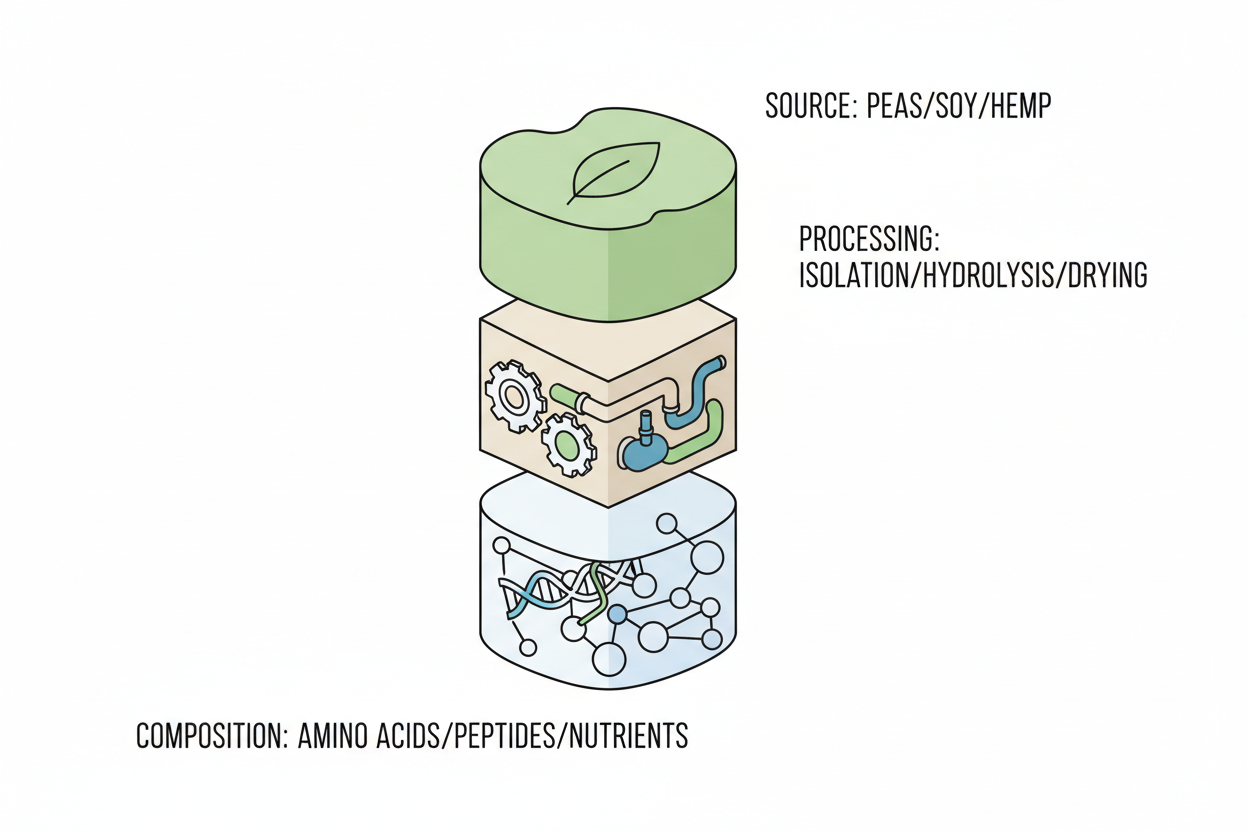
Plant protein ingredient transparency refers to how clearly the structure, sourcing, and composition of a protein ingredient are presented. Understanding transparency from a mechanical perspective focuses on how information about the ingredient reflects its actual structure and processing.
All plant protein ingredients originate from plant based materials such as seeds, legumes, and grains. These materials undergo processing to isolate protein and create a usable ingredient.
Transparency is not a property of the protein itself, but a way of describing how clearly the ingredient’s characteristics are communicated.
This article explains plant protein and ingredient transparency using neutral, science based language focused on sourcing, processing, and composition.
What Ingredient Transparency Means
Ingredient transparency refers to how clearly an ingredient is described and understood.
This includes information about the source material, how the protein was processed, and what components are present in the final ingredient.
Transparency allows the structure and composition of the ingredient to be evaluated without assumptions.
Understanding transparency begins with identifying how information about the ingredient is presented.
Source Identification
One aspect of transparency is clearly identifying the source of the plant protein.
Plant protein can be derived from different materials such as seeds, legumes, or grains. Each source has its own structural characteristics.
Clearly stating the source provides insight into how the protein is structured within the plant and how it may have been processed.
Understanding the origin of the ingredient is a key part of transparency.
Processing Disclosure
Another component of transparency is how processing methods are communicated.
Plant protein undergoes extraction, refinement, and drying to become a usable ingredient. These processes influence how the protein is structured and presented.
A deeper explanation of processing methods can be found here:
protein powder processing methods explained
Providing information about processing helps clarify how the ingredient was created.
Understanding processing disclosure supports a more complete view of the ingredient.
Composition Clarity
Transparency also includes clear information about the composition of the ingredient.
This involves identifying what components are present, such as protein content and any additional elements that remain from the original plant material.
Composition reflects how the ingredient has been formulated and processed.
Understanding composition allows for a clearer evaluation of plant protein ingredients.
Evaluating Transparency Mechanically
Evaluating ingredient transparency from a mechanical perspective focuses on the clarity of information related to structure and composition.
This includes source identification, processing details, and ingredient composition.
By focusing on these elements, plant protein ingredients can be understood without relying on assumptions or incomplete information.
This approach supports a more accurate and structured understanding of plant protein.
Part of the Protein Science Foundations Series
This article is part of the Earth Fuel Protein Science Foundations series, where we explore how protein functions within modern nutrition.
The series focuses on protein structure, sourcing, and how protein ingredients are used in formulation systems.
Related Articles in This Series
Plant Protein Explained for Beginners
Plant Protein Compared Without Bias
What Protein Quality Really Means
Price vs Quality in Protein Powders
Why Cheaper Protein Is Not Always Better
About Earth Fuel
Earth Fuel is built around one principle: simple protein. Nothing extra. We focus on clean ingredients, transparent sourcing, and clear formulation practices across every stage of the protein lifecycle. Learn more about the formulation and ingredients behind Earth Fuel plant protein powder:
Frequently Asked Questions
What is ingredient transparency in plant protein
It refers to how clearly the source, processing, and composition of the ingredient are communicated.
Why is source identification important
It helps explain how the protein is structured within the plant.
Does processing affect transparency
Yes. Clear disclosure of processing helps explain how the ingredient is created.
What does composition clarity mean
It refers to understanding what components are present in the ingredient.
How can transparency be evaluated
By examining source, processing, and composition information.

Written by Earth Fuel