How Fiber Impacts Protein Absorption
Fiber is commonly associated with digestion and gut health, but its relationship with protein absorption is often misunderstood. Some people worry that fiber interferes with protein, while others assume more fiber is always better.
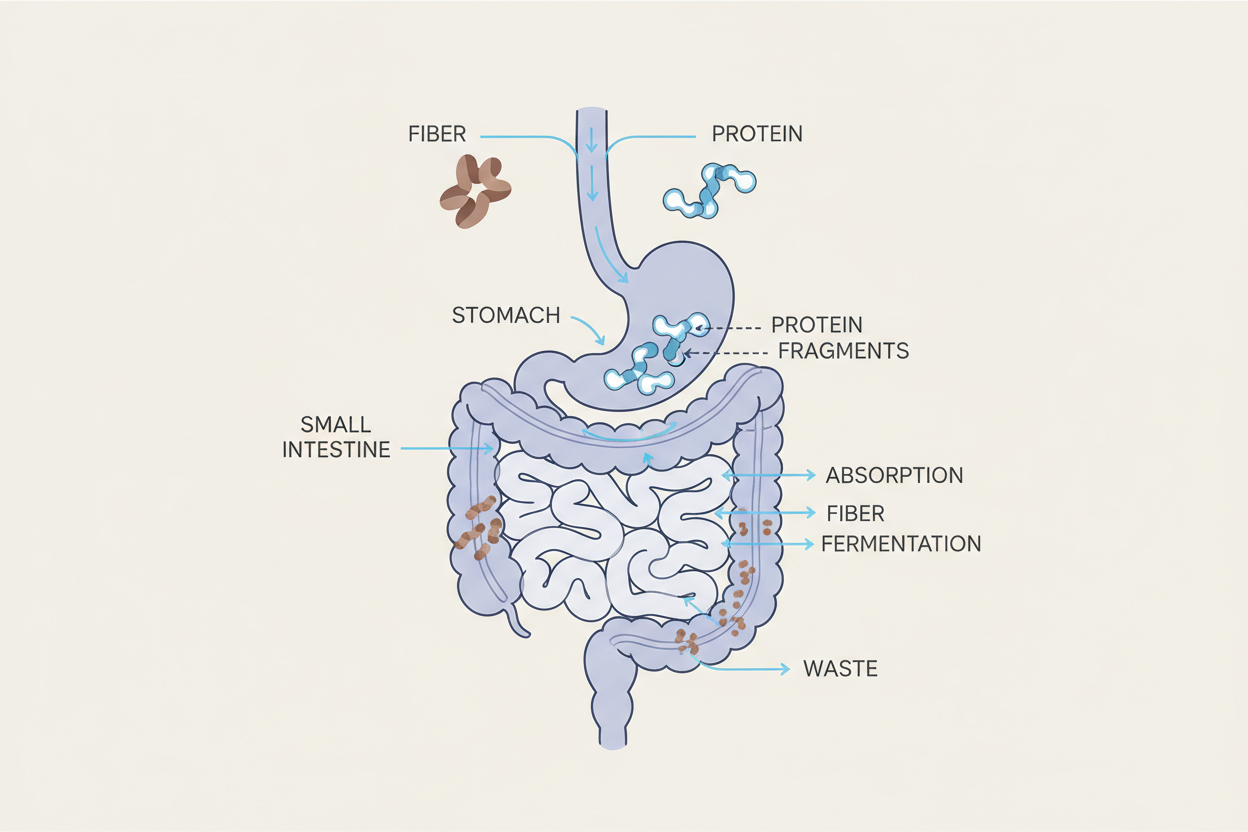
Fiber can influence how protein is processed during digestion. This article explains how protein is broken down step by step:
https://getearthfuel.com/blogs/learn/what-happens-to-protein-during-digestion
The reality is more nuanced.
Understanding how fiber interacts with protein digestion helps explain why formulation, balance, and ingredient selection matter when choosing protein sources.
This guide explains what fiber does in digestion, how it affects protein absorption, and why context matters.
What Is Dietary Fiber
Dietary fiber is a type of carbohydrate found in plant foods that the body does not fully digest.
Fiber passes through the digestive system largely intact and plays a role in:
-
Digestion timing
-
Stool formation
-
Nutrient movement through the gut
There are different types of fiber, and each behaves differently during digestion.
You can also explore how protein is absorbed after digestion:
https://getearthfuel.com/blogs/learn/how-protein-is-absorbed-in-the-small-intestine
Soluble vs Insoluble Fiber
Fiber is generally classified into two categories.
Soluble fiber
Soluble fiber dissolves in water and forms a gel-like substance during digestion. It can slow the movement of food through the digestive tract.
Insoluble fiber
Insoluble fiber does not dissolve in water and adds bulk to stool. It helps move material through the digestive system.
Both types are part of normal digestion and can influence how nutrients are processed.
How Protein Is Digested and Absorbed
Protein digestion involves breaking protein into amino acids so they can be absorbed through the small intestine.
This process depends on:
-
Enzyme activity
-
Digestion speed
-
Movement of food through the gut
Fiber can influence this environment, but it does not stop protein digestion from occurring.
Does Fiber Reduce Protein Absorption
Fiber does not block protein absorption.
Instead, fiber can change the timing of digestion. When fiber slows digestion, protein may be absorbed more gradually rather than all at once.
For most people, this does not reduce the total amount of protein absorbed. It simply affects how quickly amino acids enter the bloodstream.
Fiber and Digestive Comfort
Fiber can influence digestive comfort depending on:
-
Type of fiber
-
Amount consumed
-
Individual tolerance
-
Overall formulation
In some cases, very high fiber intake combined with protein may feel uncomfortable for certain individuals, especially if digestion is sensitive.
Balanced formulations consider fiber content alongside protein quality.
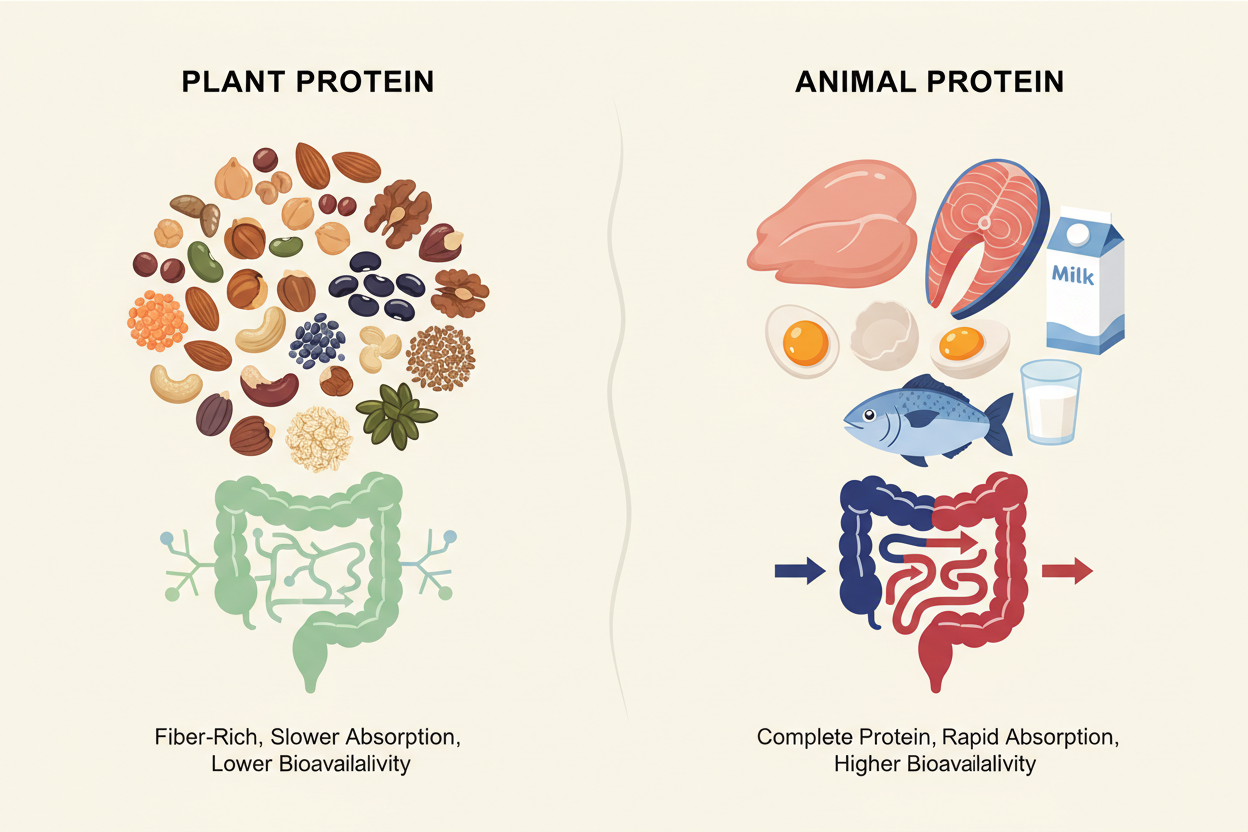
Fiber in Plant Based Protein Sources
Plant based proteins often naturally contain fiber because they are derived from whole plant ingredients.
This fiber can contribute to:
-
Slower digestion
-
Steadier nutrient release
-
Digestive regularity
However, the amount and type of fiber matter. Excess fiber without balance may affect comfort rather than absorption.
Why Balance Matters More Than Elimination
Removing fiber entirely is not necessary for protein absorption. Instead, balance is key.
Thoughtful formulation aims to:
-
Support digestion
-
Maintain amino acid availability
-
Avoid unnecessary digestive strain
This is why protein quality involves more than protein grams alone.
Fiber, Protein, and Daily Nutrition
In everyday nutrition, protein and fiber work together as part of a broader dietary pattern.
For most people:
-
Moderate fiber does not interfere with protein use
-
Digestion speed varies naturally
-
Overall intake matters more than single meals
Understanding this relationship helps reduce confusion around plant based protein choices.
Part of the Nutrition Foundations Series
This article is part of our Nutrition Foundations series, where we explain how protein digestion, absorption, and ingredient balance support normal body function.
👉 Visit the Nutrition Foundations hub to explore more articles in this series.
Related Articles in This Series
You may also find these helpful:
About Earth Fuel
Earth Fuel is built around one principle: simple protein. Nothing extra. We focus on clear formulation, ingredient transparency, and structural integrity across every stage of the protein lifecycle. Learn more about our approach and formulation philosophy on the
Earth Fuel homepage
FAQ
Does fiber block protein absorption
No. Fiber can affect digestion speed but does not prevent protein absorption.
Is high fiber bad for protein digestion
Very high fiber intake may affect comfort for some individuals, but moderate fiber is part of normal digestion.
Do plant based proteins contain fiber
Many plant based proteins naturally contain fiber due to their source ingredients.
Can fiber slow amino acid absorption
Fiber may slow the rate of digestion, leading to more gradual amino acid absorption.
Should protein powders avoid fiber
Not necessarily. Balance and formulation matter more than elimination.
Does fiber affect protein quality
Fiber does not change protein quality but can influence digestion experience.

Written by Earth Fuel