Do You Absorb Plant Protein as Well as Animal Protein
Protein absorption is one of the most misunderstood topics in nutrition. Many people assume that animal protein is always absorbed better than plant protein, while plant protein is somehow “inferior.” The reality is more nuanced.
The short answer is: yes, plant protein can be absorbed effectively, but absorption depends on several factors including protein source, processing, formulation, and the individual consuming it.
This article breaks down how protein absorption works, how plant and animal proteins compare, and what actually matters when choosing a protein you feel good using every day.
How Protein Absorption Works in the Body
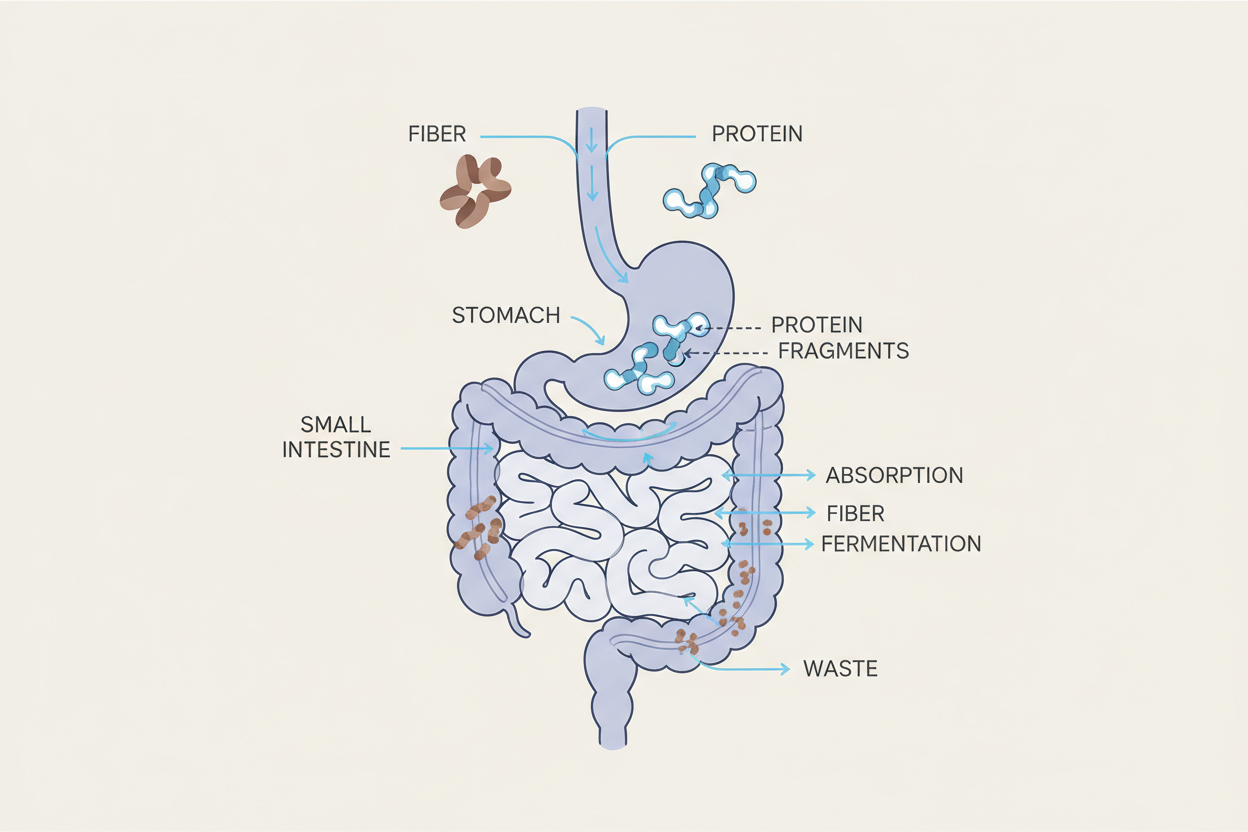
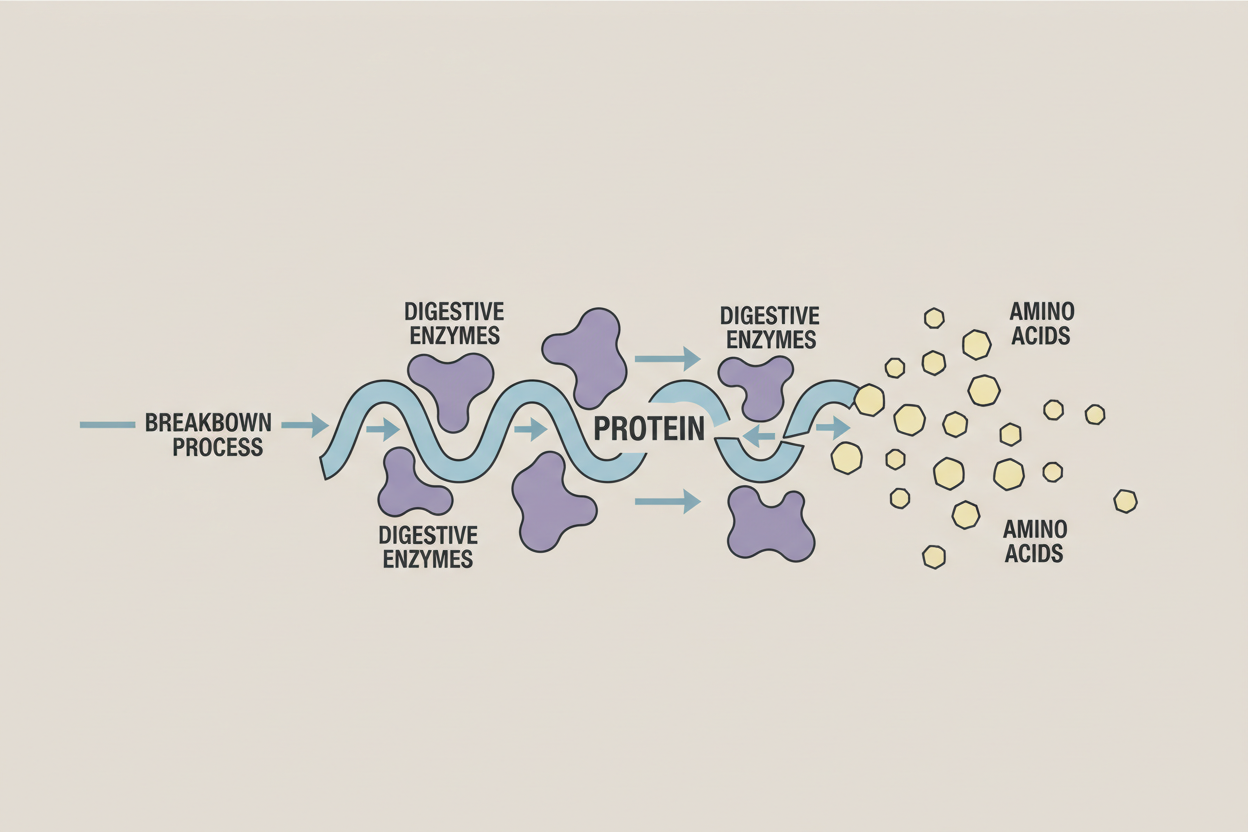
Protein absorption begins once protein is broken down into amino acids and small peptides during digestion.
The process happens in stages:
-
Protein is mechanically broken down in the mouth
-
Stomach acid and enzymes begin separating protein structures
-
Additional enzymes in the small intestine break proteins into absorbable units
-
Amino acids are absorbed through the intestinal lining into the bloodstream
Absorption refers to how efficiently these amino acids enter circulation, not just how much protein you consume.
Eating more protein does not automatically mean absorbing more protein.
What Determines How Well Protein Is Absorbed
Protein absorption is influenced by several factors:
Protein structure
Different proteins have different physical and chemical structures. Some are more compact, while others are embedded in fiber or plant cell walls that require additional breakdown.
Digestibility
Digestibility refers to how easily enzymes can access and break down protein. Proteins that are easier to digest tend to be absorbed more efficiently.
Processing and formulation
Processing methods such as grinding, filtering, fermenting, or isolating protein can improve digestibility. Formulation matters just as much as protein source.
Other ingredients
Added fibers, gums, artificial sweeteners, and thickeners can slow digestion or contribute to discomfort for some people.
Individual variation
Digestive enzyme production, gut health, and sensitivity vary from person to person. What works well for one individual may not feel the same for another.
Comparing Plant Protein and Animal Protein Absorption
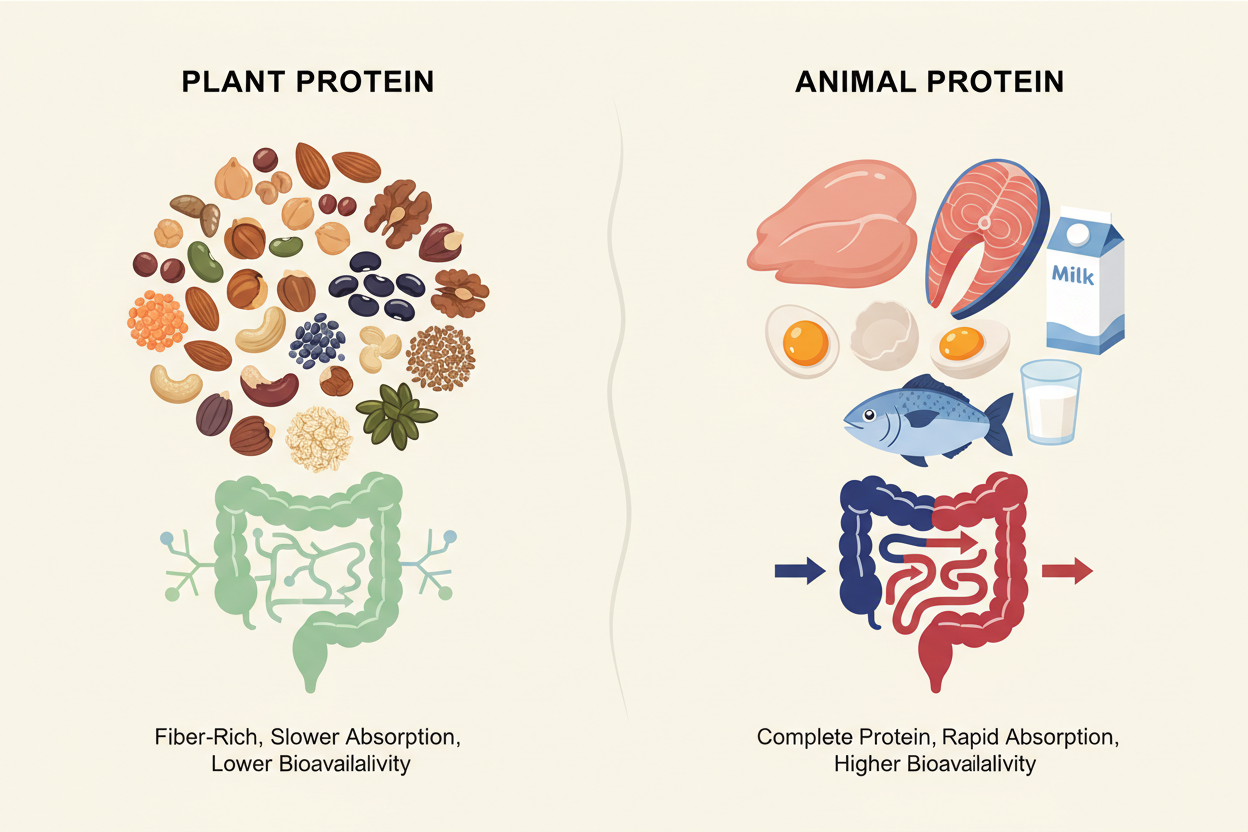
Animal proteins like whey, eggs, and meat are often described as highly digestible because they contain all essential amino acids and lack plant fiber structures.
Plant proteins can also be absorbed effectively, but they differ in a few key ways.
Amino acid profile
Some plant proteins contain lower levels of certain essential amino acids. This does not mean they are unusable — it means formulation and protein blending matter.
Fiber content
Plant proteins often contain natural fiber. While fiber is beneficial for overall health, it can slow digestion and alter how protein is broken down.
Anti-nutrients
Certain plant foods naturally contain compounds that can interfere with nutrient absorption. Processing and sourcing can significantly reduce their impact.
Processing quality
Well-processed plant proteins are often far easier to digest and absorb than minimally processed or poorly formulated ones.
In practice, many people absorb plant protein just as well as animal protein when the formulation is thoughtful.
Does “Complete Protein” Automatically Mean Better Absorption
Not necessarily.
A complete protein contains all essential amino acids, but completeness does not guarantee better digestion or comfort.
To understand absorption properly, it helps to first look at how the body digests plant based protein, since digestion is what makes absorption possible in the first place. Some complete proteins may still cause digestive discomfort depending on:
-
serving size
-
added ingredients
-
individual sensitivity
-
formulation complexity
Absorption is about more than amino acid checklists — it’s about how the protein behaves in the digestive system.
Why Some People Feel Better Using Plant Protein
Many people report feeling better using certain plant-based proteins, even if absorption rates are similar.
Common reasons include:
-
fewer artificial ingredients
-
lower lactose exposure
-
fewer gums and thickeners
-
lighter texture
-
simpler formulations
Comfort plays a role in consistency. A protein you feel good using is more likely to become part of a daily routine.
The Role of Digestive Enzymes and Protein Breakdown
Digestive enzymes help break protein into absorbable components.
Some formulations include enzymes to support protein breakdown, especially for people who:
-
consume higher protein amounts
-
experience digestive sensitivity
-
use protein daily
Enzymes do not replace digestion — they simply support the process.
Not everyone needs them, but for some individuals they can improve comfort and consistency.
What Actually Matters When Choosing a Protein
Instead of asking whether plant or animal protein is “better,” more useful questions include:
-
Is the ingredient list simple
-
Is the protein source thoughtfully processed
-
Does it feel good to use consistently
-
Is the formulation designed for daily use
-
Are unnecessary additives avoided
Protein absorption is influenced by how a product is made, not just what category it falls into.
About Earth Fuel
Earth Fuel is built around one principle: simple protein. Nothing extra. We focus on clear formulation, ingredient transparency, and structural integrity across every stage of the protein lifecycle. Learn more about our approach and formulation philosophy on the
Earth Fuel homepage
Final Thoughts
Plant protein can be absorbed effectively and support daily protein needs when sourced and formulated properly.
Animal protein and plant protein each have advantages, but neither is universally superior for everyone.
Understanding absorption helps shift the conversation away from labels and toward digestibility, formulation quality, and individual experience — which ultimately matter more than protein type alone.

Written by Earth Fuel