How Long Does Protein Take to Digest? (Hour-by-Hour Breakdown)
Protein digestion does not happen instantly. After you eat protein, your body begins a gradual process that breaks it down, absorbs it, and makes amino acids available over time.
How Long Does It Take to Digest Protein?
- Whey Protein Liquid: 1.5 to 2 hours (digests rapidly but can cause sudden digestive distress).
- Plant-Based Protein Powder: 2 to 3 hours (provides a smooth, steady release of amino acids).
- Whole Foods (Chicken/Fish): 3 to 4 hours.
-
Red Meat & Complex Blends: 4 to 5+ hours.
If you are feeling a heavy sensation after eating, read our companion guide exploring exactly how long protein sits in your stomach and how to speed it up.
Digestion timing depends on how protein is broken down and absorbed. This article explains the full breakdown process step by step:
https://getearthfuel.com/blogs/learn/what-happens-to-protein-during-digestion
Many people wonder how long protein takes to digest, especially when comparing different foods or protein sources. The answer depends on several factors related to digestion, meal composition, and individual tolerance.
This article explains how long protein digestion typically takes and why timing varies.
To go further, this guide explains how protein is absorbed once digestion is complete:
https://getearthfuel.com/blogs/learn/how-protein-is-absorbed-in-the-small-intestine
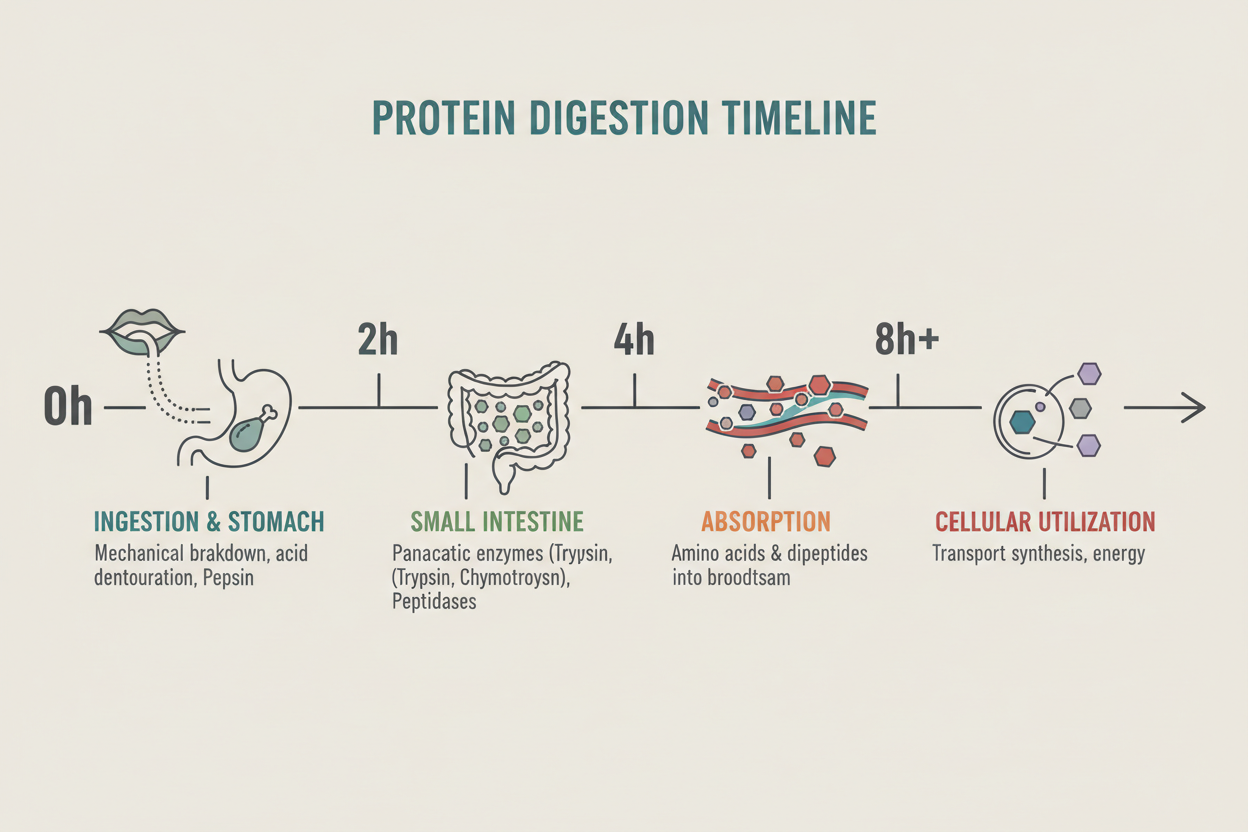
Protein Digestion Happens in Stages
Protein digestion occurs across multiple stages of the digestive system.
In general:
-
Initial digestion begins in the stomach
-
Further breakdown continues in the small intestine
-
Absorption occurs gradually as amino acids are released
Because these stages overlap, digestion is a continuous process rather than a single event.
Average Time Frame for Protein Digestion
For most people, protein digestion begins shortly after eating and continues for several hours.
Rather than having a fixed digestion time, protein:
-
Breaks down gradually
-
Releases amino acids steadily
-
Contributes to the circulating amino acid pool over time
This steady process supports normal protein use throughout the day.
Why Protein Digests More Slowly Than Some Nutrients
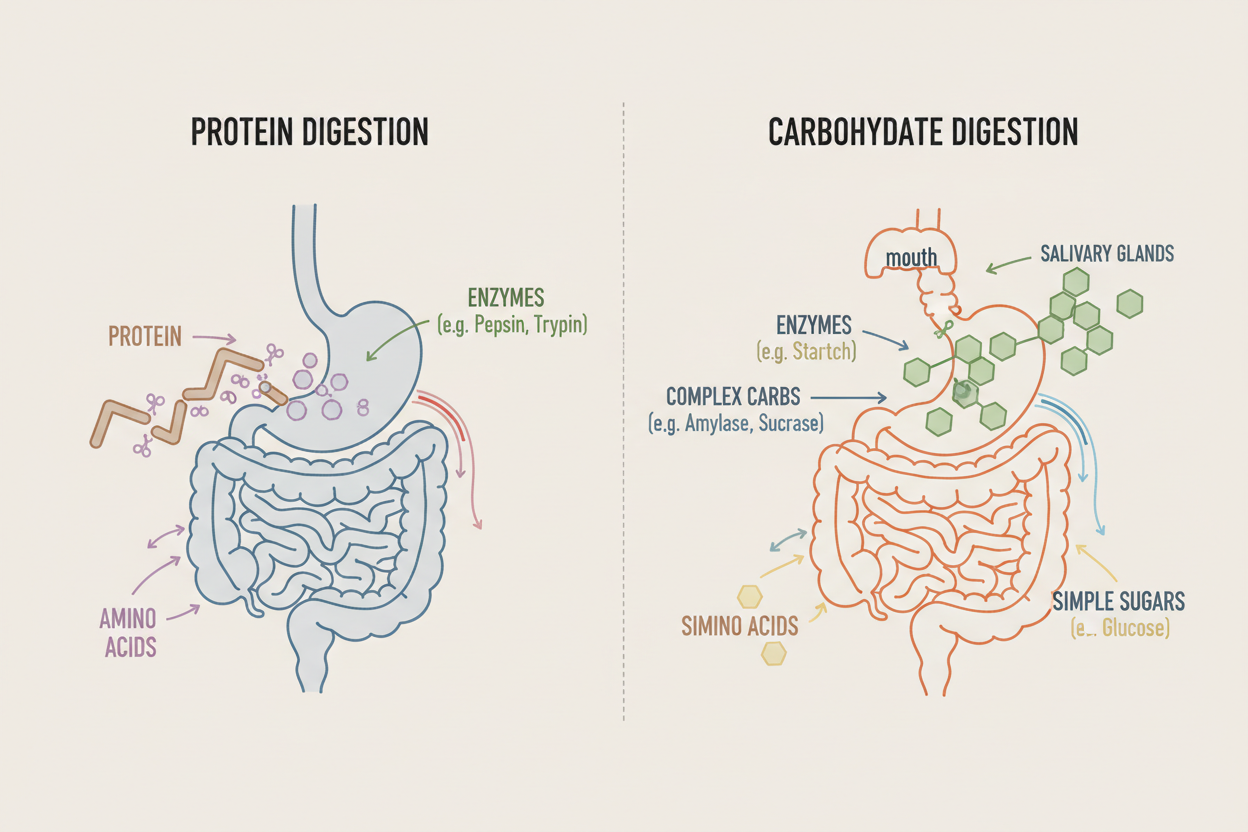
Protein generally digests more slowly than carbohydrates.
This is because:
-
Protein structures are more complex
-
Digestion requires multiple enzymes
-
Breakdown occurs step by step
Slower digestion does not mean poorer digestion. It reflects how protein is designed to be processed by the body.
Factors That Influence How Long Protein Takes to Digest
Digestion speed varies based on several factors, including:
-
Protein source
-
Processing and formulation
-
Fiber and fat content of the meal
-
Digestive enzyme activity
-
Individual digestive sensitivity
These factors explain why digestion times are not identical for everyone.
Whole Foods vs Protein Powders
Protein from whole foods and protein powders may digest at different rates.
Whole foods:
-
Often digest more slowly due to fiber and fat
Protein powders:
-
May digest more quickly depending on processing
-
Still release amino acids gradually
Both forms contribute to normal protein digestion and absorption over time.
Protein Digestion and Absorption Over Time
As protein digests, amino acids are absorbed progressively.
This gradual absorption:
-
Supports steady availability
-
Reduces digestive strain
-
Aligns with normal protein turnover
This is why protein does not need to be consumed constantly throughout the day.
Individual Experience Matters
Some people feel protein digestion more noticeably than others.
Differences in experience may be influenced by:
-
Digestive comfort
-
Protein tolerance
-
Meal size and composition
Paying attention to personal digestion patterns helps guide protein choices.
Why Digestion Time Is Not a Performance Metric
Digestion speed is not a measure of protein quality on its own.
A protein that digests more slowly can:
-
Support sustained amino acid availability
-
Feel more satisfying
A protein that digests faster can:
-
Fit different routines
Both can support normal nutrition depending on individual needs.
Protein Digestion Fits Into Daily Nutrition
Protein digestion supports daily nutrition best when intake is consistent and comfortable.
Rather than focusing on exact digestion times, it is more helpful to consider:
-
How protein fits into meals
-
How it feels over time
-
Whether it supports regular use
This perspective supports long term habits.
Part of the Nutrition Foundations Series
This article is part of our Nutrition Foundations series, where we explain how protein digestion, absorption, and timing support normal body function.
👉 Visit the Nutrition Foundations hub to explore more articles in this series.
Related Articles in This Series
You may also find these helpful:
About Earth Fuel
Earth Fuel is built around one principle: simple protein. Nothing extra. We focus on clear formulation, ingredient transparency, and structural integrity across every stage of the protein lifecycle. Learn more about our approach and formulation philosophy on the
Earth Fuel homepage
FAQ
How long does protein take to digest
Protein digestion begins shortly after eating and continues for several hours as amino acids are released.
Does protein digest faster than carbohydrates
No. Protein generally digests more slowly due to its structure and digestion process.
Do protein powders digest faster than whole foods
They may digest somewhat faster, but absorption still occurs gradually.
Is slower digestion better
Slower digestion is not better or worse. It simply reflects how protein is processed.
Why does digestion time vary
Protein source, meal composition, and individual digestion influence timing.
Should digestion time affect protein choice
Comfort and consistency matter more than exact digestion timing.

Written by Earth Fuel