How Pumpkin Seed Protein Is Made
Pumpkin seed protein is a plant based protein ingredient produced by extracting and concentrating the protein portion of pumpkin seeds. As interest in plant based nutrition grows, pumpkin seed protein has become a common ingredient in modern protein powder formulations.
Like other plant proteins, pumpkin seed protein begins as a whole food source that undergoes processing steps to isolate and concentrate the protein content. These processes separate protein from other components such as oils, carbohydrates, and fiber found in the original seed.
This article explains how pumpkin seed protein is made using neutral, science based language. The focus remains on ingredient sourcing, processing methods, and structural characteristics rather than performance claims.
Pumpkin Seeds as a Protein Source
Pumpkin seeds naturally contain protein along with fats, carbohydrates, fiber, and other plant compounds. In their whole food form, these components exist together within the seed structure.
To produce pumpkin seed protein powder, the goal of processing is to concentrate the protein portion of the seed while separating other components that are not needed in the final ingredient.
The general process used to produce plant protein ingredients is explained in How Plant Proteins Are Extracted, which describes how plant materials are processed to isolate protein.
Different plant protein ingredients use similar processing principles even though the original plant sources may vary.
Understanding the starting material provides context for how protein ingredients are produced.
Oil Removal and Protein Concentration
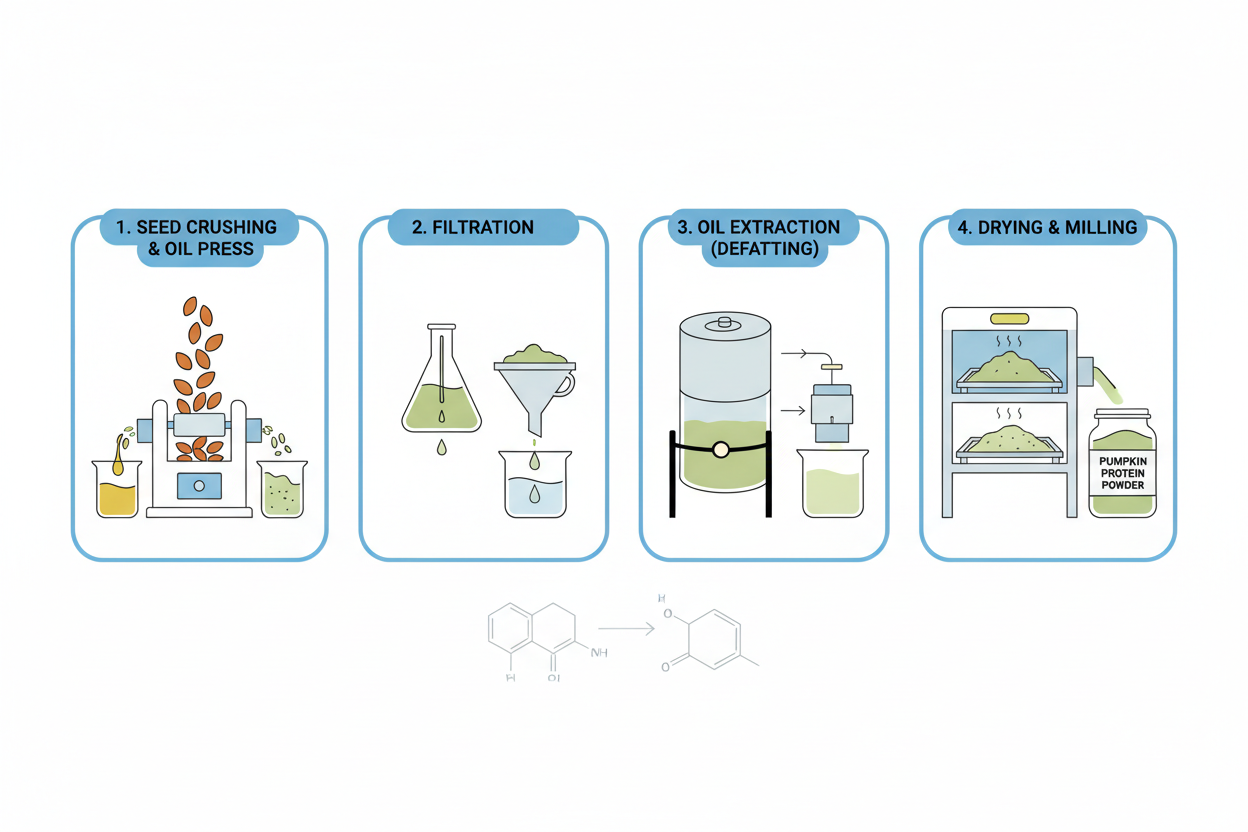
One of the first steps in producing pumpkin seed protein involves removing much of the natural oil contained within the seeds.
Pumpkin seeds contain a significant amount of oil. Removing this oil allows the remaining seed material to contain a higher concentration of protein.
This step is typically performed through mechanical pressing or similar processing methods.
After oil removal, the remaining seed material contains protein along with plant fiber and other structural components. The material is then refined further to concentrate the protein portion.
The structural characteristics of protein ingredients are influenced by processing methods, which is discussed in How Processing Affects Protein Structure.
Processing steps such as oil removal and refinement help transform the original seed into a usable protein ingredient.
Filtration and Drying Processes
After the initial oil removal stage, additional processing steps may be used to further refine the protein ingredient.
These steps may include:
• filtration
• separation of remaining plant material
• moisture reduction
• drying and milling
Filtration and separation help remove non protein components that remain after oil extraction. This allows the protein portion of the ingredient to become more concentrated.
Drying is an important stage because protein powders must have stable moisture levels to maintain ingredient consistency and shelf life.
The stability of protein ingredients during storage is discussed in Protein Ingredient Stability Explained, which explains how protein powders maintain their structure over time.
These processing stages convert the refined seed material into a stable protein powder ingredient.
Milling and Powder Formation
The final stage in producing pumpkin seed protein typically involves milling the refined protein material into a consistent powder.
Particle size and uniformity play an important role in how protein powders behave during preparation and digestion.
Consistent particle size helps support uniform mixing behavior when protein powder is combined with liquids.
The physical behavior of protein powders during preparation is explained in How Protein Ingredients Affect Mixability, which explores how particle structure influences mixing performance.
Milling also helps produce a stable powder that can be easily packaged and used in protein powder formulations.
These final processing steps prepare the ingredient for use in finished nutrition products.
Pumpkin Seed Protein in Protein Powder Formulations
Once produced, pumpkin seed protein can be used as a primary protein ingredient or combined with other plant proteins depending on the formulation.
Plant protein powders often combine ingredients to create a balanced amino acid profile and consistent formulation behavior.
The compatibility of protein ingredients in formulations is discussed in Protein Ingredient Compatibility Explained, which explains how protein ingredients interact when combined.
Protein powders built around plant based ingredients often emphasize ingredient transparency and simple formulation systems.
Earth Fuel protein powder reflects this approach by focusing on plant based ingredients and simplified formulation practices designed to emphasize ingredient clarity and clean protein sourcing.
Understanding how pumpkin seed protein is made helps provide context for how this ingredient fits into modern plant based protein formulations.
Part of the Protein Ingredient Science Series
This article is part of the Earth Fuel Protein Ingredient Science series, where we explore how protein ingredients are sourced, processed, and used in modern protein powder formulations.
The series examines how ingredient structure, processing methods, and formulation design influence protein behavior.
Related Articles in This Series
How Plant Proteins Are Extracted
How Processing Affects Protein Structure
Protein Ingredient Stability Explained
How Protein Ingredients Affect Mixability
Protein Ingredient Compatibility Explained
About Earth Fuel
Earth Fuel is built around one principle: simple protein. Nothing extra. We focus on clean ingredients, transparent sourcing, and clear formulation practices across every stage of the protein lifecycle. Learn more about the formulation and ingredients behind Earth Fuel plant protein powder.
Frequently Asked Questions
How is pumpkin seed protein made
Pumpkin seed protein is produced by removing oil from pumpkin seeds and processing the remaining material into a concentrated protein powder.
Does pumpkin seed protein contain oil
Most of the natural oil in pumpkin seeds is removed during processing to increase protein concentration.
Why are pumpkin seeds processed into protein powder
Processing concentrates the protein portion of the seed and creates a stable powder ingredient used in protein formulations.
Does processing change the amino acids in pumpkin seed protein
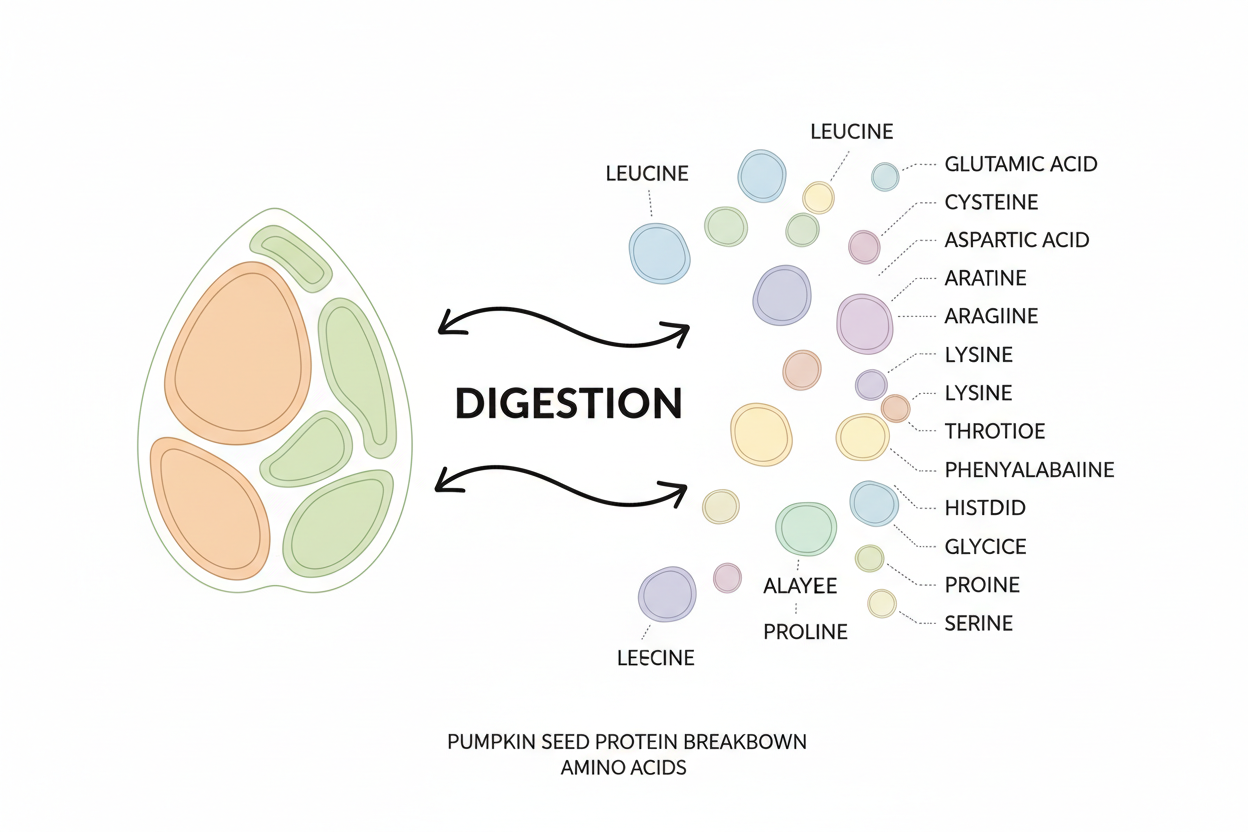
Processing methods focus on separating and concentrating protein rather than changing its amino acid structure.
Why is pumpkin seed protein used in protein powders
Pumpkin seed protein provides plant based protein and can be used in formulations designed around plant derived ingredients.

Written by Earth Fuel