Does Plant Protein Cause Bloating
Bloating is one of the most common reasons people hesitate to use protein powders. Because plant based proteins are often associated with fiber and whole food ingredients, some assume they are more likely to cause digestive discomfort.
The truth is more nuanced.
Bloating is influenced by digestion, ingredient selection, processing methods, and individual sensitivity—not simply whether protein comes from plants or animals.
This article explains why bloating can occur, how plant protein fits into the picture, and what actually matters for digestive comfort.
What Bloating Is and Why It Happens
Bloating generally refers to a feeling of fullness or pressure in the abdomen. It can be influenced by several factors during digestion, including:
-
How quickly food moves through the digestive tract
-
Gas production during digestion
-
Individual tolerance to certain ingredients
-
Meal size and composition
Bloating is a digestive experience, not a diagnosis, and it can vary from person to person.
Does Plant Protein Automatically Cause Bloating
Plant protein does not automatically cause bloating.
Some people tolerate plant based protein very well, while others may notice discomfort depending on formulation and personal digestion.
Bloating is more closely related to:
-
Ingredient quality
-
Fiber type and amount
-
Processing methods
-
Overall digestive sensitivity
The protein source alone is rarely the sole factor.
Fiber and Digestive Comfort
Plant based proteins may naturally contain fiber due to their source ingredients.
Fiber can:
-
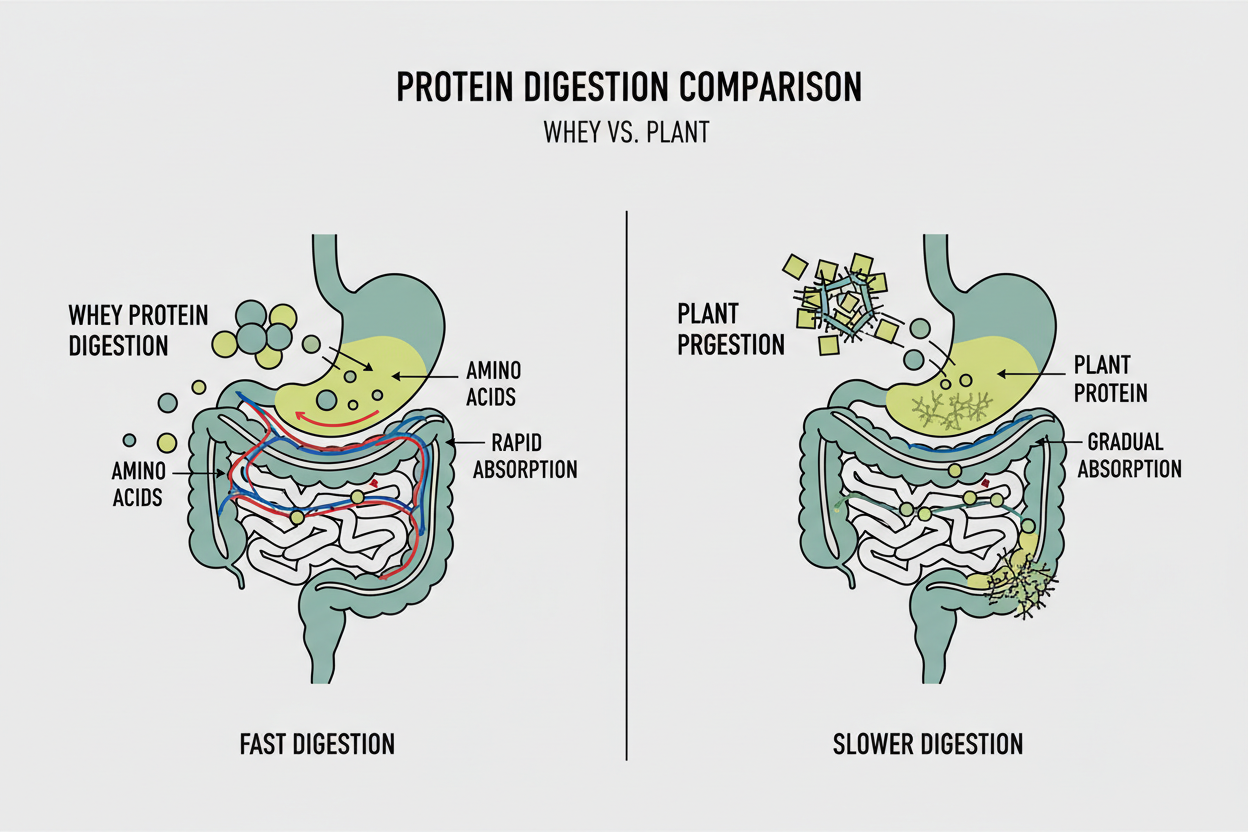
Slow digestion
-
Affect how food moves through the gut
-
Influence gas production
For many people, moderate fiber supports digestion. For others, very high fiber intake—especially when introduced suddenly—may feel uncomfortable.
Balanced formulations consider fiber alongside protein quality.
Processing and Protein Particle Size
How protein is processed influences how easily it is digested.
Gentle processing can:
-
Preserve protein structure
-
Support enzyme activity
-
Improve digestibility
Over-processed proteins or poorly formulated blends may be harder for some individuals to tolerate.
Individual Digestive Sensitivity Matters
Digestive comfort is highly individual.
Factors that influence sensitivity include:
-
Gut health
-
Enzyme activity
-
Previous diet patterns
-
Overall meal context
This is why the same protein can feel different for different people.
Plant Protein vs Animal Protein and Bloating
Both plant and animal proteins can contribute to bloating depending on formulation and individual tolerance.
Some people experience discomfort with dairy-based proteins, while others prefer them. Similarly, some find plant proteins easier to tolerate.
Comfort depends on digestion, not labels.
How to Reduce the Chance of Bloating
Rather than avoiding plant protein entirely, many people focus on:
-
Starting with smaller servings
-
Choosing simple ingredient lists
-
Paying attention to fiber balance
-
Staying hydrated
-
Allowing the digestive system time to adjust
These factors influence comfort more than protein source alone.
Digestion Over Time
Digestive systems adapt gradually.
Introducing new protein sources slowly and consistently helps the body adjust, supporting comfort over time.
Balanced nutrition works best when changes are made thoughtfully rather than abruptly.
Part of the Nutrition Foundations Series
This article is part of our Nutrition Foundations series, where we explain protein digestion, ingredient quality, and nutrition concepts clearly and without hype.
👉 Visit the Nutrition Foundations hub to explore more articles in this series.
Related Articles in This Series
You may also find these helpful:
About Earth Fuel
Earth Fuel is built around one principle: simple protein. Nothing extra. We focus on clear formulation, ingredient transparency, and structural integrity across every stage of the protein lifecycle. Learn more about our approach and formulation philosophy on the
Earth Fuel homepage
FAQ
Does plant protein cause bloating for everyone
No. Digestive comfort varies by individual and formulation.
Is fiber the reason for bloating
Fiber can influence digestion speed and comfort, but balance matters.
Are plant proteins harder to digest than animal proteins
Digestibility depends on processing, formulation, and individual tolerance.
Can bloating happen when starting a new protein
Yes. Digestive systems may need time to adjust to new ingredients.
Does ingredient quality affect bloating
Yes. Clean, thoughtfully processed ingredients often support better tolerance.
Should plant protein be avoided if bloating occurs
Not necessarily. Adjusting serving size and formulation may improve comfort.
About Earth Fuel
Earth Fuel is built around one principle: simple protein. Nothing extra. We focus on clear formulation, ingredient transparency, and structural integrity across every stage of the protein lifecycle. Learn more about our approach and formulation philosophy on the
Earth Fuel homepage

Written by Earth Fuel