Is Whey Protein Easier to Digest Than Plant Protein (Full Breakdown)
Whey protein is often described as easy to digest, while plant based protein is sometimes viewed as harder on the stomach. This comparison can create confusion for people trying to choose a protein that fits their digestion and daily routine.
Understanding digestion requires looking at how protein is broken down structurally. This complete explanation walks through each stage of the process:
https://getearthfuel.com/blogs/learn/what-happens-to-protein-during-digestion
The reality is not as simple as one being easier than the other.
Digestibility depends on multiple factors, including protein source, processing, formulation, and individual tolerance. This guide explains how whey and plant proteins are digested and what actually influences digestive comfort.
It also helps to understand how plant proteins are extracted and structured before digestion begins:
https://getearthfuel.com/blogs/learn/how-plant-proteins-are-extracted
What Whey Protein Is
Whey protein is derived from milk during the cheese making process. It is commonly used in protein powders and supplements because it contains all essential amino acids and dissolves easily in liquid.
Whey protein is available in different forms, including:
-
Whey concentrate
-
Whey isolate
-
Whey hydrolysate
Each form differs slightly in processing and composition, which can influence digestion experience.
How Whey Protein Is Digested
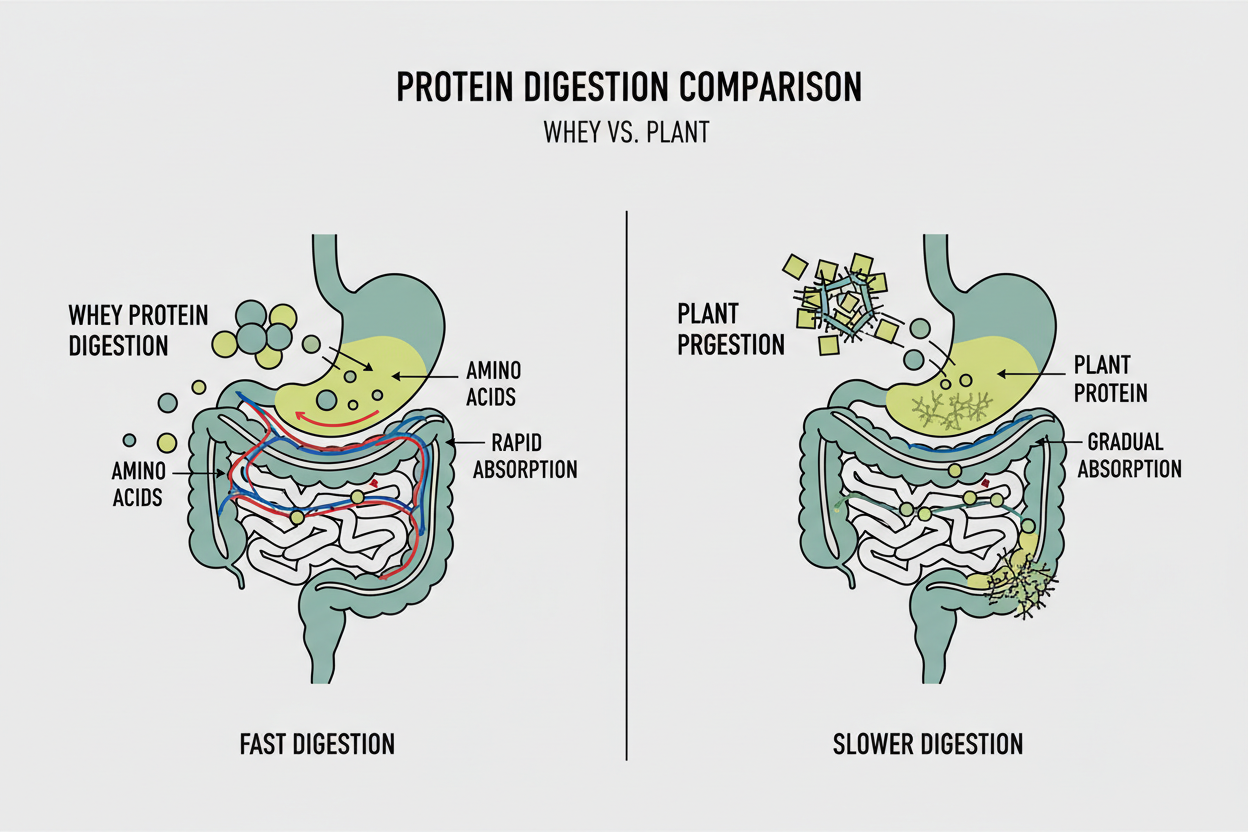
Whey protein is generally digested relatively quickly once consumed.
Its digestion involves:
-
Breakdown by stomach acid and enzymes
-
Release of amino acids in the small intestine
-
Absorption into the bloodstream
For many people, this process occurs smoothly. For others, especially those sensitive to dairy components, digestion may feel less comfortable.
What Plant Based Protein Is
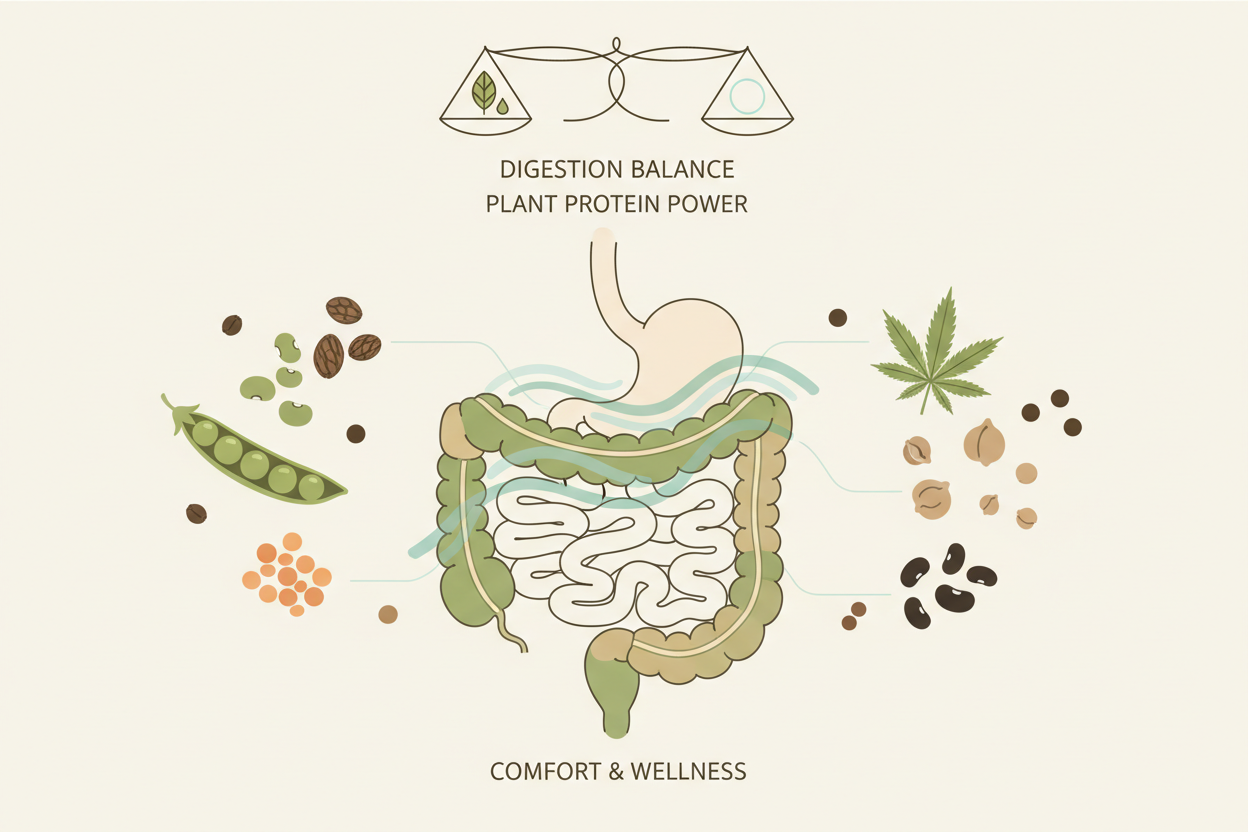
Plant based protein is derived from plant sources such as peas, seeds, grains, and nuts.
Plant proteins may naturally contain:
-
Fiber
-
Plant compounds
-
Varying amino acid profiles
These characteristics influence digestion speed and comfort depending on formulation and individual tolerance.
How Plant Based Protein Is Digested
Plant based protein follows the same fundamental digestive pathway as whey protein.
Differences in digestion experience may come from:
-
Fiber content
-
Protein particle size
-
Processing methods
-
Blended versus single source formulations
When thoughtfully formulated, plant based protein can digest smoothly and support normal amino acid absorption.
Is Whey Always Easier to Digest
Whey is not universally easier to digest for everyone.
Some individuals experience discomfort with whey due to:
-
Lactose sensitivity
-
Milk protein intolerance
-
Individual digestive sensitivity
Others tolerate whey well and prefer it. Digestibility is highly individual and not determined by protein source alone.
Plant Protein and Digestive Comfort
Many people choose plant based protein because it aligns better with their digestion preferences.
Plant based protein may feel gentler for some individuals, especially when:
-
Fiber levels are balanced
-
Ingredients are simple
-
Processing is gentle
Digestive comfort often improves when formulation considers both protein quality and digestion.
Processing and Formulation Matter Most
Whether whey or plant based, protein digestibility is influenced by how the protein is processed and formulated.
Important factors include:
-
Ingredient purity
-
Degree of processing
-
Balance of supporting ingredients
-
Serving size
A well formulated protein of either type can support comfortable digestion.
Choosing Based on Your Digestion
Rather than asking which protein is objectively easier to digest, it is more helpful to consider:
-
How your body responds
-
Ingredient transparency
-
Simplicity of formulation
-
Consistency over time
Digestive comfort is personal and may change depending on lifestyle and diet.
Whey vs Plant Protein in Daily Nutrition
Both whey and plant based protein can support normal nutrition when they align with individual needs.
The best choice is one that:
-
Fits digestion comfortably
-
Is easy to use consistently
-
Supports balanced daily protein intake
Understanding digestion helps remove unnecessary pressure from protein comparisons.
Part of the Nutrition Foundations Series
This article is part of our Nutrition Foundations series, where we explain protein digestion, formulation, and ingredient differences clearly and without hype.
👉 Visit the Nutrition Foundations hub to explore more articles in this series.
Related Articles in This Series
You may also find these helpful:
About Earth Fuel
Earth Fuel is built around one principle: simple protein. Nothing extra. We focus on clear formulation, ingredient transparency, and structural integrity across every stage of the protein lifecycle. Learn more about our approach and formulation philosophy on the
Earth Fuel homepage
FAQ
Is whey protein easier to digest than plant protein
Digestibility varies by individual. Some people tolerate whey well, while others prefer plant protein.
Does lactose affect whey digestion
Lactose sensitivity can influence digestion for some individuals, depending on whey type.
Can plant protein digest smoothly
Yes. When formulated thoughtfully, plant based protein can digest comfortably.
Does processing affect digestibility
Yes. Processing and formulation influence digestion for both whey and plant proteins.
Should digestion determine protein choice
Digestive comfort is an important factor when choosing a protein source.
Is one protein type better for everyone
No. The best protein is one that aligns with individual digestion and routine.

Written by Earth Fuel