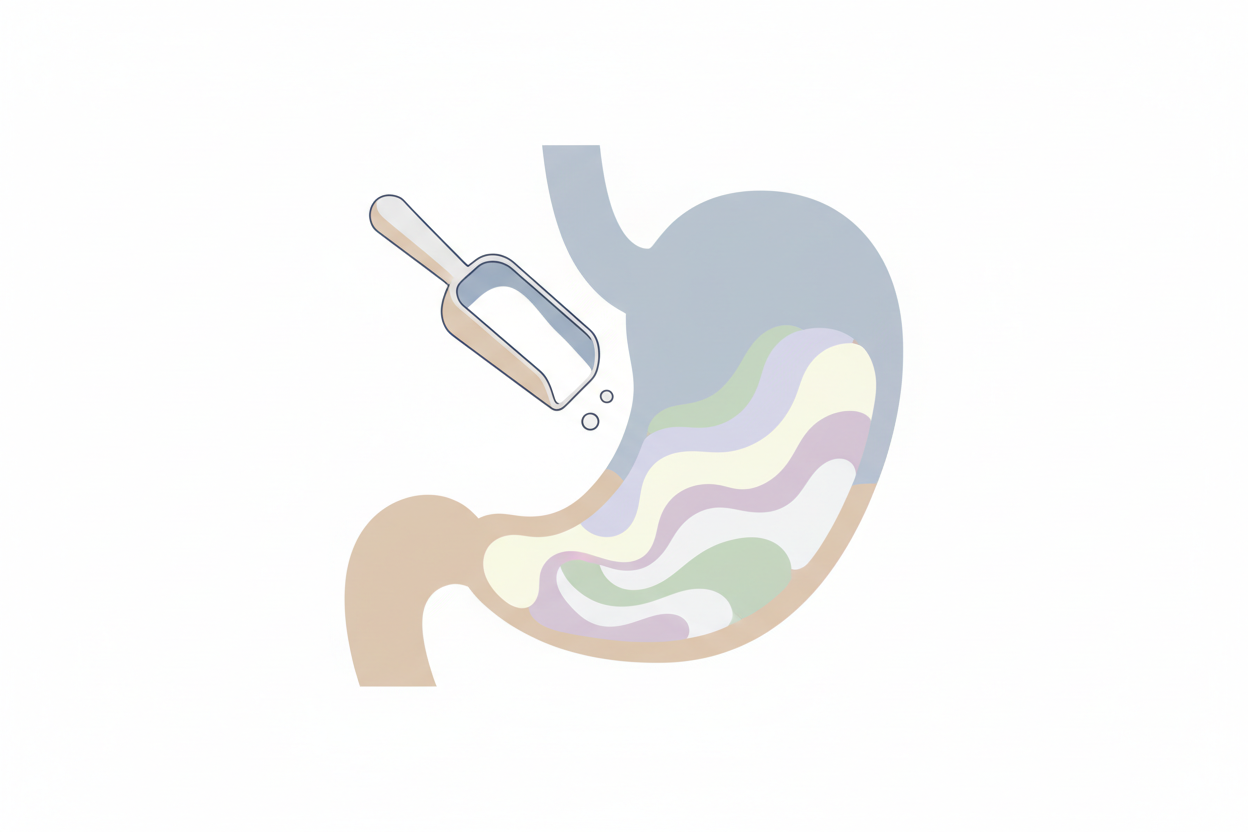
Signs Your Protein Powder Is Hard to Digest
Some protein powders feel smooth and easy, while others create noticeable discomfort after consumption. When protein is hard to digest, the body often gives clear signals.
These signs are not random. They are the result of the digestive system working harder than expected to break down and process the protein.
Understanding these signals can help identify when a protein powder is not a good fit for your system.
Common Signs of Poor Protein Digestion
When protein is difficult to digest, the most common signs include:
bloating
gas
stomach heaviness
slow or uncomfortable digestion
These symptoms usually appear within a short time after consuming protein and can vary in intensity.
If you want to understand how digestion issues develop at a deeper level, see:
What Happens When Protein Is Hard to Digest
This helps explain what is happening inside the digestive system when these symptoms occur.
Feeling of Fullness That Lasts Too Long
Protein is naturally filling, but when it feels excessively heavy or lingers for too long, it may be a sign of slow or inefficient digestion.
A normal digestion process should feel steady, not overwhelming.
If you want to understand how digestion timing affects this, see:
Protein Digestion Speed Differences
Slower digestion can increase the duration of that full or heavy feeling.
Increased Gas and Digestive Discomfort
Gas is another common indicator that protein is not being processed efficiently.
When protein is not fully broken down, it can move into later stages of digestion in a less processed state, which may contribute to gas formation.
If you want to understand how this develops, see:
Does Protein Powder Slow Digestion
Digestion speed and breakdown efficiency both influence gas production.
Sensitivity to Specific Protein Formulas
Some people notice that certain protein powders consistently cause discomfort while others do not.
This often points to ingredient sensitivity rather than protein intake itself. Additives and formulation complexity can make a protein harder to process.
If you want to understand how ingredients affect digestion, see:
Why Protein Feels Heavy for Some People
The overall formulation can significantly change how protein feels in the body.
When to Pay Attention to These Signs
Occasional discomfort can happen, but consistent symptoms are worth paying attention to.
Repeated bloating, gas, or heaviness after using a specific protein powder is a strong indicator that it may not be the best match for your digestive system.
Switching to a simpler formulation often improves the overall experience.
Part of the Protein Digestion and Gut Health Series
This article is part of the Earth Fuel Protein Digestion and Gut Health series, focused on how protein moves through the digestive system.
Related Articles in This Series
What Makes Protein Easy to Digest
What Happens When Protein Is Hard to Digest
Protein Powder and Stomach Sensitivity
Protein Absorption Issues Explained
About Earth Fuel
Earth Fuel is built around one principle simple protein nothing extra. We focus on clean ingredients transparent sourcing and clear formulation practices across every stage of the protein lifecycle.
Earth Fuel Plant Protein Powder
Frequently Asked Questions
What are the signs that protein powder is hard to digest
Common signs include bloating gas heaviness and discomfort
Is gas a sign of poor protein digestion
It can be especially if it happens consistently after consumption
Should protein feel heavy after drinking it
Mild fullness is normal but excessive heaviness may indicate slow digestion
Can ingredients cause digestion issues
Yes formulation complexity can increase digestive workload
What should you do if protein feels hard to digest
Try a simpler protein formulation and monitor how your body responds

Written by Earth Fuel