Plant Protein and Nutrient Absorption
Plant protein digestion ultimately leads to nutrient absorption, the stage where amino acids enter circulation and become available for biological processes throughout the body. While digestion refers to breaking protein into smaller components, absorption describes how those components move through the intestinal wall and into the bloodstream.
Understanding plant protein and nutrient absorption helps clarify how the body processes plant derived protein and how amino acids become available after digestion is complete.
This article explains plant protein and nutrient absorption using neutral, science based language. The discussion focuses on digestive physiology, amino acid transport, and nutrient availability rather than performance claims.
Digestion and Absorption Are Separate Processes
Protein digestion and nutrient absorption are closely connected but represent two different stages of protein metabolism.
Digestion refers to the breakdown of protein structures into amino acids. Absorption refers to the movement of those amino acids into circulation.
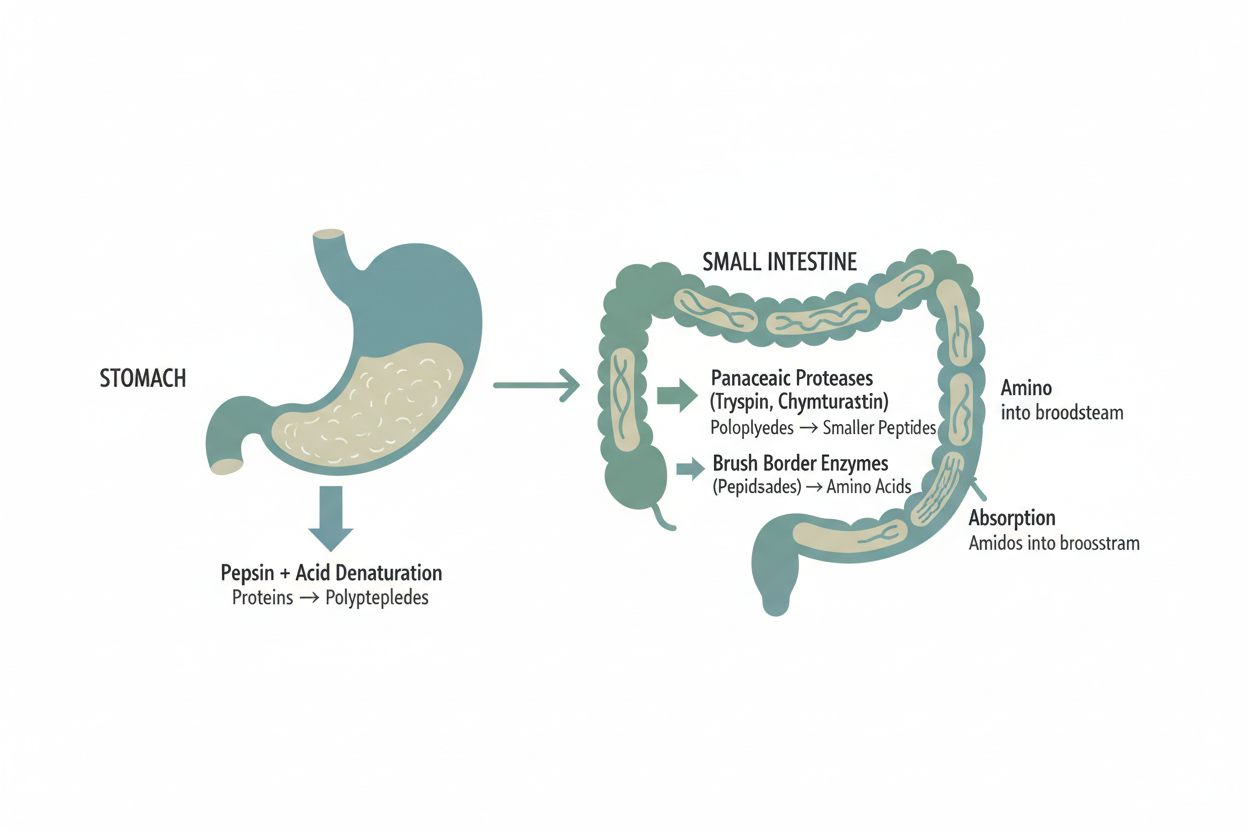
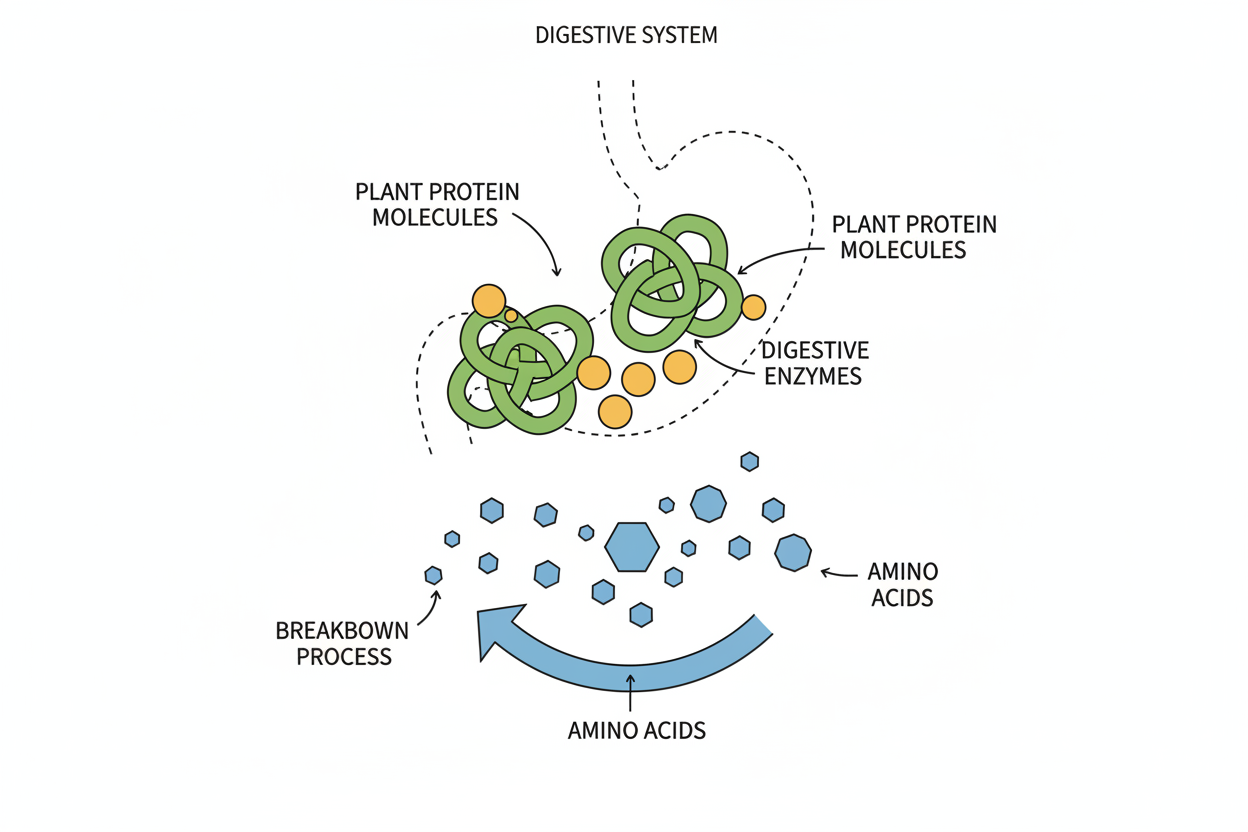
Protein digestion begins in the stomach, where stomach acid and digestive enzymes begin separating protein molecules into smaller fragments.
The stages of protein digestion are explained in What Happens to Protein During Digestion, which describes how digestive enzymes gradually break protein structures into peptides and amino acids.
Once digestion progresses far enough to release amino acids, those amino acids become available for absorption in the small intestine.
Understanding this sequence helps explain how digestion prepares nutrients for absorption.
How Amino Acids Are Absorbed
After digestion breaks protein into amino acids, these molecules move into the small intestine where absorption occurs.
The lining of the small intestine contains specialized transport systems that allow amino acids to pass through the intestinal wall and enter circulation.
This process is explained in How Protein Is Absorbed in the Small Intestine, which describes how amino acids move from the digestive tract into the bloodstream.
Once absorbed, amino acids travel through the bloodstream and become available to cells throughout the body.
These amino acids contribute to a wide range of biological processes including enzyme production, structural proteins, and cellular communication.
Understanding how amino acids move through the digestive system provides insight into how plant proteins support normal nutrition.
Plant Protein Structure and Absorption
Protein structure influences how efficiently digestion releases amino acids for absorption.
Proteins consist of chains of amino acids connected by peptide bonds. Digestive enzymes must first break these bonds before amino acids can be absorbed.
The relationship between protein structure and digestion behavior is discussed in Digestibility Differences Between Protein Sources, which explains how structural characteristics influence digestion.
Plant proteins originate from seeds, legumes, and grains. These plant derived proteins contain structural differences compared with animal proteins.
These differences may influence how digestive enzymes access peptide bonds during digestion.
However, once amino acids are released from protein structures, they follow the same absorption pathways regardless of the original protein source.
Factors That Influence Nutrient Absorption
Several physiological factors influence how efficiently amino acids are absorbed after digestion.
These factors include:
• digestive enzyme activity
• gastrointestinal motility
• intestinal health
• overall digestive efficiency
The broader concept of nutrient availability after digestion is discussed in Protein Absorption and Bioavailability Explained, which explains how absorbed amino acids become available for biological functions.
Absorption efficiency depends on both digestion and the health of the intestinal transport systems that move amino acids into circulation.
Understanding these factors helps explain how digestion and absorption work together during protein metabolism.
Plant Protein in Modern Nutrition
Plant proteins are widely used in modern nutrition products including protein powders and plant based foods.
These proteins provide amino acids that become available after digestion and absorption.
Protein powders built around plant based ingredients often emphasize ingredient transparency and simple formulation systems.
Earth Fuel protein powder reflects this philosophy by focusing on plant based ingredients and simplified formulation practices designed to emphasize ingredient clarity and protein sourcing.
Understanding plant protein digestion and nutrient absorption provides context for how plant proteins contribute to modern nutrition.
Part of the Protein Digestion and Gut Health Series
This article is part of the Earth Fuel Protein Digestion and Gut Health series, where we explore how protein ingredients interact with digestion, absorption, and metabolic processes.
The series examines how digestive mechanisms, ingredient structure, and physiological factors influence protein metabolism.
Related Articles in This Series
What Happens to Protein During Digestion
How Protein Is Absorbed in the Small Intestine
Digestibility Differences Between Protein Sources
Protein Absorption and Bioavailability Explained
Plant Protein Digestibility Explained
About Earth Fuel
Earth Fuel is built around one principle: simple protein. Nothing extra. We focus on clean ingredients, transparent sourcing, and clear formulation practices across every stage of the protein lifecycle. Learn more about the formulation and ingredients behind Earth Fuel plant protein powder.
Frequently Asked Questions
What is nutrient absorption in protein digestion
Nutrient absorption refers to the movement of amino acids from the digestive tract into the bloodstream.
Does digestion happen before protein absorption
Yes. Proteins must first be broken down into amino acids before absorption can occur.
Where are amino acids absorbed
Amino acids are absorbed primarily in the small intestine.
Does plant protein absorb the same as animal protein
Once proteins are digested into amino acids, absorption occurs through the same biological transport systems.
What factors influence nutrient absorption
Digestive enzyme activity, intestinal health, and overall digestive efficiency influence how nutrients are absorbed.

Written by Earth Fuel