Leucine and Muscle Protein Synthesis Explained
Leucine is one of the most talked-about amino acids in nutrition, especially when discussions turn to protein quality and muscle support. You may have seen it mentioned on protein labels or in fitness articles, but what exactly is leucine, and why does it matter?
Understanding leucine helps clarify how protein supports normal muscle maintenance and why amino acid balance is more important than chasing single ingredients.
This guide explains what leucine is, how it fits into muscle protein synthesis, and how it works as part of a complete protein profile.
What Is Leucine
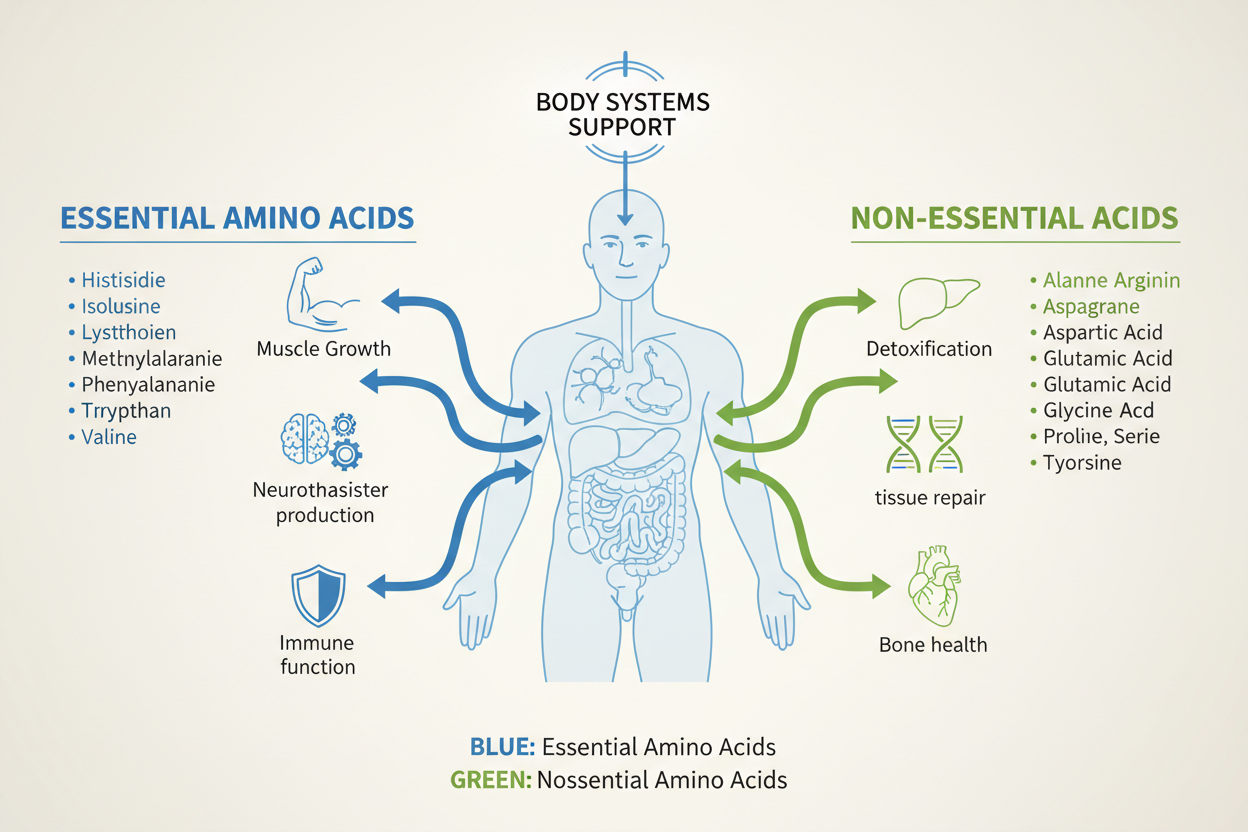
Leucine is one of the nine essential amino acids, meaning it must come from the diet because the body cannot produce it on its own.
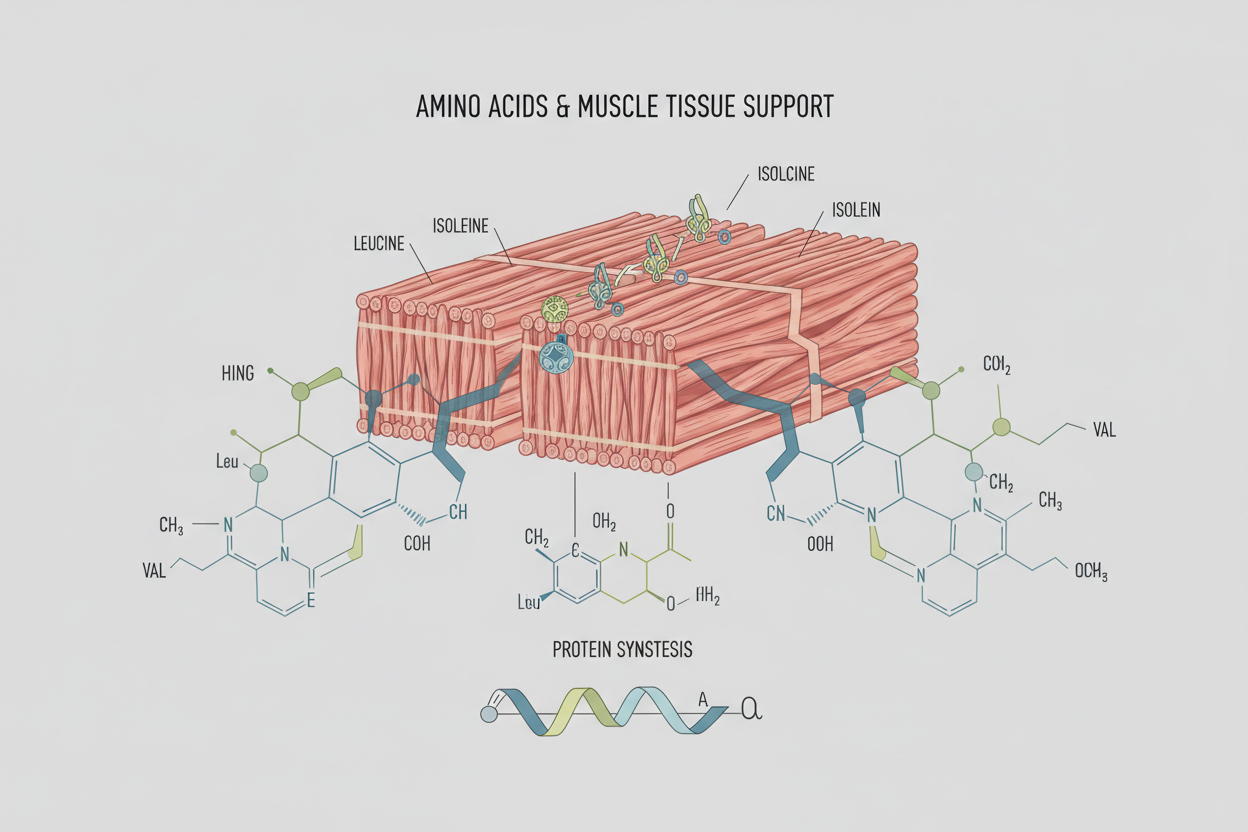
It belongs to a group called branched-chain amino acids, along with isoleucine and valine. These amino acids are commonly associated with muscle tissue and normal protein metabolism.
Leucine is naturally present in many protein sources, including both animal-based and plant-based options.
What Is Muscle Protein Synthesis
Muscle protein synthesis is the normal biological process by which the body builds and maintains muscle tissue.
This process relies on the availability of amino acids following protein intake. When amino acids are present, the body uses them to support routine muscle repair and turnover that occur throughout the day.
Muscle protein synthesis is not limited to athletes. It is a continuous process that supports strength, mobility, and function over time.
How Leucine Fits Into Muscle Protein Synthesis
Leucine plays a signaling role within muscle protein synthesis. In simple terms, it helps signal the body that amino acids are available.
However, leucine does not work alone. It functions as part of a broader amino acid profile, and its role depends on the presence of other essential amino acids.
Without adequate overall protein and amino acid balance, leucine on its own cannot support normal muscle processes.
Leucine Works Best as Part of Complete Protein
Focusing on leucine alone can be misleading. Muscle protein synthesis requires:
-
Adequate total protein
-
All essential amino acids
-
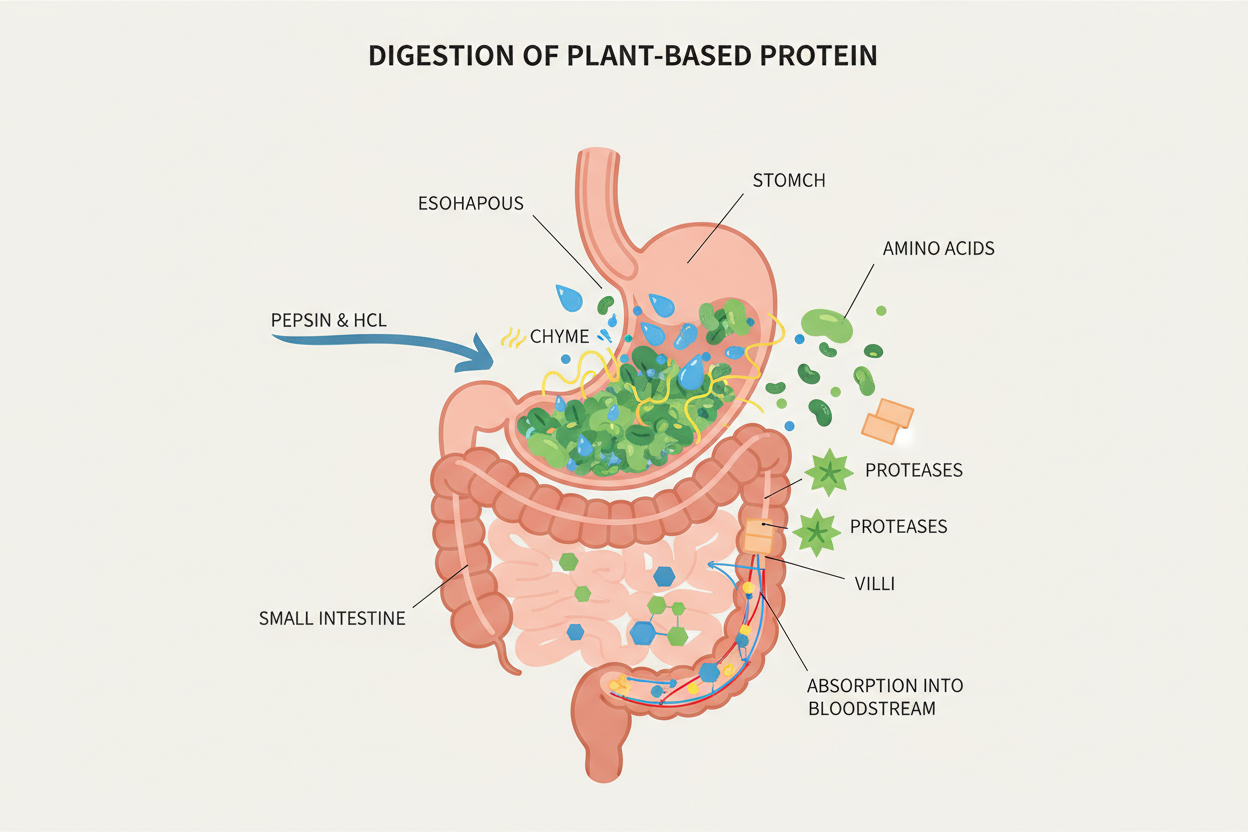
Proper digestion and absorption
Leucine contributes to the process, but it must be supported by a complete amino acid profile to be effective.
This is why protein quality, not just individual amino acids, matters.
Plant Based Protein and Leucine
Plant based proteins contain leucine naturally, though the amount varies by source.
Some plant proteins may contain lower leucine levels individually, which is why high quality plant based formulations often use blends of complementary protein sources.
Blending helps provide a more balanced amino acid profile that supports normal muscle maintenance and overall nutrition.
Leucine, Digestion, and Absorption
The body must digest protein and absorb amino acids before leucine can play its role.
Factors that influence how leucine is utilized include:
-
Digestive efficiency
-
Protein source
-
Ingredient processing
-
Overall amino acid availability
Supporting digestion and absorption helps ensure amino acids are available when needed.
Leucine in the Context of Daily Nutrition
Leucine is not only relevant for workouts. It plays a role in daily protein metabolism, including:
-
Maintaining lean tissue
-
Supporting normal muscle turnover
-
Contributing to protein utilization throughout the day
Consistent protein intake from high quality sources supports these normal processes over time.
Avoiding the “Single Nutrient” Trap
Nutrition often becomes oversimplified, with attention placed on one ingredient at a time.
While leucine is important, long term nutrition works best when:
-
Protein intake is balanced
-
Amino acids are complete
-
Digestion is supported
-
Formulations are simple and consistent
This broader approach aligns better with how the body actually functions.
Part of the Nutrition Foundations Series
This article is part of our Nutrition Foundations series, where we explain how amino acids, digestion, and protein quality work together to support normal body function.
👉 Visit the Nutrition Foundations hub to explore more articles in this series.
Related Articles in This Series
You may also find these helpful:
About Earth Fuel
Earth Fuel is built around one principle: simple protein. Nothing extra. We focus on clear formulation, ingredient transparency, and structural integrity across every stage of the protein lifecycle. Learn more about our approach and formulation philosophy on the
Earth Fuel homepage
FAQ
What is leucine
Leucine is an essential amino acid involved in normal protein metabolism and muscle maintenance.
Is leucine only important for athletes
No. Leucine plays a role in daily muscle protein turnover for everyone.
Can leucine work on its own
Leucine functions as part of a complete amino acid profile and does not work independently.
Do plant based proteins contain leucine
Yes. Plant based proteins naturally contain leucine, though amounts vary by source.
Is more leucine always better
Balance matters more than quantity. Adequate overall protein and amino acids are key.
Does digestion affect how leucine is used
Yes. Amino acids must be digested and absorbed before they can be utilized.

Written by Earth Fuel