Protein Ingredient Labeling Explained
Protein powders are formulated using a combination of ingredients that work together to create the final product. To communicate these ingredients to consumers, products include standardized labeling that presents the components used in the formulation.
Protein ingredient labeling provides a structured way to identify the contents of a product. These labels are designed to list ingredients in a consistent format so that consumers can review and understand what is included in a protein powder.
Understanding protein ingredient labeling helps clarify how products are presented, how ingredients are identified, and how labeling systems communicate formulation details.
This article explains protein ingredient labeling using neutral, science based language. The focus remains on labeling structure, ingredient identification, and formulation transparency rather than performance claims.
What Protein Ingredient Labels Show
Protein ingredient labels list the components used in a product’s formulation.
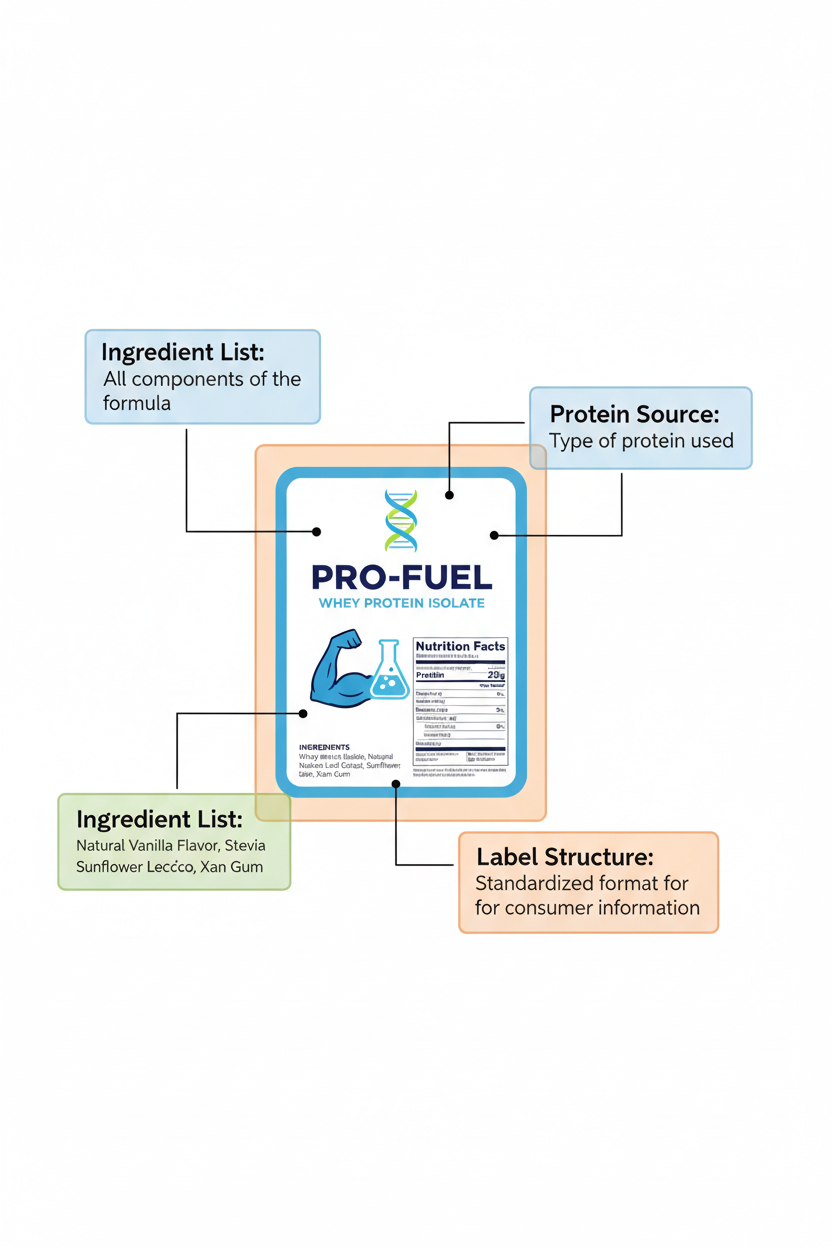
These labels typically include the primary protein source along with any additional ingredients used to create the final product. The ingredient list is usually presented as part of the product packaging and follows standardized formatting.
Protein powders are multi ingredient systems. In addition to the protein source, they may include other components that contribute to flavor, texture, and formulation structure.
Ingredient labels provide a way to identify these components in a consistent format.
Understanding what ingredient labels show helps clarify how protein powders are constructed.
How Ingredient Lists Are Structured
Ingredient lists follow a standardized structure designed to present ingredients clearly.
Ingredients are typically listed in a specific order based on established labeling conventions. This structure allows consumers to review the components included in the product in a consistent way.
Each ingredient is identified by its commonly recognized name, allowing it to be easily understood within the context of the label.
Protein powders may include a range of ingredients depending on the formulation design. These may include protein sources, flavor components, and other formulation ingredients.
Understanding how ingredient lists are structured helps provide clarity when reviewing protein powder labels.
Labeling and Formulation Design
Protein ingredient labeling reflects the formulation of the product.
Each ingredient listed on the label corresponds to a component used in the formulation. This allows the label to serve as a representation of how the product is constructed.
Because protein powders are designed as ingredient systems, labeling provides insight into how different components contribute to the final product.
Understanding the relationship between labeling and formulation design helps clarify how ingredient lists are created.
This connection allows consumers to better understand how protein powders are developed.
Ingredient Identification and Transparency
Ingredient labeling supports transparency by identifying the components included in a product.
Consumers often use ingredient labels to evaluate products and compare different formulations.
Clear labeling allows consumers to identify the types of ingredients used and how the product is structured.
Ingredient transparency is an important part of how modern nutrition products are presented.
Understanding ingredient identification helps provide a clearer view of how protein powders are formulated and labeled.
Reading Protein Ingredient Labels
Reading protein ingredient labels involves understanding how the listed components relate to the overall formulation.
Consumers can review ingredient lists to identify protein sources and additional formulation components.
Learning how to interpret ingredient lists helps provide insight into how protein powders are designed.
Ingredient labels present information in a standardized format, allowing for consistent interpretation across products.
Understanding how to read these labels helps clarify how protein powders are structured.
Part of the Protein Ingredient Science Series
This article is part of the Earth Fuel Protein Ingredient Science series, where we examine how protein ingredients are sourced, processed, and used in modern protein powder formulations.
The series explores how ingredient structure, formulation design, and labeling practices influence protein ingredient behavior.
Related Articles in This Series
Ingredient Transparency in Protein Powders
Protein Powder Additives Explained
Sweeteners Used in Protein Powders Explained
Gums and Thickeners in Protein Powders
What to Look for on a Protein Powder Ingredient Label
About Earth Fuel
Earth Fuel is built around one principle: simple protein. Nothing extra. We focus on clean ingredients, transparent sourcing, and clear formulation practices across every stage of the protein lifecycle. Learn more about the formulation and ingredients behind Earth Fuel plant protein powder.
Frequently Asked Questions
What is protein ingredient labeling
Protein ingredient labeling refers to how the ingredients in a protein powder are listed and presented on the product label.
Why do protein powders list ingredients
Ingredient lists provide a standardized way to identify the components used in the product.
How are ingredients ordered on a label
Ingredients are listed according to established labeling conventions that provide a consistent format.
What can you learn from an ingredient label
Ingredient labels show the components used in the formulation and how the product is constructed.
Do all protein powders follow the same labeling structure
Protein powder labels follow standardized formats that allow for consistent presentation.

Written by Earth Fuel