Plant Protein and Digestive Efficiency
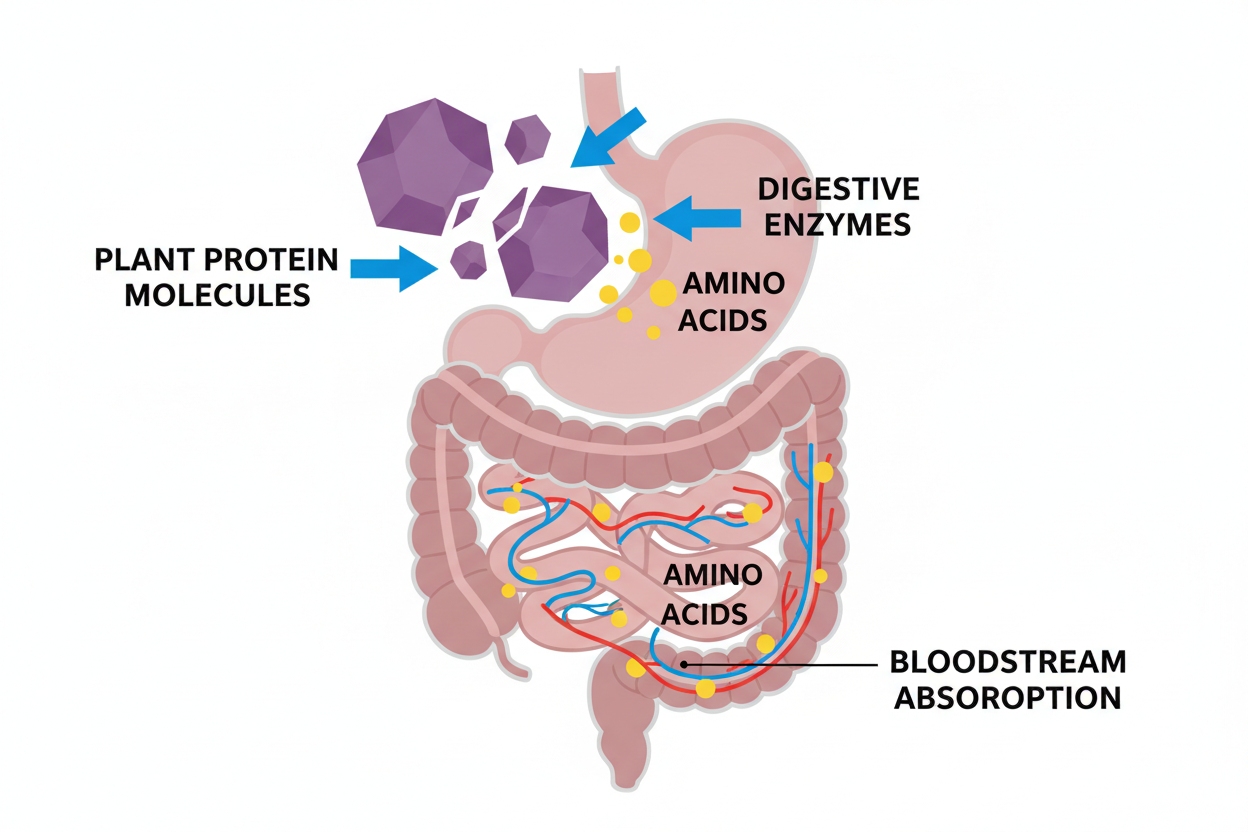
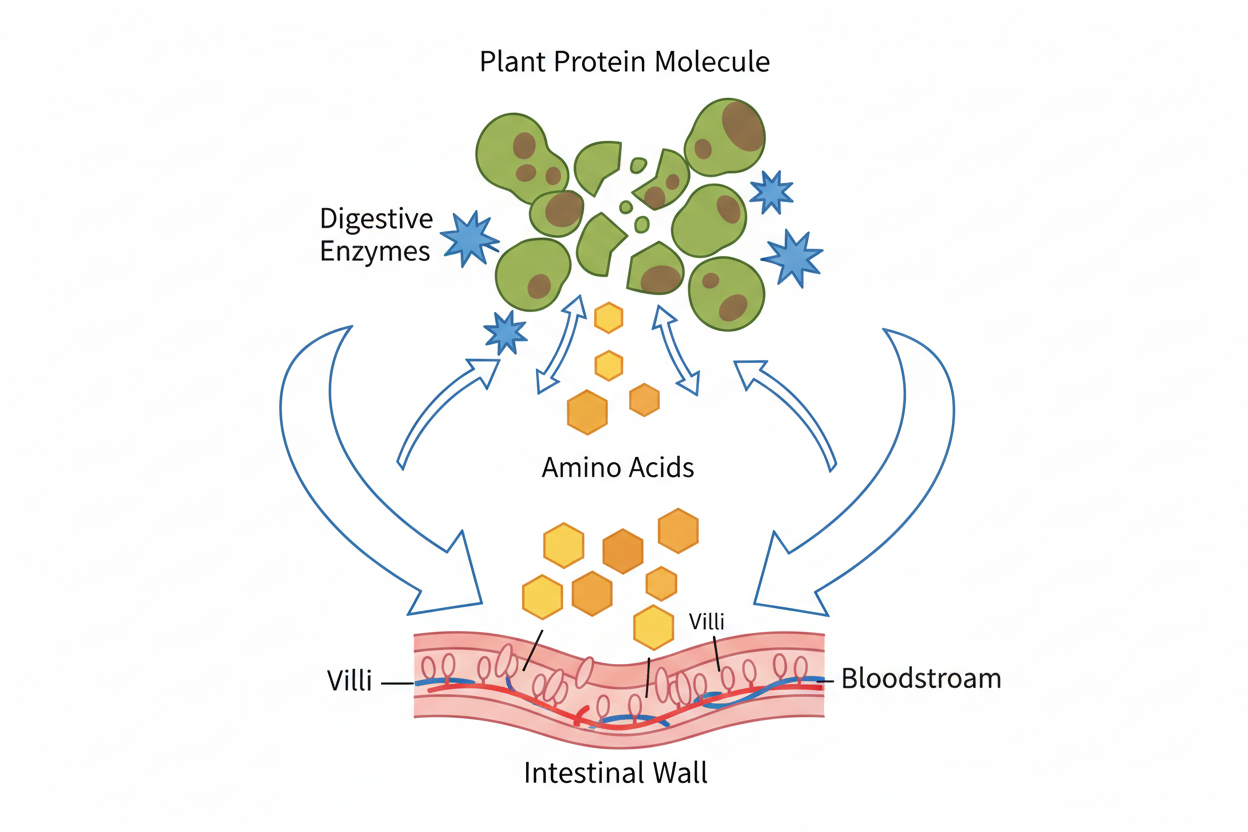
Plant protein digestive efficiency refers to how effectively the digestive system can break down plant based proteins and make their amino acids available for absorption. Efficient digestion allows enzymes to access protein structures, separate amino acids, and move them through the digestive tract so they can enter circulation.
All dietary proteins must go through the same fundamental digestive process, but structural characteristics, ingredient composition, and processing methods influence how smoothly this process occurs.
This article explains plant protein digestive efficiency using neutral, science based language. The focus remains on digestive mechanisms, structural behavior, and ingredient characteristics rather than performance claims.
What Digestive Efficiency Means for Protein
Digestive efficiency refers to how effectively digestive enzymes can interact with a protein source during the digestion process.
Proteins must first be unfolded and separated into smaller peptide fragments before enzymes can break them into individual amino acids. These amino acids are then absorbed through the small intestine and transported throughout the body.
The stages of protein digestion are explained in How the Body Breaks Down Protein After You Eat It, which describes how stomach acid and digestive enzymes begin dismantling protein structures.
Digestive efficiency focuses on how easily enzymes can perform this work. If enzymes can access the protein structure without interference, digestion proceeds smoothly.
When digestion progresses efficiently, proteins are broken down more completely before reaching the absorption stage.
Understanding digestive efficiency helps clarify how different protein sources behave during digestion.
Structural Characteristics That Influence Digestive Efficiency
Protein structure plays a major role in digestive efficiency.
Proteins are made of amino acid chains that fold into complex shapes. Before enzymes can break peptide bonds, these structures must first unfold so enzymes can reach the bonds connecting amino acids.
Plant proteins may contain additional plant compounds such as fiber or naturally occurring plant molecules that interact with the digestive process.
These structural components can influence how easily enzymes access the protein structure.
The broader concept of protein digestion is discussed in What Happens to Protein During Digestion, which explains how protein structures gradually break apart during the digestive process.
Digestive efficiency is not determined by a single factor. Instead, it reflects how multiple structural characteristics interact with digestive enzymes.
Understanding these relationships provides insight into why different protein ingredients may behave differently during digestion.
Ingredient Composition and Digestive Behavior
Ingredient composition also contributes to digestive efficiency.
Protein powders often contain additional components beyond protein itself. These may include flavor systems, structural ingredients, or other formulation components.
When multiple ingredients are present, digestive enzymes interact with the entire mixture rather than the protein alone.
Simpler formulations can sometimes allow digestive enzymes to focus more directly on the protein structure.
The influence of ingredient composition on digestion is discussed in Ingredient Quality and Digestibility in Protein Powders, which explains how formulation choices influence digestive behavior.
Ingredient quality also matters. Higher quality protein ingredients often undergo processing steps that improve particle consistency and remove non protein components.
These structural adjustments may influence how efficiently digestive enzymes interact with the protein during digestion.
Digestive Efficiency and Amino Acid Absorption
Digestive efficiency and amino acid absorption are closely connected.
Digestion breaks proteins into amino acids, while absorption refers to the movement of those amino acids through the intestinal wall and into the bloodstream.
Once digestion is complete, amino acids pass through specialized transport systems in the small intestine.
These mechanisms are explained in How Protein Is Absorbed in the Small Intestine, which describes how amino acids move from the digestive tract into circulation.
The overall concept of absorption efficiency is further discussed in Protein Absorption and Bioavailability Explained, which explains how absorbed amino acids become available for biological use.
Digestive efficiency therefore represents the stage that prepares amino acids for absorption.
Without effective digestion, absorption cannot occur.
Understanding both processes provides a more complete picture of how protein functions within the body.
How This Fits Into Protein Nutrition
Plant protein digestive efficiency is one component of the broader system of protein metabolism.
All dietary proteins must first be digested into amino acids before they can support biological processes such as enzyme production, structural tissue maintenance, and cellular communication.
Differences in digestive efficiency reflect variations in ingredient structure, processing methods, and formulation composition.
These structural factors influence how digestive enzymes interact with protein ingredients during digestion.
Recognizing these relationships helps clarify how different protein sources behave within the digestive system and how ingredient characteristics influence digestion.
Understanding digestive efficiency therefore provides a more accurate framework for evaluating protein ingredients and protein powder formulations.
Part of the Digestibility Series
This article is part of the Earth Fuel Digestibility series, where we explore how protein ingredients interact with digestion, absorption, and metabolic processes.
The series examines how ingredient structure, processing methods, and formulation choices influence protein behavior throughout the digestive cycle.
Related Articles in This Series
How the Body Breaks Down Protein After You Eat It
What Happens to Protein During Digestion
Ingredient Quality and Digestibility in Protein Powders
How Protein Is Absorbed in the Small Intestine
Protein Absorption and Bioavailability Explained
About Earth Fuel
Earth Fuel is built around one principle: simple protein. Nothing extra. We focus on clean ingredients, transparent sourcing, and clear formulation practices across every stage of the protein lifecycle. Learn more about our approach and formulation philosophy on the Earth Fuel homepage.
Frequently Asked Questions
What is plant protein digestive efficiency
Plant protein digestive efficiency refers to how effectively the digestive system can break down plant proteins into amino acids.
Does digestive efficiency affect protein absorption
Yes. Proteins must first be broken down during digestion before amino acids can be absorbed through the small intestine.
Do plant proteins digest differently than animal proteins
Yes. Structural differences between plant and animal proteins may influence how digestive enzymes interact with the protein during digestion.
Does ingredient composition affect digestive efficiency
Yes. Ingredient structure and formulation choices may influence how digestive enzymes interact with protein ingredients.
Does digestive efficiency change amino acid content
No. Digestive efficiency affects how proteins are broken down, but it does not change the amino acid composition of the protein itself.

Written by Earth Fuel