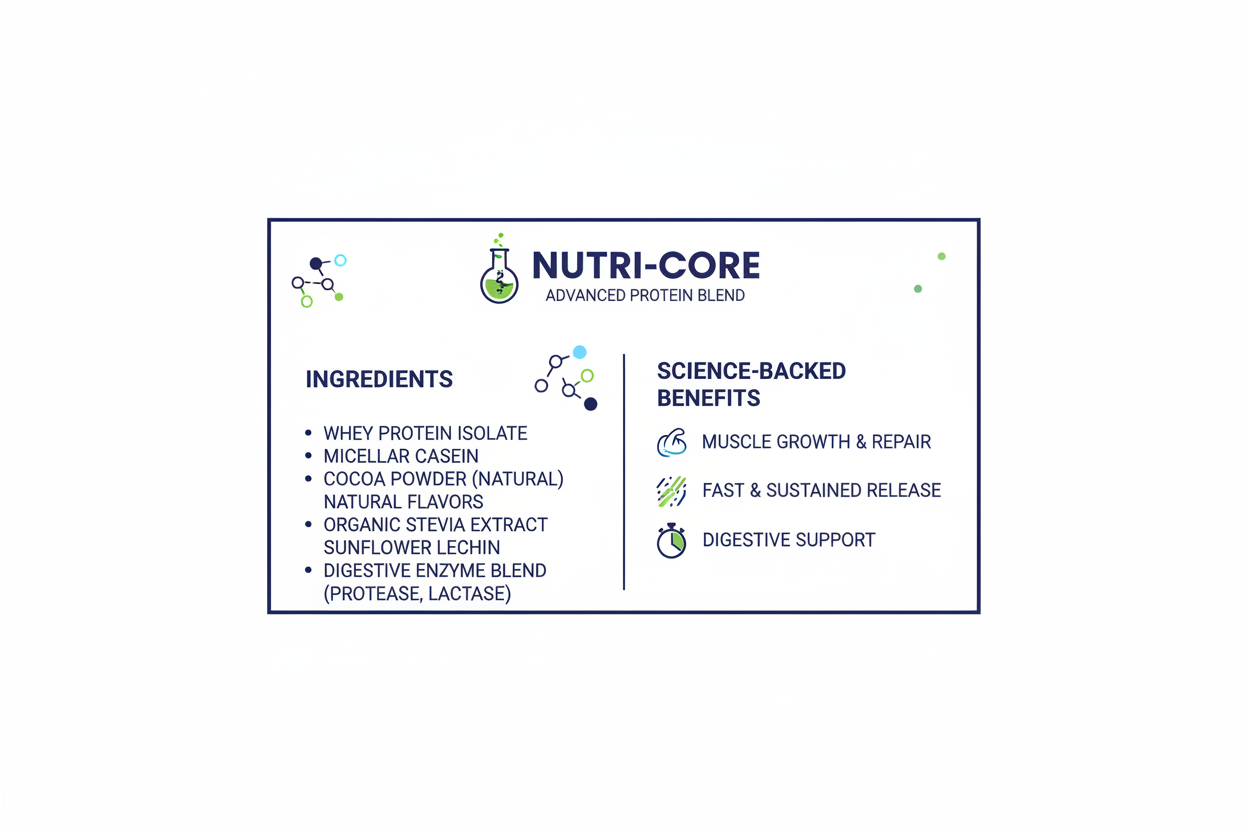
Ingredient Lists vs Marketing Language in Protein Powders
Protein powders are presented to consumers through two primary forms of information: ingredient lists and marketing language. Both appear on product packaging and product descriptions, but they serve different purposes.
Ingredient lists provide a structured representation of the components used in the formulation. Marketing language, on the other hand, is used to describe the product and highlight certain features or characteristics.
Understanding the difference between ingredient lists and marketing language helps clarify how protein powders are presented and how product information can be interpreted.
This article explains ingredient lists vs marketing language in protein powders using neutral, science based language. The focus remains on labeling structure, product communication, and formulation transparency rather than performance claims.
What Ingredient Lists Represent
Ingredient lists are standardized sections on product labels that identify the components used in a formulation.
These lists are designed to present information in a consistent format so that consumers can review the contents of a product. Each ingredient listed corresponds to a component included in the formulation.
Protein powders are multi ingredient systems. In addition to the primary protein source, they may include ingredients that contribute to flavor, texture, and formulation structure.
Ingredient lists provide a way to identify these components in a clear and structured manner.
Understanding ingredient lists helps clarify how protein powders are constructed.
What Marketing Language Represents
Marketing language is used to describe a product and communicate its positioning.
This type of language may appear on packaging, product pages, or promotional materials. It is used to highlight certain aspects of a product, such as ingredient sourcing, formulation approach, or product characteristics.
Marketing language does not change the composition of the product. Instead, it reflects how the product is presented to consumers.
Understanding marketing language helps clarify how protein powders are described and positioned within the market.
Differences Between Ingredient Lists and Marketing Language
Ingredient lists and marketing language serve different roles.
Ingredient lists provide factual information about the components used in a product. Marketing language provides descriptive information about how the product is presented.
Because protein powders are complex formulations, the ingredient list offers a structured view of what is included in the product.
Marketing language may highlight specific aspects of the formulation, but it does not replace the ingredient list.
Understanding this distinction helps clarify how product information is communicated.
Evaluating Product Information
Evaluating a protein powder involves reviewing both the ingredient list and the marketing language.
Ingredient lists provide a clear view of the components used in the formulation, while marketing language provides context about how the product is positioned.
Understanding how to interpret both forms of information helps provide a more complete picture of how protein powders are presented.
This process supports a clearer understanding of product design and communication.
Ingredient Transparency and Communication
Ingredient transparency plays a central role in how product information is presented.
Transparent labeling allows ingredient lists to clearly identify the components of a formulation.
Marketing language complements this by providing additional context about the product.
Together, these elements contribute to how protein powders are understood.
Understanding ingredient transparency and communication helps clarify how protein powders are presented within modern nutrition.
Part of the Protein Ingredient Science Series
This article is part of the Earth Fuel Protein Ingredient Science series, where we examine how protein ingredients are sourced, processed, and used in modern protein powder formulations.
The series explores how ingredient structure, labeling practices, and product communication influence how protein powders are presented.
Related Articles in This Series
Ingredient Transparency in Protein Powders
Protein Ingredient Labeling Explained
How to Read a Protein Powder Label
How to Evaluate Ingredient Lists in Protein Powders
Ingredient Quality vs Marketing Claims in Protein Powders
About Earth Fuel
Earth Fuel is built around one principle: simple protein. Nothing extra. We focus on clean ingredients, transparent sourcing, and clear formulation practices across every stage of the protein lifecycle. Learn more about the formulation and ingredients behind Earth Fuel plant protein powder.
Frequently Asked Questions
What is the difference between ingredient lists and marketing language
Ingredient lists show the components used in a product, while marketing language describes how the product is presented.
Are ingredient lists required on protein powders
Yes. Ingredient lists are standardized sections that identify the components used in the formulation.
Does marketing language affect product composition
No. Marketing language describes the product but does not change its formulation.
Why is it important to understand ingredient lists
Ingredient lists provide a structured way to identify what is included in a product.
How should product information be evaluated
Both ingredient lists and marketing language should be reviewed to understand how a product is presented.

Written by Earth Fuel