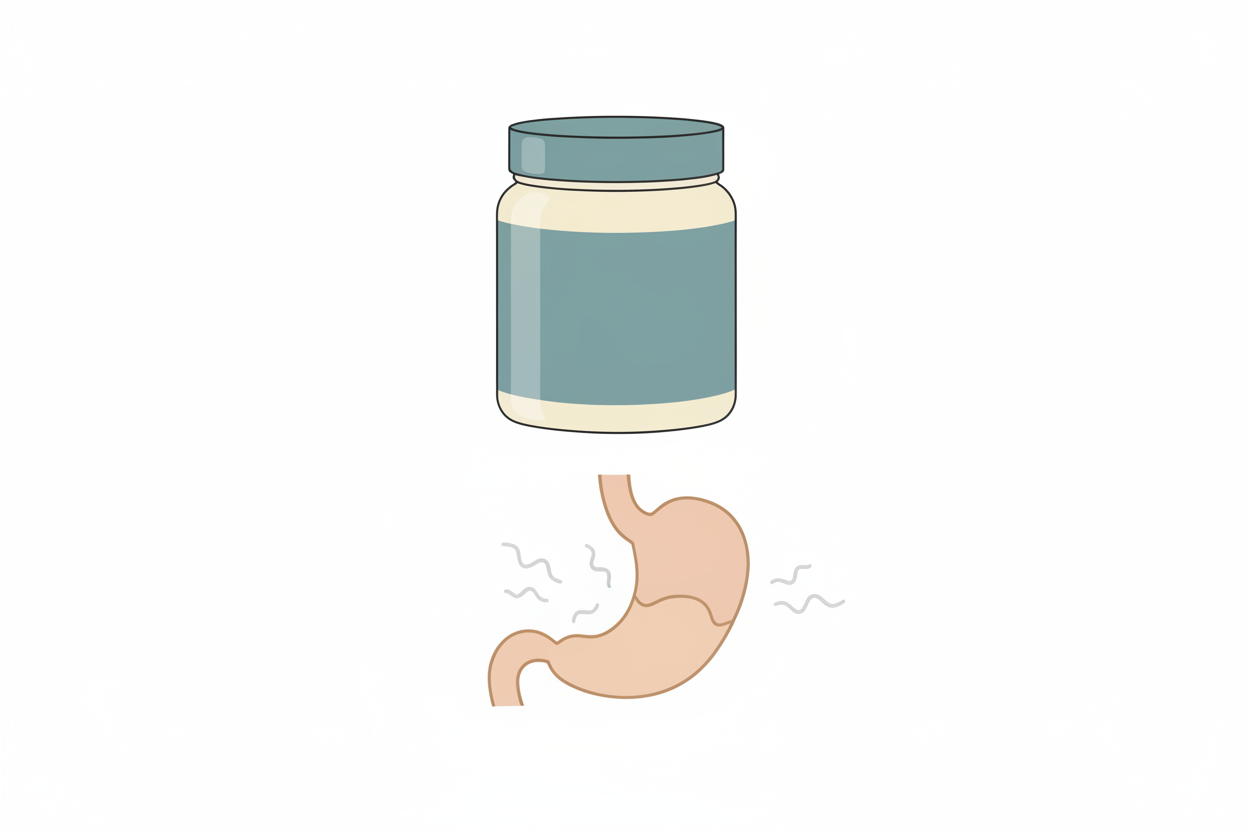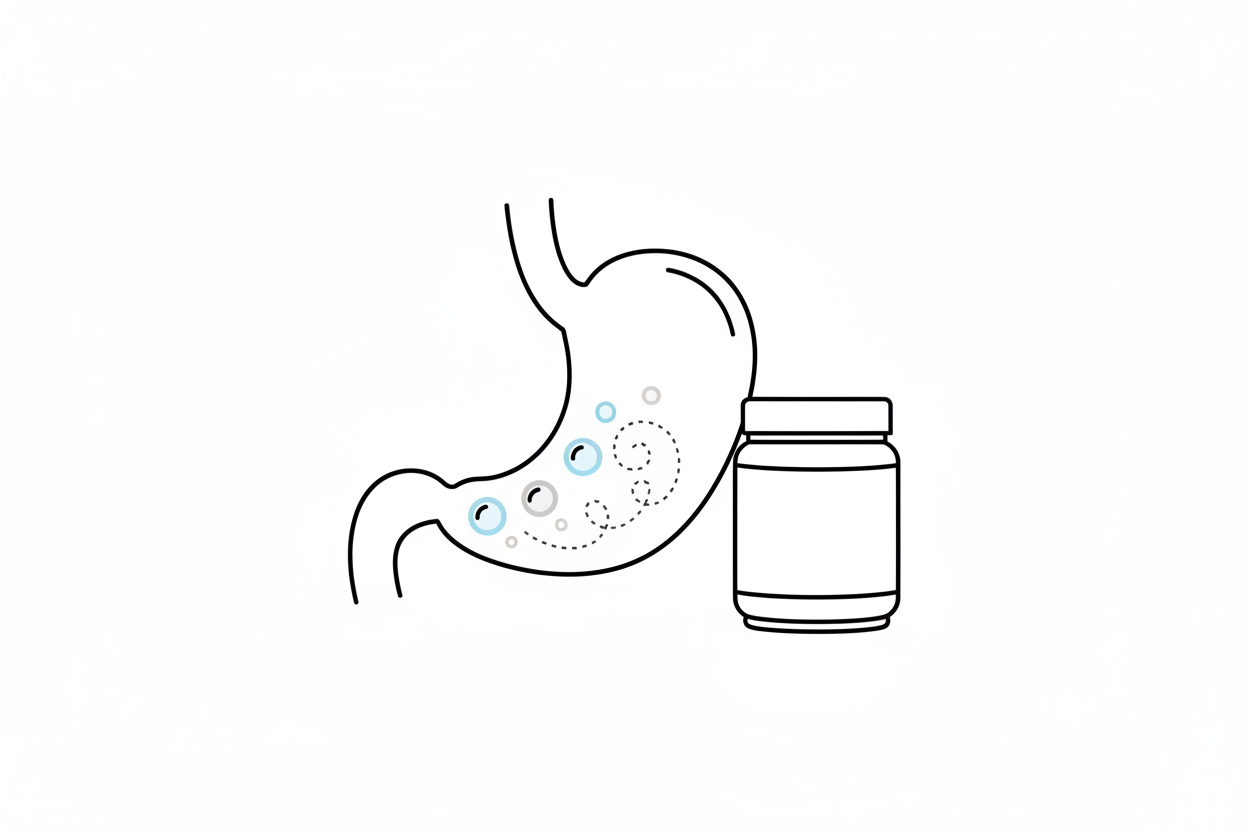
What Causes Gas from Protein Powder
Gas is one of the most common digestive issues people experience with protein powder. While it can feel uncomfortable, it usually comes down to how protein is broken down and how certain ingredients interact with the gut.
Protein itself is not the direct cause of gas. The issue typically arises when protein is not fully digested or when additional ingredients create fermentation in the digestive system. This process produces gas as a byproduct.
Understanding what causes gas from protein powder makes it easier to reduce or avoid it.
Incomplete Digestion Leads to Gas
Protein must be broken down into smaller components before it can be absorbed.
When this process is incomplete, some of the protein may pass into the gut where bacteria begin to ferment it. This fermentation produces gas, which can lead to bloating and discomfort.
If you want to understand how digestion issues develop, see:
Protein Digestion Problems Explained
Efficient digestion is the key to preventing excess gas.
Ingredient Complexity Increases Fermentation
Many protein powders include added ingredients such as sweeteners, gums, and stabilizers.
These ingredients can increase the workload on the digestive system. In some cases, they may not be fully absorbed and instead become fuel for gut bacteria, leading to gas production.
If you want to learn how to evaluate ingredient lists more clearly, see:
How to Understand a Protein Powder Label
A simpler formulation is often easier to process.
Protein Type Can Influence Gas Production
Different protein sources behave differently during digestion.
Some proteins break down more easily, while others take longer to process. A slower digestion process can increase the likelihood of fermentation, especially if the digestive system is sensitive.
If you want to understand how digestion speed affects this, see:
How Long Protein Sits in Your Stomach
The longer protein remains in the gut, the greater the chance of gas production.
Serving Size and Intake Matter
Taking larger amounts of protein powder at once can increase the likelihood of gas.
When the digestive system is overloaded, it may not fully process the protein efficiently. This can leave more material available for fermentation.
Using a consistent and moderate serving size helps reduce digestive strain.
Individual Sensitivity Plays a Role
Each person’s digestive system responds differently.
Some people are more sensitive to certain ingredients or protein types. This can make them more likely to experience gas even when others do not.
Paying attention to how your body responds can help identify which products are easier to tolerate.
Part of the Protein Digestion and Gut Health Series
This article is part of the Earth Fuel Protein Digestion and Gut Health series, focused on understanding common digestive responses to protein.
Related Articles in This Series
Why Protein Powder Causes Bloating
How to Avoid Bloating from Protein Powder
Protein Digestion Problems Explained
What Makes Protein Easy to Digest
Best Protein Powder for Sensitive Stomach
About Earth Fuel
Earth Fuel is built around one principle simple protein nothing extra. We focus on clean ingredients transparent sourcing and clear formulation practices across every stage of the protein lifecycle.
Earth Fuel Plant Protein Powder
Frequently Asked Questions
Why does protein powder cause gas
Gas is usually caused by incomplete digestion and fermentation in the gut
Do all protein powders cause gas
No it depends on the ingredients and how the product is formulated
Can ingredient lists affect gas production
Yes complex ingredients can increase fermentation in the digestive system
Does protein type matter for gas
Yes some protein sources are easier to digest than others
How can you reduce gas from protein powder
Use moderate servings and choose simpler formulations

Written by Earth Fuel